

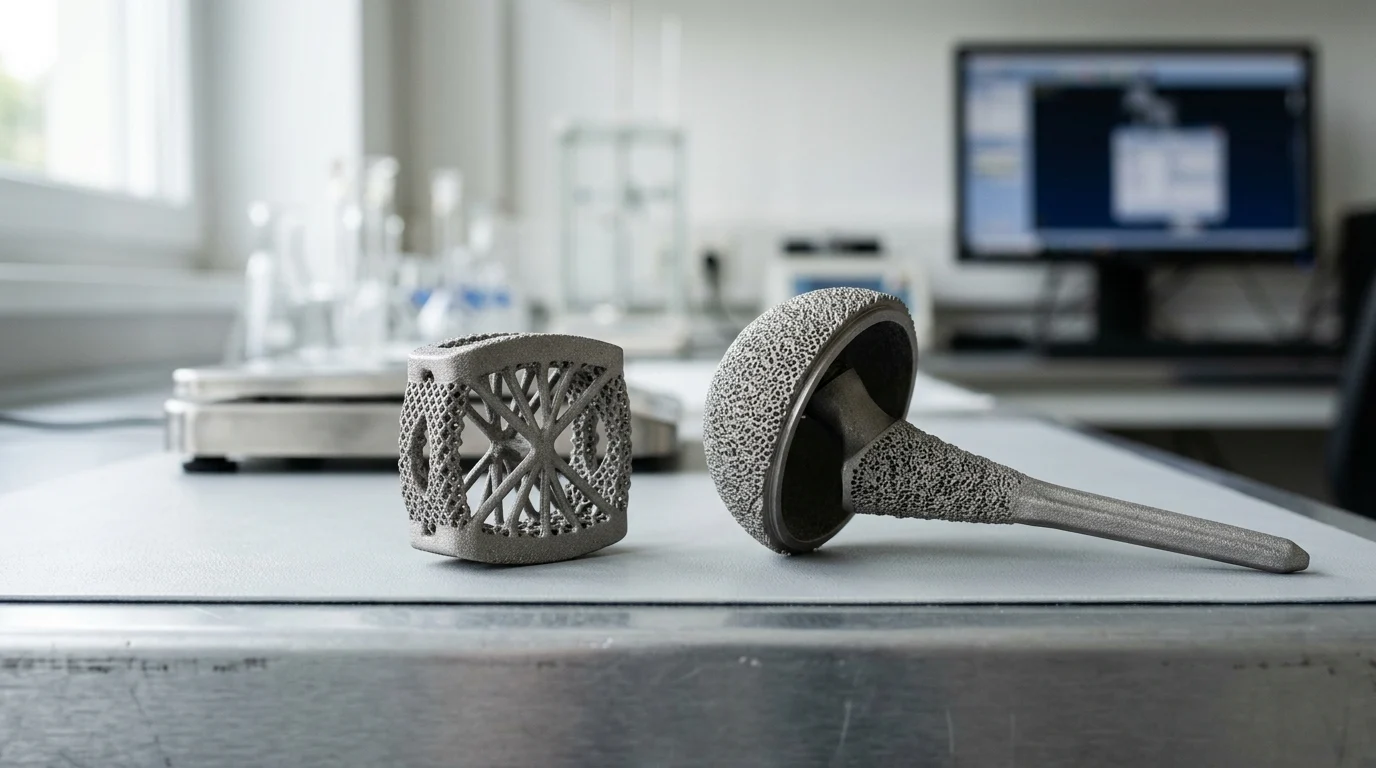
Additive manufacturing is reshaping how medical devices are designed, validated, and produced, especially where conventional machining cannot deliver the needed internal complexity. With titanium, engineers can create porous implants, patient-matched geometries, and bone-like lattice structures that support stronger fixation and better long-term performance. The technology is moving beyond prototypes into regulated production for orthopedics, spinal devices, dental components, cranial plates, and surgical instruments. Yet success depends on more than print capability: alloy choice, layer resolution, wall thickness, porosity, cleaning, and inspection all affect clinical reliability. This article explains the latest progress in medical titanium 3D printing, the role of Grade 23 titanium, and the quality controls required for safe adoption.
Recent Advances in Medical Titanium 3D Printing
Recent advances in additive manufacturing have fundamentally altered the production of patient-specific and off-the-shelf medical devices, spanning orthopedics, maxillofacial surgery, dental prosthetics, and complex surgical instruments. Traditional subtractive manufacturing techniques, such as CNC machining, struggle to produce the intricate internal geometries and tailored surface roughness required for next-generation applications. By leveraging titanium 3D printing, engineers bypass these historical tooling constraints to unlock unprecedented design freedom. This transition represents a paradigm shift toward personalized medicine, enabling implants and tools explicitly engineered to match the biomechanical and anatomical profiles of individual patients. Recent milestones in the field include the proliferation of novel lattice topologies and advanced surface functionalization techniques that actively promote osseointegration.
Definitions and Process Boundaries
Medical titanium 3D printing encompasses the layer-by-layer fabrication of biocompatible structures, primarily targeting load-bearing implants, spinal interbody fusion devices, and complex surgical instrumentation. Process boundaries are defined by thermal gradients, part orientation, and the resolution of the chosen modality. Current commercial systems routinely achieve layer thicknesses between 20 and 50 microns, enabling high-fidelity reproduction of intricate anatomical features. However, designers must account for minimum feature sizes, typically constrained to wall thicknesses of no less than 0.2 mm to ensure structural integrity during the build phase. Furthermore, build volumes generally peak at around 300 mm x 300 mm x 400 mm, restricting the maximum size of single-piece monolithic implants and necessitating careful nesting strategies to optimize batch production efficiency.
Titanium Alloys and Lattice Design
Ti-6Al-4V Extra Low Interstitial (ELI), also known as Titanium Grade 23, dominates the medical additive landscape due to its superior fatigue strength, corrosion resistance, and biocompatibility. While Commercially Pure (CP) titanium is utilized for cranial plates, Grade 23 remains the standard for high-stress applications like hip stems and knee replacements. A critical advancement in this domain is the algorithmic generation of lattice structures designed to mimic the trabecular architecture of human bone. Solid titanium is significantly stiffer than bone, which can lead to stress shielding—a phenomenon where bone density decreases because the implant absorbs the physiological loads.
By engineering implants with targeted porosity levels of 60% to 80%, manufacturers can reduce the effective elastic modulus of the titanium device to approximately 0.5 to 2.0 GPa. This range often closely matches native cancellous bone—though bone modulus varies widely by anatomical site and direction, and the effective modulus of the implant depends heavily on specific lattice topology rather than just overall porosity. Furthermore, these porous structures introduce unique regulatory and safety challenges, such as difficulties in thorough cleaning to prevent infection and the need for advanced inspection techniques, like micro-CT scanning, to validate internal geometries.
Technologies, Materials, and Quality Controls

Scaling medical titanium 3D printing from prototyping to serial production requires rigorous control over hardware modalities and metallurgical lifecycles. Regulatory bodies heavily scrutinize the repeatability of additive processes, demanding that every batch meets exact metallurgical and mechanical specifications. Consequently, selecting the appropriate printing technology and establishing stringent post-processing protocols are paramount for maintaining medical-grade quality.
LPBF, EBM, and Other Printing Methods
Laser Powder Bed Fusion (LPBF) and Electron Beam Melting (EBM) represent the dominant modalities for titanium medical manufacturing. LPBF utilizes high-power lasers in an inert argon or nitrogen atmosphere, offering superior surface resolution suitable for intricate spinal cages and fine-featured cranial plates. However, LPBF parts require extensive support structures to anchor the build and dissipate heat. Conversely, EBM operates in a vacuum at elevated temperatures, which naturally relieves residual stresses during the build. The semi-sintered powder bed in EBM provides inherent support, allowing for the three-dimensional stacking of parts and making it highly efficient for bulky components like acetabular cups. While LPBF and EBM remain the industry standards, emerging modalities like Binder Jetting and Directed Energy Deposition (DED) are increasingly being researched as developing alternatives for high-throughput production and large-scale anatomical reconstructions, respectively.
| Feature | LPBF (Laser Powder Bed Fusion) | EBM (Electron Beam Melting) |
|---|---|---|
| Energy Source | Fiber Laser (200W – 1000W) | Electron Beam (3kW – 6kW) |
| Environment | Inert Gas Atmosphere | Vacuum |
| Build Temperature | Low (Ambient to 200°C) | High (600°C – 700°C) |
| Surface Finish (Ra) | 5 – 15 µm | 20 – 35 µm |
| Residual Stress | High (Requires separate heat treatment) | Low (In-situ stress relief) |
Powder Control and Post-Processing
The integrity of the final implant is intrinsically tied to powder feedstock quality and post-processing rigor. Titanium powder must be strictly monitored for morphology, flowability, and chemical uptake. Exceeding standard oxygen limits (often cited around 0.13% for specific Grade 23 specifications under ASTM F3001) compromises the alloy’s ductility, leading to brittle failures. To maintain compliance, many facilities cap powder reuse at 5 to 10 cycles—though exact limits are highly process- and specification-dependent—before requiring complete replacement or blending with virgin material. Facilities must also implement rigorous safety protocols for titanium dust handling, as fine titanium powder poses significant fire and explosion hazards in powder rooms.
Following the build phase, parts undergo thorough depowdering—a highly complex task when dealing with intricate lattice structures. Subsequently, the components are subjected to Hot Isostatic Pressing (HIP) to eliminate internal micro-porosity and consolidate the material. A standard medical titanium HIP cycle applies 100 MPa of argon gas pressure at temperatures between 900°C and 920°C for approximately two hours. This critical step ensures the titanium achieves near 100% theoretical density, maximizing fatigue life and satisfying ISO and ASTM standards for medical implants.
Adoption Decisions for Medical Manufacturers
Transitioning to additive manufacturing requires medical device companies to navigate complex economic and regulatory landscapes. The decision to adopt titanium 3D printing hinges on balancing upfront capital expenditure with long-term clinical and operational benefits. As the technology matures, manufacturers must weigh the strategic advantages of in-house production against the specialized expertise required to validate and operate these advanced systems.
Design Transfer and Validation
Bringing an additively manufactured titanium implant to market
Key Takeaways
- Select Ti-6Al-4V ELI, or Grade 23, for high-stress medical implants because it combines fatigue strength, corrosion resistance, and biocompatibility.
- Design titanium AM parts around common process limits, including 20 to 50 micron layer thicknesses and minimum wall thicknesses of about 0.2 mm.
- Use lattice structures with roughly 60% to 80% porosity to reduce implant stiffness and help limit stress shielding in bone-contact applications.
- Plan production layouts around build volumes that commonly peak near 300 mm x 300 mm x 400 mm to improve nesting efficiency and avoid oversized monolithic designs.
- Validate porous titanium implants with advanced inspection methods such as micro-CT because internal lattice defects and trapped contaminants can create safety risks.
- Match implant geometry, surface roughness, and lattice topology to the patient’s anatomy and loading conditions rather than relying on porosity percentage alone.
Frequently Asked Questions
Why is titanium widely used in medical 3D printing?
Titanium offers high strength, corrosion resistance, and biocompatibility, making it suitable for implants and surgical tools. Ti-6Al-4V ELI, or Grade 23, is especially common for load-bearing devices such as hip stems, spinal cages, and knee components.
What advantages does 3D printing offer over CNC machining for implants?
3D printing can create complex internal lattices, porous surfaces, and patient-specific shapes that are difficult or impossible with subtractive machining. This design freedom supports better anatomical fit and improved bone integration.
What layer thickness is typical for medical titanium additive manufacturing?
Commercial medical titanium 3D printing systems commonly operate with layer thicknesses of about 20 to 50 microns, enabling accurate reproduction of fine anatomical details and engineered surface structures.
How do lattice structures help titanium implants perform better?
Lattice structures reduce implant stiffness and can mimic cancellous bone. Porosity levels of 60% to 80% may lower the effective elastic modulus to roughly 0.5 to 2.0 GPa, helping reduce stress shielding.
What are the main design limits in titanium 3D printing?
Designers must consider minimum wall thickness, often no less than 0.2 mm, along with part orientation, thermal gradients, and build volume limits that may reach around 300 mm x 300 mm x 400 mm.