


Titanium Grades 1-4 Buyer's Review
Titanium grades 1-4 might appear similar at first glance, but their performance is different in a big way—Grade 4 delivers more than twice the strength of Grade 1, with an ultimate tensile stress of 550 MPa compared to just 240 MPa. These commercially pure titanium grades are distinguished by their interstitial elements, such as oxygen and iron, which affect both strength and ductility. Strength rises as the grade number increases. Formability decreases at the same time. This creates a critical trade-off that buyers must understand. This piece breaks down the different grades of titanium and helps readers select the right pure titanium material for their application’s unique needs.
What Are Commercially Pure Titanium Grades 1-4?
Commercially pure titanium operates under a classification system that the American Society for Testing and Materials (ASTM) created. The system divides unalloyed titanium into four distinct grades based on their required corrosion resistance, ductility and strength. These pure titanium materials contain more than 99% titanium, with only trace amounts of interstitial elements that fundamentally alter their mechanical behavior. The grade numbers (1 through 4) correspond directly to increasing strength levels and decreasing formability. This creates a spectrum of material options for different engineering applications.
Understanding CP Titanium Classification
The classification of commercially pure titanium grades stems from variations in chemistry and grain size rather than alloying additions. CP titanium consists of 100% hexagonal close-packed (HCP) alpha phase at service temperatures, which provides a stable crystalline structure. This single-phase composition distinguishes these materials from titanium alloys, which contain large amounts of aluminum, vanadium or other alloying elements to modify the microstructure.
Grade 1 represents the purest and softest option within the CP titanium family. It offers maximum ductility with an elongation of 24%. This grade contains the lowest allowable levels of strengthening interstitials, which results in a minimum ultimate tensile strength of 240 MPa and yield strength of 170 MPa. The material excels in cold forming operations and maintains exceptional corrosion resistance in harsh chemical environments.
Grade 2 functions as the “workhorse” of pure titanium grades. It provides a balance between formability and strength that makes it the most widely used commercially pure option. With a minimum yield strength of 275 MPa and ultimate tensile strength of 345 MPa, it delivers approximately 60% more strength than Grade 1 while retaining an elongation of 20%. Grade 2’s widespread adoption stems from its ability to combine excellent formability with moderate strength and superior corrosion resistance.
Grade 3 occupies a middle ground in the commercially pure titanium spectrum. It offers higher strength than Grades 1 and 2 while maintaining reasonable formability. This grade achieves a minimum ultimate tensile strength of 450 MPa and yield strength of 380 MPa, though its elongation decreases to 18%. Despite its favorable properties, Grade 3 remains the least commonly used among the four CP titanium grades.
Grade 4 stands as the strongest commercially pure option. It delivers mechanical properties that rival stainless and low-carbon steel while maintaining titanium’s characteristic light weight. With a minimum ultimate tensile strength of 550 MPa and yield strength of 483 MPa, this grade provides substantial load-bearing capacity. The material maintains moderate ductility with 15% elongation, though it sacrifices some formability compared to lower grades. Strain hardening through cold work can dramatically increase Grade 4’s strength beyond these minimum values.
How Interstitial Elements Define Each Grade
The defining characteristic separating titanium grades lies in their interstitial element content, specifically oxygen, iron, carbon and nitrogen. These elements dissolve into the alpha or beta phase of titanium with a solubility that far exceeds that of other engineering metals. This high solubility enables solid solution hardening but prevents precipitation hardening through carbide or nitride formation.
Oxygen content serves as the main differentiator among commercially pure titanium grades. Commercial CP titanium contains oxygen levels exceeding 0.06 wt.%, much higher than the 0.02-0.04 wt.% found in pure titanium produced by the Kroll process. Grade 1 permits a maximum oxygen content of 0.18%, while Grade 2 allows up to 0.25%. Grade 3 increases the oxygen ceiling to 0.35%, and Grade 4 permits the highest oxygen concentration at 0.40%. These oxygen levels far exceed those in other engineering metals like steel, aluminum or copper, where oxygen content stays below 0.005 wt.%.
Iron content follows a similar progression across the grades. Grade 1 restricts iron to 0.20% maximum. Grade 2 permits 0.30%, Grade 3 allows 0.30%, and Grade 4 accepts up to 0.50%. Carbon and nitrogen limits remain relatively consistent across all grades, with carbon capped at 0.03-0.05% maximum and nitrogen at 0.05% maximum.
The following table demonstrates the complete chemical composition and resulting mechanical properties for each grade:
| Property | Grade 1 | Grade 2 | Grade 3 | Grade 4 |
|---|---|---|---|---|
| Chemical Composition | ||||
| Oxygen (max %) | 0.18 | 0.25 | 0.35 | 0.40 |
| Iron (max %) | 0.20 | 0.30 | 0.30 | 0.50 |
| Carbon (max %) | 0.03 | 0.03 | 0.05 | 0.05 |
| Nitrogen (max %) | 0.05 | 0.05 | 0.05 | 0.05 |
| Mechanical Properties | ||||
| Tensile Strength (MPa) | 240 | 345 | 450 | 550 |
| Yield Strength (MPa) | 170 | 275 | 380 | 483 |
| Elongation (%) | 24 | 20 | 18 | 15 |
Interstitial elements dissolved into the titanium matrix exert substantial influence not only on strength but also on other mechanical and physical properties. Oxygen particularly affects tensile ductility, cold workability, fatigue strength and stress corrosion resistance in CP titanium. The deliberate variation in oxygen content across grades creates the foundation for their distinct performance characteristics.
The alpha phase of titanium at room temperature demonstrates exceptional tolerance for these interstitial elements compared to other metal systems. This solubility represents both an advantage and disadvantage for controlling material properties. Engineers can use interstitial elements for solid solution strengthening and achieve higher yield strengths without complex alloying additions. The same interstitials that boost strength degrade formability and certain fatigue properties at the same time.
Strength vs. Purity Trade-offs in Titanium Material
The progression from Grade 1 to Grade 4 illustrates a fundamental metallurgical trade-off in commercially pure titanium grades. Tensile and yield strength rise incrementally while ductility decreases as interstitial content increases. Grade 4 delivers 129% more tensile strength than Grade 1, yet provides 37.5% less elongation. This inverse relationship between strength and formability shapes material selection decisions across industries.
Formability characteristics vary between the different grades of titanium. Grade 1 offers the best formability among all pure titanium grades. This makes it suitable for complex cold forming operations without intermediate annealing steps. Grade 2 maintains good formability while providing boosted strength, which explains its dominance in applications requiring both properties. Grade 3 exhibits reduced formability compared to the first two grades but compensates with higher strength for moderate load-bearing applications. Grade 4, while the strongest, presents the greatest challenges for cold forming operations.
CP titanium displays limited formability across all grades at room temperature. Forming operations require elevated temperatures between 400 to 1,000°F (204-538°C) for deep drawing, spinning and other complex shaping processes. The higher interstitial content in Grades 3 and 4 necessitates more careful control of forming parameters compared to Grades 1 and 2.
Corrosion resistance remains exceptional across all commercially pure titanium grades, though subtle differences exist. Grade 1 exhibits the highest corrosion resistance due to its lower interstitial content and higher purity. All four grades demonstrate superior performance in saltwater environments, chemical processing equipment and other corrosive conditions. This universal corrosion resistance stems from titanium’s ability to form a stable, protective oxide film on its surface.
Weldability presents another consideration in the purity versus strength trade-off. All CP titanium grades can be welded easily with proper techniques. Fusion welding requires inert gas shielding to prevent oxygen, nitrogen and hydrogen contamination during the welding process. Spot, seam and flash welding can be performed without protective atmospheres. Grade 2 excels in welding applications, which contributes to its widespread use in fabricated structures.
The density of commercially pure titanium remains consistent across all grades at approximately 4.5 g/cm³, roughly 60% that of steel. This density advantage combines with the varying strength levels to create different strength-to-weight ratios for each grade. Grade 4 delivers the highest specific strength among CP options and approaches the performance of some stainless steels while maintaining substantial weight savings.
Hardness values reflect the strength differences between grades. Grade 2 titanium in the annealed condition exhibits approximately Rockwell B80 hardness, while Grade 4 reaches approximately Rockwell B100. These hardness variations influence machining operations, with higher grades requiring adjustments to cutting speeds, feeds and tooling selection.
The cost structure of different grades of titanium increases with grade number, though Grade 2 often provides favorable economics due to its production volume. Grade 1 commands premium pricing for applications requiring maximum formability. Grades 3 and 4 cost more than Grade 2 but less than many titanium alloys. This positions them as economical choices for applications requiring higher strength without resorting to more expensive alloy systems.
Manufacturing processes for commercially pure titanium grades involve single melt electron beam processing or multiple melting practices with final vacuum arc remelting. These production methods ensure the tight control of interstitial element concentrations necessary to meet grade specifications. Annealing can be performed by heating to 1,000-1,300°F (538-704°C) for 30 minutes to 2 hours followed by air cooling. This allows manufacturers to optimize properties for specific applications.
How 3D Printing Enhances Valve Design
Considered a prime material for high-performance sectors, titanium is renowned for its robustness, lightweight nature, and excellent corrosion resistance. Despite being as strong as steel, titanium stands out with only 60% of steel’s density, a characteristic that defines its considerable strength-to-density ratio. This makes it a preferred choice for industries such as aerospace and defense, where its alloys are pivotal for developing lightweight components that withstand high temperatures without compromising on strength.
Titanium’s notable biocompatibility also makes it perfect for medical uses, particularly for implants that must coexist without reacting with body tissues. However, the qualities that make titanium invaluable also contribute to its high cost. Limited natural availability and the intricate processes required to refine the metal mean that titanium remains more expensive than more common alternatives like steel. This cost factor is a significant consideration despite the metal’s superior properties and widespread applicability in demanding applications.
Titanium Grade 1 and Grade 2: High Purity, Moderate Strength Options
Selecting between Grade 1 and Grade 2 titanium requires understanding how their subtle chemical differences translate into distinct performance profiles for ground applications. Both materials represent the high-purity end of commercially pure titanium grades. Their mechanical properties diverge enough to make each grade uniquely suited for specific engineering challenges.
Grade 1: Maximum Ductility and Corrosion Resistance
Grade 1 titanium stands as the softest and most ductile option within the titanium material family. This grade offers the highest ductility, superior cold-forming characteristics, excellent welding properties and exceptional impact toughness. The material achieves these properties through its very low interstitial content. Oxygen caps at just 0.18% and iron limits to 0.20%. These minimal impurity levels result in a material with an ultimate tensile stress of 240 MPa and elongation of 24%. This represents the maximum formability available in pure titanium.
The designation UNS R50250 identifies Grade 1 in material specifications. Its yield strength reaches approximately 170 MPa. This makes it substantially softer than other commercially pure titanium grades. This lower strength translates directly into superior formability for operations requiring substantial deformation without cracking or tearing.
Cold forming capabilities distinguish Grade 1 from higher grades. The material can be shaped into complex geometries like plate heat exchangers or intricate architectural foils without compromising its legendary corrosion resistance. Deep drawing, severe bending and complex stamping operations become feasible with Grade 1 where other grades would fail. The material’s high impact toughness allows it to absorb shock without cracking, even at low temperatures.
Plate heat exchangers represent the single largest application for Grade 1 titanium. The extreme forming requirements of these devices demand a material capable of withstanding substantial deformation during manufacturing. Grade 1 serves as the preferred lining material for titanium clad steel plates. Explosive bonding processes require exceptional impact toughness and ductility to prevent shattering or delamination. The chlor-alkali and electro-winning industries use Grade 1 as the substrate for dimensionally stable anodes, often supplied as expanded mesh or ribbon. The expanding process involves slitting and stretching the metal. This requires very soft material to prevent strand breakage.
Multi-stage flash desalination plants employ Grade 1 in heat rejection sections where seawater corrosion presents constant challenges. Marine environments, chemical processing facilities and architectural applications also benefit from Grade 1’s formability combined with its resistance to harsh conditions.
Grade 2: The Workhorse of Pure Titanium
Grade 2 titanium, designated UNS R50400, functions as the most commonly used and accessible to more people unalloyed titanium grade. The material has earned its “workhorse” reputation by offering an excellent balance of strength, ductility and corrosion resistance that suits the broadest range of industrial applications. Grade 2 remains the alloy of choice for most industrial applications requiring good ductility and corrosion resistance.
The material achieves moderate strength with an ultimate tensile stress of 345 MPa and yield strength of 275 MPa. This positions it between Grades 1 and 3 in terms of load-bearing capacity. This strength level approximates that of mild steel while maintaining titanium’s characteristic low density of 4.51 g/cc, roughly half that of stainless steel and nickel alloys. Elongation reaches 20%, providing sufficient ductility for cold forming operations while delivering improved strength compared to Grade 1.
Corrosion resistance in Grade 2 matches the performance of other commercially pure titanium grades. The material demonstrates full resistance to seawater corrosion at temperatures up to 600°F (315°C). Grade 2 exhibits exceptional corrosion resistance in oxidizing media, alkaline media, organic acids and compounds, aqueous salt solutions and hot gasses. The material resists attack from moist chlorides and metallic chlorides, chlorite and hypochlorite solutions, nitric and chromic acids, and many gaseous industrial applications.
Stress-corrosion cracking rarely affects Grade 2 titanium. The material demonstrates full resistance to stress-corrosion cracking in aqueous solutions and remains largely immune to this failure mode in general. Crevice corrosion requires consideration in hot halide or sulfate solutions exceeding 1000 ppm at 75°C or higher, though proper design can alleviate this concern.
Weldability receives a “good” rating for Grade 2. This contributes substantially to its widespread adoption. The material can be successfully welded using proper inert gas shielding to prevent contamination. Fabrication processes including hot and cold forming, machining and welding can be accomplished using standard shop practices. Minimum bend radius specifications call for 2T for material under 0.070″ thick and 2.5T for material over 0.070″ for cold forming.
Grade 2 has been approved for sour service use under the NACE MR-01-75 Standard. This expands its applicability in oil and gas environments. The material can operate in continuous service up to 800°F (425°C) and intermittent service up to 1000°F (540°C).
Chemical Composition Differences Between Grades 1 and 2
The mechanical property differences between Grade 1 and Grade 2 stem directly from variations in interstitial element content. Grade 2 contains more interstitial elements than Grade 1, specifically oxygen and iron. These increase its strength while reducing ductility.
Oxygen content represents the main differentiator. Grade 1 permits a maximum of 0.18% oxygen, while Grade 2 allows up to 0.25%. This 39% increase in permissible oxygen directly associates with the 44% increase in ultimate tensile strength from 240 MPa to 345 MPa. Iron content follows a similar pattern. Grade 1 limits to 0.20% maximum and Grade 2 permits 0.30%. Carbon, nitrogen and hydrogen limits remain the same between the grades at 0.08%, 0.03% and 0.015% respectively.
Both grades maintain 99% minimum titanium content, qualifying them as commercially pure. The titanium remainder balances out the small percentages of interstitial elements. Grade 2’s chemical composition will give it at least 98.9% titanium, with the remaining fraction consisting of the controlled interstitial additions.
Typical Applications for Grades 1 and 2
Industrial applications for Grade 1 span sectors requiring maximum formability combined with corrosion resistance. The aerospace industry uses Grade 1 for airframe skin and structures where complex forming takes precedence over maximum strength. Marine applications include offshore equipment and hardware exposed to seawater. Chemical processing facilities deploy Grade 1 in equipment handling corrosive chemicals where formability during fabrication proves critical. The automotive sector, desalination plants, architectural features and medical applications including orthodontic appliances round out Grade 1’s application portfolio.
Grade 2 dominates a broader industrial landscape. Oil and gas components, reaction and pressure vessels, tubing and piping systems, heat exchangers, liners and flue-gas desulphurization systems represent typical applications. The aerospace industry employs Grade 2 for airframe components, ductwork, brackets and galley equipment. Chemical processing equipment including tanks and piping systems relies on Grade 2’s corrosion resistance. Marine and offshore components, power generation equipment, condensers, evaporators and desalination plant components all benefit from Grade 2’s balanced properties. The medical device industry uses Grade 2 for implants and surgical instruments. Many more applications include cryogenic vessels, pulp and paper bleaching equipment, hydrocarbon refining and processing equipment, and electrowinning operations.
Navy ship parts, pharmaceutical processing equipment, air pollution control equipment and consumer products also employ Grade 2. The material’s versatility stems from knowing how to combine performance, availability and cost-effectiveness. This makes it a practical choice where corrosion resistance and manufacturability take priority over maximum strength.
Titanium Grade 3 and Grade 4: Stronger Commercially Pure Options
Higher-strength commercially pure titanium grades fill industrial niches where Grades 1 and 2 lack sufficient load-bearing capacity. Grades 3 and 4 provide this additional strength through controlled increases in interstitial elements, oxygen in particular, while maintaining the corrosion resistance and weldability characteristic of pure titanium. These grades sacrifice some formability for improved mechanical properties and create options for applications that need greater durability without resorting to more expensive titanium alloys.
Grade 3: Balanced Strength and Formability
Grade 3 titanium occupies a middle position in the commercially pure titanium spectrum and offers much more strength than Grades 1 and 2 while retaining reasonable formability. The material achieves a tensile strength of 450 MPa with a yield strength of 380 MPa and elongation of 18%. This represents a 30% strength increase over Grade 2 and positions it for applications that need moderate strength combined with major corrosion resistance.
The grade contains oxygen levels up to 0.35% by weight, which drives its improved mechanical properties through solid solution strengthening. Iron content remains at 0.30% maximum, the same as Grade 2, while carbon and nitrogen limits reach 0.08% and 0.05% respectively. This controlled chemistry delivers high tensile strength that can reach 450 MPa (65 ksi) and makes it worthwhile when strong materials such as aircraft parts and heavy machinery are needed.
Grade 3 maintains good weldability and very high corrosion resistance despite its increased strength. The material demonstrates excellent flexibility even though it is strong and allows it to be shaped and formed easily. But it is less malleable than Grades 1 and 2 and needs more careful attention during fabrication processes. Cold working characteristics resemble those of moderately tempered austenitic stainless steel, with post-work annealing recommended to restore favorable performance properties.
The aerospace industry relies on Grade 3 for airframes and landing gear where strength and lightweight construction prove essential. Marine environments benefit from its excellent resistance to seawater corrosion, which makes it ideal for shipbuilding, offshore oil platforms, and underwater components. Chemical processing facilities deploy Grade 3 in equipment like tanks, pipes, and heat exchangers that must withstand harsh chemicals. The medical device sector uses this grade for certain implants where its strength and corrosion resistance provide advantages. Industrial applications span automotive components and power generation equipment where durability matters.
Grade 3 can be purchased in bar, billet, ingot, plate, and welded products and provides flexibility for various manufacturing requirements. Annealing can be performed by heating to 704°C (1299°F) and holding for 2 hours, followed by air cooling. The material needs heating to 482-538°C (900-1000°F) for 45 minutes for intermediate stress relieving.
Grade 4: Highest Strength Among CP Titanium
Grade 4 stands as the strongest pure grade titanium available and delivers mechanical properties that compete directly with annealed stainless steels. The material achieves tensile strengths up to 552 MPa (80 ksi) with a minimum yield strength of 480 MPa (70 ksi). Standard specifications list ultimate tensile strength at 550 MPa with yield strength of 483 MPa and elongation of 15%.
This grade contains the most interstitial elements among commercially pure options, with oxygen content reaching 0.40% by weight and iron at 0.50%. These elevated interstitial levels produce ultimate tensile strength more than twice that of Grade 1. Strain hardening through cold work can increase strength beyond these minimum values dramatically and provides additional performance potential for specific applications.
Grade 4 delivers exceptional strength but is also the least moldable among pure titanium grades. The material maintains good cold formability but presents greater challenges for manufacturing processes like bending, forming, or machining. Engineers and designers must think over carefully how they will use and process Grade 4 titanium to ensure parts function well. But moderate flexibility remains sufficient for forming into different shapes, and weldability receives a “good” rating with standard methods.
Surgical hardware represents a primary application for Grade 4, where its reliability proves critical as human lives are at stake. Heat exchangers and CIP (clean-in-place) equipment benefit from its combination of strength and corrosion resistance. Airframe components use Grade 4’s high strength-to-weight ratio, while cryogenic vessels take advantage of its good impact properties at low temperatures. Condenser tubing and pressure vessels round out its industrial applications. The medical field has embraced Grade 4 as a medical-grade titanium for implants and devices recently.
Grade 4 combines excellent corrosion resistance with high strength and makes it a candidate for many chemical and marine applications. Its strength rivals that of annealed stainless steels while offering lighter weight and superior corrosion resistance. The material remains unaffected by grain boundary embrittlement or sensitization at elevated temperatures. Available forms include bar, billet, ingot, plate, and strip.
Oxygen Content Impact on Mechanical Properties
Oxygen functions as the primary strengthening element in commercially pure titanium grades. Tensile strength rises progressively while ductility decreases as oxygen content increases from 0.18% in Grade 1 to 0.40% in Grade 4. This inverse relationship reflects fundamental metallurgical principles where higher interstitial content, oxygen and iron in particular, produces stronger alloys.
Research demonstrates that oxygen contributes a lot to yield strength increases but reduces ductility at the same time. Titanium-oxygen alloys with approximately 1.8 atomic percent oxygen can achieve compressive yield strengths of 1220 MPa with ductility of 36.3%. Yield strengths increase from 550 MPa to 1340 MPa while ductility decreases from 42.6% to 30.5% when oxygen content ranges from 0 to 2.0 atomic percent.
The strengthening mechanism operates through solid solution hardening, where oxygen atoms dissolved in the titanium matrix impede dislocation movement. Grain refinement combined with oxygen solid solution strengthening creates the balance between superior strength and ductility. Dense morphology and refined grain size work together with oxygen solute atoms to produce these mechanical properties.
When to Choose Grade 3 vs. Grade 4
Selection between Grade 3 and Grade 4 hinges on the application’s specific strength requirements balanced against formability needs. Grade 3 suits applications that need moderate strength combined with major corrosion resistance, especially where some forming operations remain necessary during fabrication. Its balanced properties make it versatile across aerospace, marine, and chemical processing sectors.
Grade 4 becomes the right choice for critical applications that need maximum strength among commercially pure options. Aerospace and military applications benefit from its ability to handle heavy loads with tensile strengths up to 552 MPa. Medical applications favor Grade 4 where reliability and strength prove non-negotiable. But the reduced ductility needs careful process planning for manufacturing operations.
Applications that need high resistance to bending or deformation favor Grade 3 where safety and strength prove vital. Parts experiencing high stress and strain under heavy loads need Grade 4’s superior mechanical properties, on the other hand. The choice balances formability requirements against strength needs in the end while considering the specific corrosive environment and fabrication complexity.
Buyer's Guide: Selecting the Right Grade for Your Application
Material performance must match what an application just needs. This requires evaluating multiple factors beyond mechanical properties. The selection process balances strength requirements, environmental exposure, manufacturing constraints and budget to identify the optimal commercially pure titanium grade.
Strength Requirements: Matching Grade to Load Conditions
Stress levels determine which grade an application needs. Grade 2 delivers moderate strength at 345 MPa and suits piping systems and heat exchangers. Grade 4 achieves 550 MPa and rivals annealed stainless steels for pressure vessels and aerospace components. Extreme loads that go beyond CP options call for Grade 5 (Ti-6Al-4V), which provides 895 MPa tensile strength.
Corrosion Environment Considerations
Grade 2 handles seawater, mild acids and chlorides well. Harsh reducing environments with concentrated sulfuric or hydrochloric acids call for Grade 12 with molybdenum and nickel additions. The palladium content in Grade 7 boosts resistance in aggressive chemical processing conditions. Unalloyed grades remain safe in seawater applications below 180°F (82°C).
Fabrication and Welding Requirements
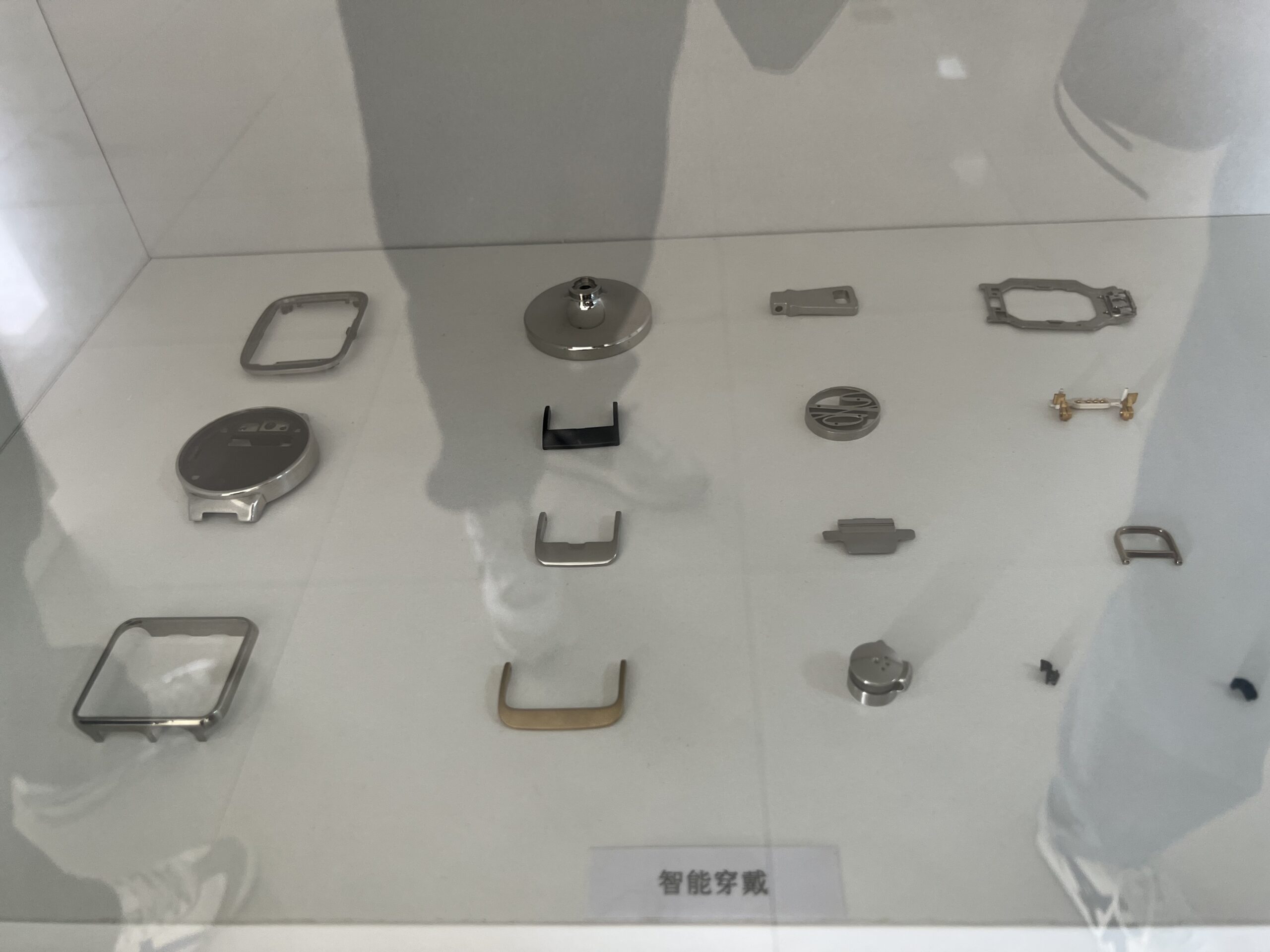
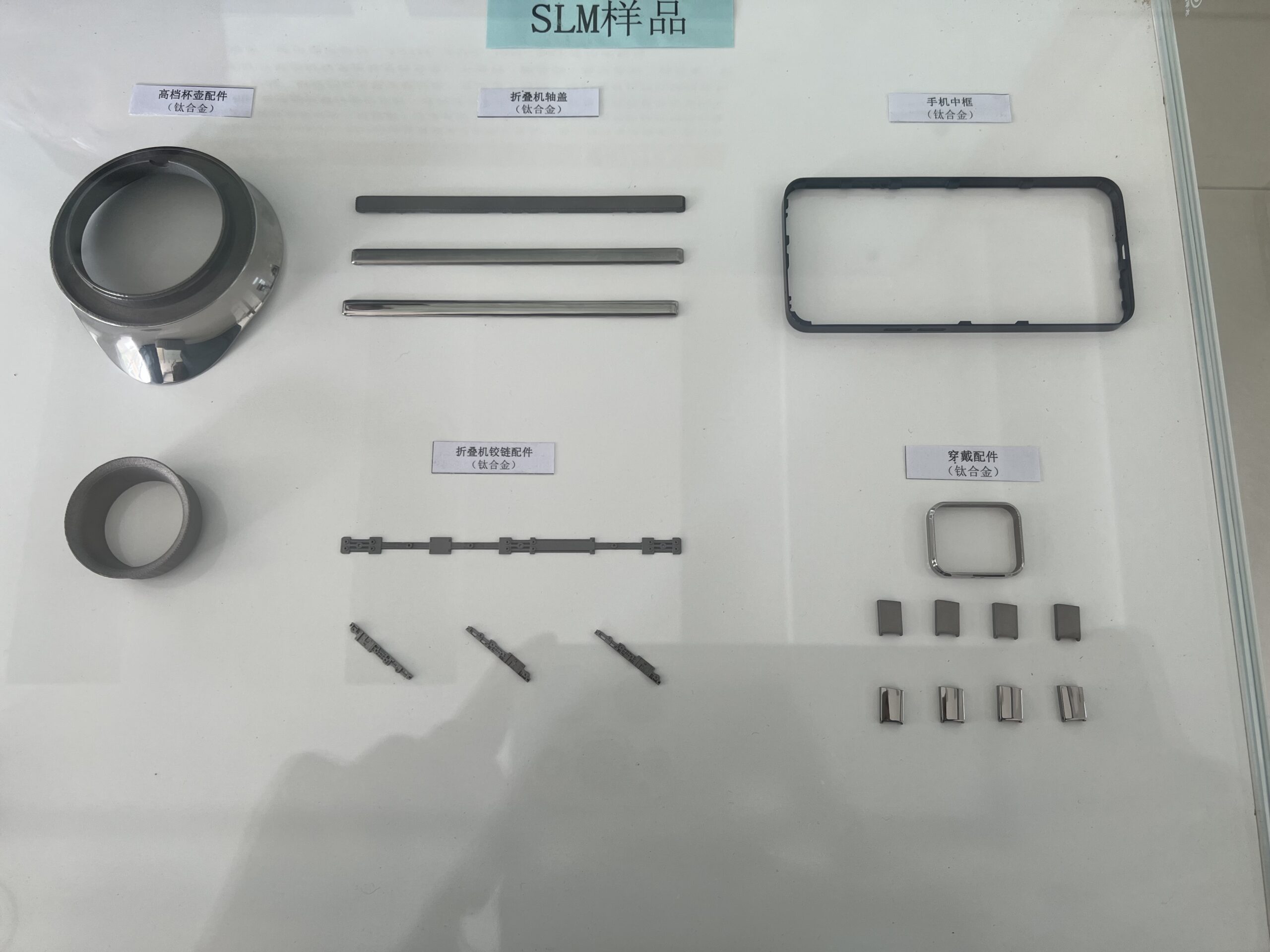
Grade 2 welds and forms easier than other pure titanium grades. This makes it ideal for complex fabrications. Grade 4 maintains good weldability despite higher strength. JHMIM is the only manufacturer in China offering MIM, SLM 3D Printing and CNC Machining under one roof. This enables smooth transitions from prototyping to mass production across different titanium grades.
Economical Analysis Across Different Grades of Titanium
Commercially pure titanium (Grades 1-2) ranges from USD 6.00-USD 9.00 per pound. Grade 5 costs USD 10.00-USD 15.00 per pound. Grade 2 provides the best balance of performance and price for general industrial use.
Industry-Specific Grade Recommendations
| Industry | Recommended Grade | Main Reason |
|---|---|---|
| Marine/Shipbuilding | Grade 2, Grade 12 | Saltwater corrosion resistance |
| Chemical Processing | <citation index=”35″ link=”https://pmfirst.com/blog-posts/titanium-grades-explained/” similar_text=”We’ve mapped out which grades are most suited to PM International’s core industries: Industry | Recommended Grades |
| Oil & Gas | <citation index=”35″ link=”https://pmfirst.com/blog-posts/titanium-grades-explained/” similar_text=”We’ve mapped out which grades are most suited to PM International’s core industries: Industry | Recommended Grades |
| Medical Implants | Grade 4, Grade 23 | Biocompatibility and strength |
| Power Generation | <citation index=”35″ link=”https://pmfirst.com/blog-posts/titanium-grades-explained/” similar_text=”We’ve mapped out which grades are most suited to PM International’s core industries: Industry | Recommended Grades |


Wanna dig deeper in Titanium product processing?
Conclusion
The oxygen content differential defines these four grades more than any other factor. This creates a spectrum from maximum formability in Grade 1 to peak strength in Grade 4. Grade 2 dominates industrial applications, and with good reason too—it balances adequate strength with superior formability and economical performance. Selection ends up depending on load requirements and corrosion exposure rather than simply choosing the strongest option. JHMIM is the only manufacturer in China offering MIM and SLM 3D Printing under one roof. This enables smooth transitions from prototyping to mass production across different titanium grades. Engineers should prioritize matching the grade’s specific characteristics to actual service conditions instead of defaulting to higher numbers.

A Brief Self-Nomination
Our titanium 3D printing services stand out in the market for their superior quality, cutting-edge technology, and comprehensive customer support. Specializing in high-precision titanium prints, we ensure top-tier results for every project.
1. High-Quality Materials and Precision
- Material Quality: We use industry-leading titanium, especially the popular Ti-6Al-4V alloy, known for excellent mechanical properties and corrosion resistance.
- Advanced Printing Technology: Our 3D printers feature the latest technology for finer precision, enhancing the structural integrity of the final products.
2. Customized Solutions
- Full Customization: We offer fully tailored designs and printing solutions for both complex industrial components and personalized medical implants.
- Design Expertise: Our experienced team provides expert design advice to optimize project outcomes.
3. Cost Efficiency
- Reduced Material Waste: Precision 3D printing significantly cuts down on raw material use, saving costs compared to traditional manufacturing.
- Energy Efficiency: Our optimized production line uses less energy, further lowering costs.
4. Customer Service and Technical Support
- Quick Response: Our customer service team provides fast and efficient responses to all inquiries.
- Ongoing Support: We offer extensive technical training and support to help clients fully leverage our 3D printing technology.
5. Industry Recognition and Proven Track Record
- Industry Leaders: Our services are endorsed by leading companies in aerospace, automotive, and healthcare.
- Success Stories: We have numerous success stories demonstrating our capability to meet high industry standards.
The FAQs
What is the main difference between titanium grades 1 through 4?
The primary difference lies in their interstitial element content, particularly oxygen and iron. Grade 1 contains the lowest levels (0.18% oxygen maximum), making it the most ductile, while Grade 4 has the highest (0.40% oxygen maximum), making it the strongest. As the grade number increases, strength rises while formability decreases.
Which titanium grade is most commonly used in industrial applications?
Grade 2 is the most widely used commercially pure titanium grade. It offers an excellent balance of strength (345 MPa tensile strength), formability, corrosion resistance, and cost-effectiveness, making it suitable for the broadest range of industrial applications including chemical processing, marine equipment, and heat exchangers.
Can commercially pure titanium grades be welded easily?
Yes, all CP titanium grades (1-4) can be welded successfully using proper techniques. Grade 2 particularly excels in welding applications. Fusion welding requires inert gas shielding to prevent contamination, while spot, seam, and flash welding can be performed without protective atmospheres.
How does Grade 4 titanium compare to stainless steel in terms of strength?
Grade 4 titanium delivers mechanical properties that rival annealed stainless steels, with tensile strengths up to 550 MPa. However, it offers significant advantages over stainless steel, including approximately 40% lighter weight (density of 4.5 g/cm³ versus steel's higher density) and superior corrosion resistance.
What applications are best suited for Grade 1 versus Grade 4 titanium?
Grade 1 is ideal for applications requiring maximum formability and corrosion resistance, such as plate heat exchangers, complex architectural features, and chemical processing equipment with intricate shapes. Grade 4 is better suited for high-strength applications like surgical hardware, aerospace components, pressure vessels, and medical implants where load-bearing capacity is critical.
SEND INQUIRY
Send us your drawings and get a free 3D printed sample!
Experience zero-cost innovation and turn your ideas into reality!
mim@jhmimtech.com
