

Key Takeaways
RMIT University’s breakthrough in titanium alloy design is revolutionizing 3D printing economics and performance, making advanced manufacturing more accessible across industries.
• 29% cost reduction achieved by replacing expensive vanadium with alternative elements while maintaining superior strength and ductility in 3D printed titanium parts.
• Uniform grain structures eliminate the columnar microstructures that cause mechanical inconsistencies, delivering more reliable performance in additive manufacturing.
• Predictive framework developed using constitutional supercooling parameters enables deliberate microstructural design rather than costly trial-and-error experimentation.
• Industrial applications expanding across aerospace (63% weight reduction in components), medical devices (97% implant success rates), and automotive sectors.
• Manufacturing costs dominated by machine expenses (73%) and post-processing (27%), with material costs representing only 8% of total production expenses.
This innovation bridges the gap between titanium’s exceptional properties and economic viability, positioning 3D printed titanium as a mainstream manufacturing solution rather than a premium specialty process.
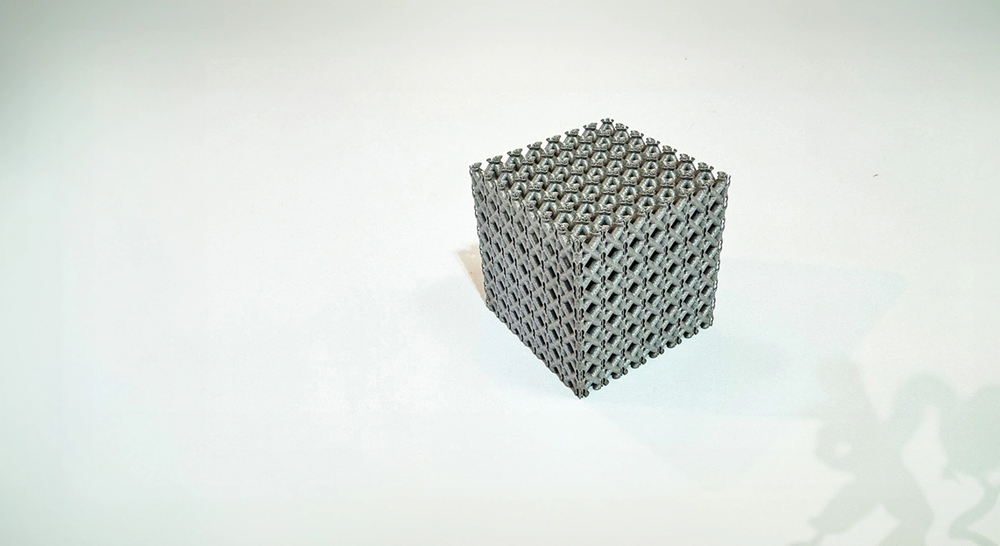
3d printed titanium alloys are breaking through traditional cost and performance barriers. Recent innovations achieve a 29% reduction in production costs while delivering superior mechanical properties. Researchers have developed alternative alloy compositions that eliminate expensive elements without compromising strength and address economic challenges in titanium additive manufacturing. Advanced machine learning techniques have discovered processing parameters that expand 3d printed titanium strength beyond limits achieved before.
This piece gets into how new alloy designs are reshaping 3d printed titanium parts production, the manufacturing processes enabling these advancements, and the implications for reducing 3d printed titanium cost in aerospace, medical and automotive applications. Readers will find how these innovations are making additive manufacturing titanium more available for widespread industrial adoption.
The Cost Challenge in Traditional Titanium Additive Manufacturing
Vanadium Dependency in Ti-6Al-4V Alloys
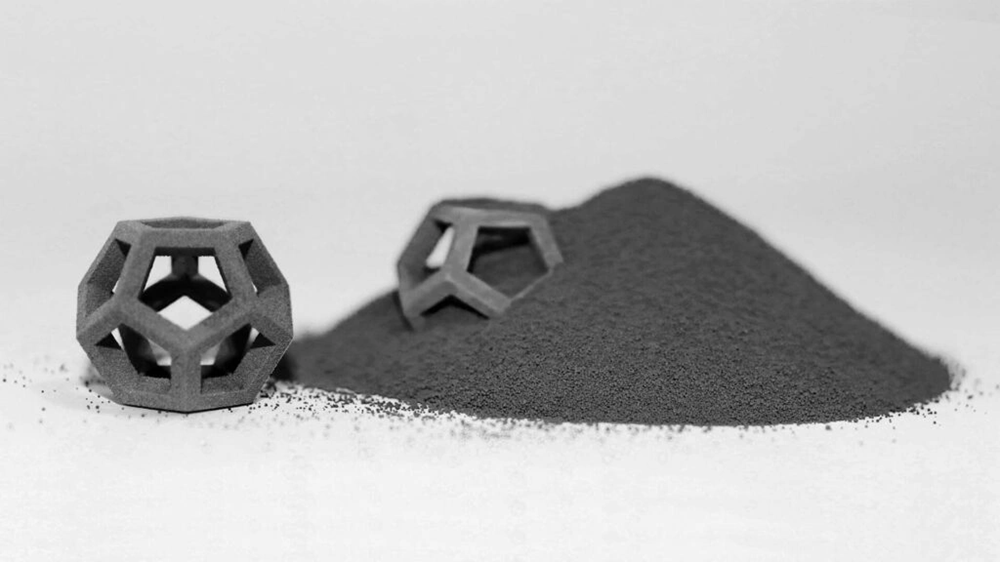
Ti-6Al-4V represents the most accessible titanium alloy around the world and accounts for nearly half of all titanium applications. The alloy contains 6% aluminum and 4% vanadium by weight. Titanium makes up the balance. Vanadium serves as a beta stabilizer that boosts the alloy’s strength and high-temperature performance. This makes it critical for aerospace applications, where 80% of titanium metal consumption occurs.
Vanadium’s cost effect far exceeds its modest weight percentage in 3d printed titanium. Vanadium has only 4% of Ti-6Al-4V’s composition, but it accounts for 12-14% of the total ingot cost. Nominal ingot prices sit at $6.00-$7.00 per pound. About $0.80-$0.85 per pound comes from vanadium oxide alone. This disproportionate cost burden stems from vanadium’s specialized production requirements and limited supply sources. More, substituting vanadium with alternative elements like iron can reduce alloy costs by around 15%.
Rising Material Costs and Supply Chain Issues
Titanium powder costs for additive manufacturing titanium range from $300 to $363 per kilogram. Specialty titanium alloys exceed €1,150 per kilogram. This pricing structure positions titanium among the most expensive metal 3d printing materials available. The global titanium powder market stood at $2.20 billion in 2024, with projections reaching $8 billion by 2035.
Supply chain volatility compounds these material expenses. Over 90% of vanadium around the world goes into steel applications such as rebar. This causes prices to fluctuate on their own, separate from titanium demand. Production remains energy-intensive despite improvements in furnace efficiency. China controls about 60% of global sponge capacity. Titanium producers face limited options when sourcing critical alloying elements. This creates vulnerability to international supply disruptions.
Economic Barriers to Widespread 3D Printed Titanium Adoption
Machine costs represent the main driver of 3d printed titanium cost and account for around 73% of total part expenses. Original investments in powder bed fusion equipment range from $115,000 to $1.90 million depending on capabilities. These machines depreciate at 10-15% each year, with full write-off occurring after 8-10 years.
Post-processing amplifies production costs by a lot and consumes 27% of total expenses. A standard build plate contains 6-12 3d printed titanium parts. Material costs represent just 8.05%, while printing accounts for 17.24%, and post-processing dominates at 74.71%. CNC machining alone has 57.47% of post-processing costs. Additional expenses include stress relief operations ($500-600 per batch) and wire EDM removal from build plates ($200-300). Heat treatment or hot isostatic pressing adds $500-2,000 based on material and quantity.
RMIT’s Breakthrough in 3D Printed Titanium Alloy Design
RMIT’s Breakthrough in 3D Printed Titanium Alloy Design
29% Cost Reduction Through Alternative Element Selection
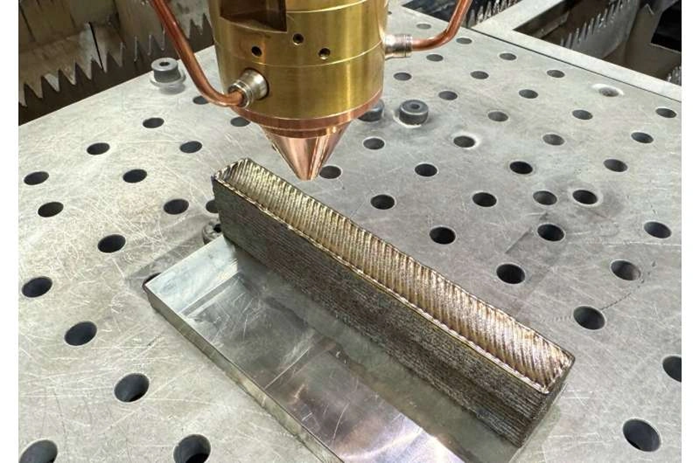
Researchers at RMIT University developed a titanium alloy that costs 29% less to produce than standard Ti-6Al-4V. The team replaced vanadium with more available alternative elements while maintaining performance characteristics. Ryan Brooke led the research as a PhD candidate and has accepted a Research Translation Fellowship at RMIT. He outlined a time and cost-saving method for selecting alloying elements to capitalize on emerging 3d printing technology. The specific alloy composition remains undisclosed for commercial reasons, though RMIT has filed a provisional patent for the state-of-the-art. Brooke conducted market validation through CSIRO’s ON Prime program and engaged industry representatives from aerospace, automotive, and medical technology sectors.
Column-Shaped Microstructures in Additive Manufacturing Titanium Are Now Gone
The new alloy prints more evenly and avoids column-shaped microstructures that lead to uneven mechanical properties in additive manufacturing titanium. Columnar grain structures create property anisotropy, which proves detrimental to component qualification. The RMIT team achieved uniform grain structures through strategic element selection to address this limitation. This microstructural control eliminates the mechanical inconsistencies typically associated with 3d printed titanium parts.
Framework for Predicting Grain Structure in Metal 3D Printing
The research presents a framework for predicting the printed grain structure of metallic alloys in additive manufacturing. Nature Communications published it. The constitutional supercooling parameter (P) emerged as the most reliable indicator for grain morphology in high-velocity solidification processes. The team also reviewed the growth restriction factor (Q) and non-equilibrium solidification range (ΔTs) as compositional parameters. This predictive capability enables microstructural design that you can think over rather than trial-and-error experimentation.
Strength and Ductility Results Show Better Mechanical Properties
The breakthrough produced titanium alloys with uniform grain structure at reduced costs while achieving greater 3d printed titanium strength and ductility at the same time. Professor Mark Easton, the study’s corresponding author, noted that end users just needed benefits representing full leaps forward rather than incremental improvements. The RMIT Center for Additive Manufacturing seeks partnerships to advance the commercialization of the technology.
Manufacturing Process and Production Technologies
Powder Bed Fusion Parameters for New Alloy Composition
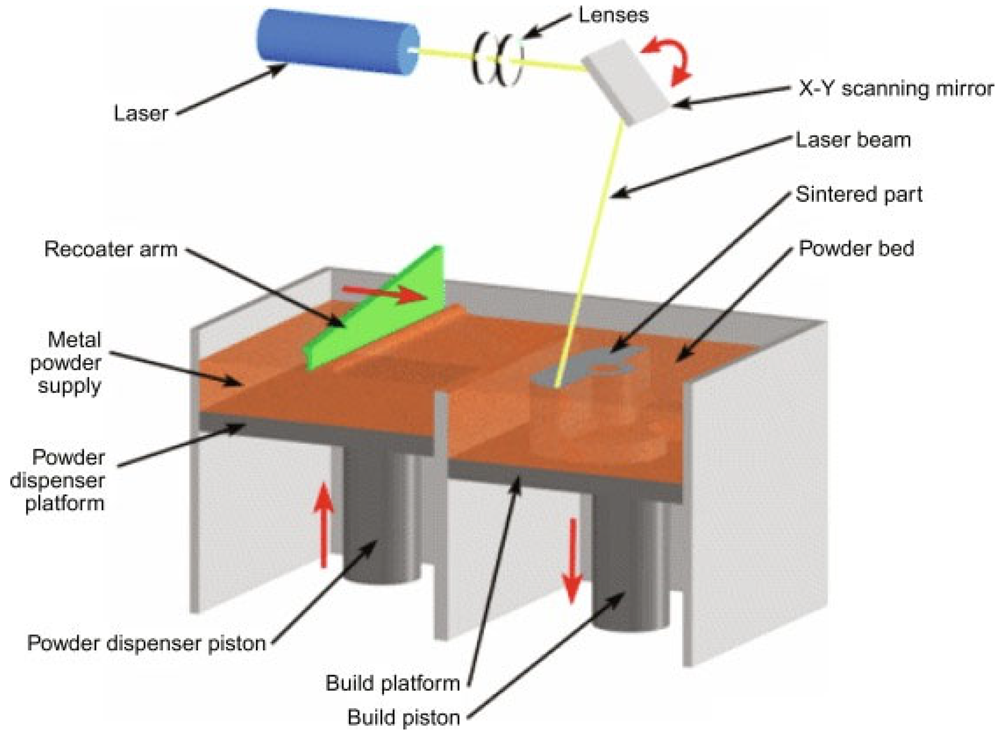
Laser powder bed fusion dominates metal additive manufacturing titanium and accounts for over 52% of global AM revenue. The process melts metal powder using high-energy laser radiation. Energy density is calculated as EV=PL/(hS·lZ·vS), where PL represents laser power, hs denotes hatch distance, lz signifies layer thickness, and vs represents scanning speed. Ti-5553 samples have been produced using layer thickness of 90 µm with gaussian laser beam profiles approximately 80 µm in diameter. Manufacturing occurs under atmospheric control. Oxygen content stays below 0.05% and build plate temperatures reach 80°C. Volumetric energy densities ranging from 21.8 to 65.4 J·mm⁻³ produce varying microstructures and mechanical properties in 3d printed titanium parts.
Quality Control in 3D Printed Titanium Parts Production
Quality control accounts for up to 70% of 3d printed titanium cost in production. Industrial X-ray computed tomography serves as the primary inspection method. Scan times range from tens of seconds to an hour, depending on part complexity. CT technology generates 3D density maps that reveal voids, porosity, and inclusions inside additively manufactured structures.
JHMIM Titanium’s Multi-Technology Production Approach
JHMIM Titanium stands as the only company in China housing three distinct production technologies under one roof. The company provides powder metallurgy, die casting, CNC machining and 3D printing capabilities. This integrated approach makes optimal process selection possible for each custom part specification.
Comparing Legacy vs. Next-Generation Alloy Processing
Powder bed fusion saves up to 90% of raw materials compared to traditional subtractive manufacturing methods.
Industry Applications and Commercial Impact
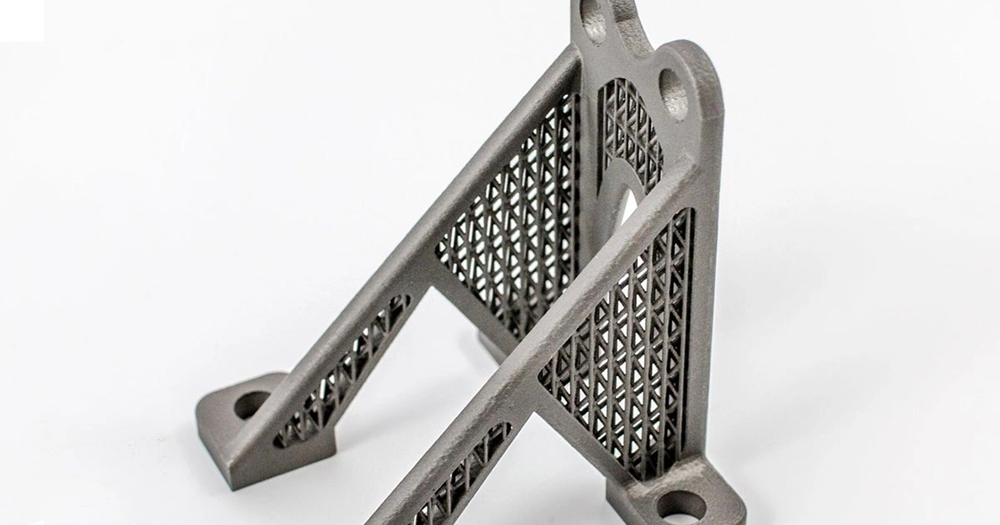
Aerospace Sector: Lightweight Components at Reduced 3D Printed Titanium Cost
Aerospace applications dominate titanium consumption and account for 37-45% of market share. Weight reduction drives adoption. One aerospace bracket achieved 63% material reduction while maintaining structural integrity. Boeing currently operates approximately 50,000 3d printed titanium parts across commercial, space, and defense programs. GE Aviation’s fuel nozzle demonstrates the technology’s maturity as a single 3D printed component. The company formed a five-year collaboration with Oerlikon to standardize powder bed titanium additive manufacturing for structural aerospace components.
Medical Device Manufacturing with Improved Biocompatibility
Titanium grades 2 and Ti-6Al-4V grade 5 comprise over 95% of biomedical titanium devices. Dental implants show 97% success rates at 10 years and 75% at 20 years. Hip and knee replacement volumes in the United States are forecasted to increase 176% and 139% respectively by 2040. Specialized alloys reach an elastic modulus of 38 GPa and match human bone’s 5-30 GPa range.
Automotive Industry Integration Potential
Automotive titanium demand will reach 103 metric tons annually by 2024, with market value approaching $48 million. Motorsports represents the main adoption segment. Monash Motorsport produces hubs and uprights through titanium 6Al-4V.
Path to Market: Commercial Partnerships and Scaling Challenges
IperionX partnered with SLM Solutions to supply 25 tons of recycled titanium powder annually. RMIT seeks supply chain partners to commercialize its cost-reduced alloy.
Conclusion
RMIT’s breakthrough titanium alloy represents a major advancement in additive manufacturing. The 29% cost reduction combines with superior mechanical properties and uniform microstructures. This addresses critical economic barriers that limited adoption before. Researchers replaced expensive vanadium with available alternatives and developed predictive frameworks for grain structure control. They have altered the economics of 3d printed titanium parts in a fundamental way. These innovations position titanium additive manufacturing for expanded use in aerospace and medical sectors, with automotive applications following.
FAQs
Q1. Can I use 3D printed titanium to make custom parts for restoring old cars? While the technology exists, it’s not yet affordable for individual hobbyists. Currently, it’s more cost-effective to use 3D printing services that specialize in metal printing rather than purchasing your own equipment. For occasional parts like suspension components or frame rails, sending your designs to professional printing services is the practical approach. Alternatively, learning welding and modifying existing parts remains a more economical solution for most restoration projects.
Q2. What makes this new titanium alloy cheaper than traditional Ti-6Al-4V? The breakthrough alloy achieves a 29% cost reduction by replacing vanadium with more accessible alternative elements. Vanadium, despite comprising only 4% of Ti-6Al-4V’s composition, accounts for 12-14% of the total material cost. By substituting it with cheaper elements while maintaining performance characteristics, researchers significantly reduced production expenses without compromising strength or quality.
Q3. How much does titanium powder for 3D printing typically cost? Titanium powder for additive manufacturing ranges from $300 to $363 per kilogram for standard grades, with specialty titanium alloys exceeding €1,150 per kilogram. This makes titanium one of the most expensive materials for metal 3D printing. However, the new alloy composition offers substantial cost savings compared to these traditional options.
Q4. What are the main cost drivers in 3D printed titanium production? Machine costs account for approximately 73% of total part expenses, with equipment ranging from $115,000 to $1.90 million. Post-processing represents another 27% of costs, including operations like stress relief, wire EDM removal, heat treatment, and CNC machining. Material costs, surprisingly, represent only about 8% of the total production expense.
Q5. Which industries benefit most from 3D printed titanium parts? The aerospace sector leads titanium consumption at 37-45% of market share, with companies like Boeing operating approximately 50,000 3D printed titanium parts. Medical device manufacturing is another major application, with titanium dental implants showing 97% success rates at 10 years. The automotive industry, particularly motorsports, is also increasingly adopting titanium 3D printing for lightweight performance components.