

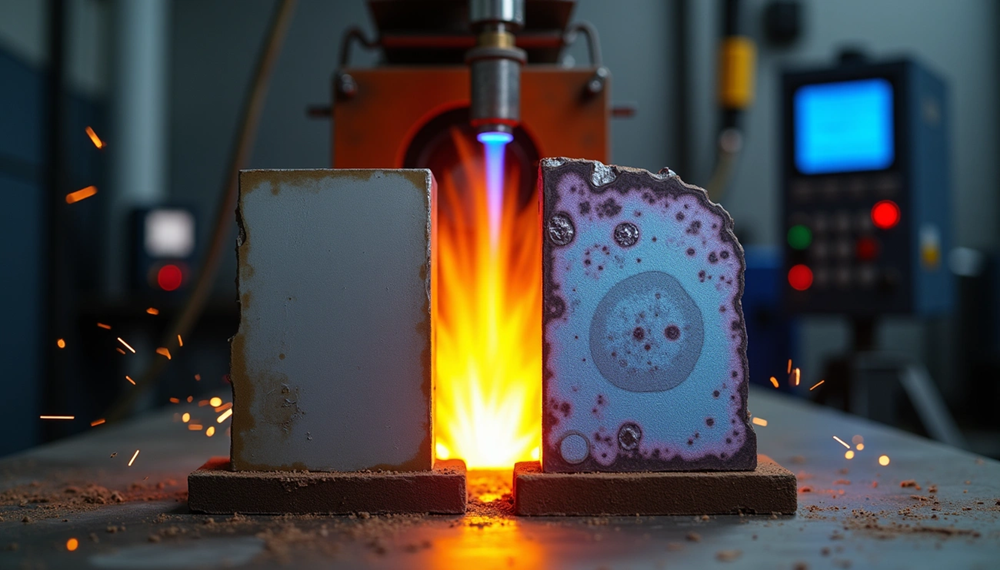
The comparison between inconel and titanium for extreme conditions reveals a striking number: 2000°F (1093°C). This is the temperature that Inconel can handle without losing its strength. Its remarkable heat resistance makes it a standout choice for the most demanding industrial applications, and it substantially outperforms many other metals.
These materials have exceptional properties but perform quite differently. Inconel, a nickel-chromium superalloy, delivers extraordinary corrosion resistance, especially when you have high temperatures. Inconel 625’s tensile strength reaches up to 180 ksi—this is a big deal as it means that it’s twice as strong as structural steel. The inconel melting point beats titanium’s heat resistance thresholds, so it keeps its structural integrity in environments where titanium would start to deform. The comparison between titanium and inconel isn’t straightforward since titanium has its own unique benefits.
Engineers and manufacturers working in extreme environments just need to understand these metals’ distinct characteristics to make the right choice. Inconel proves denser and more reliable than titanium, so it resists warping better after extreme heating and cooling cycles. Titanium brings its own set of advantages to the table. This piece gets into the key differences between these high-performance metals to help you pick the right material for your specific needs.
Material Composition and Physical Properties
Inconel and titanium stand at the peak of metallurgical achievements. These materials have unique compositions and physical properties that make them perfect for specialized uses.
What is Inconel: Nickel-Chromium Superalloy Overview
Special Metals Corporation makes Inconel, which belongs to a family of austenitic nickel-chromium-based superalloys. This amazing material contains 50-70% nickel, 14-23% chromium, along with varying amounts of iron, molybdenum, and niobium. Nickel keeps the structure stable at high temperatures, while chromium creates a protective oxide layer that boosts resistance to oxidation. The unique makeup of Inconel helps it stay strong at temperatures that are a big deal, as it means that they go beyond 2,000°F (1,093°C).
What is Titanium: Lightweight Elemental Metal
Titanium is a transition metal with atomic number 22. Unlike Inconel, it’s a pure elemental metal with a silver color and low density. Pure titanium (99.2%) has ultimate tensile strength around 434 MPa, matching common low-grade steel alloys. A passive oxidation layer forms on the metal’s surface and protects it from corrosion in seawater, aqua regia, and chlorine. People can buy pure titanium and alloys like Ti-6Al-4V (Grade 5), which has 6% aluminum and 4% vanadium.
Inconel vs Titanium Strength: Tensile and Yield Strength Comparison
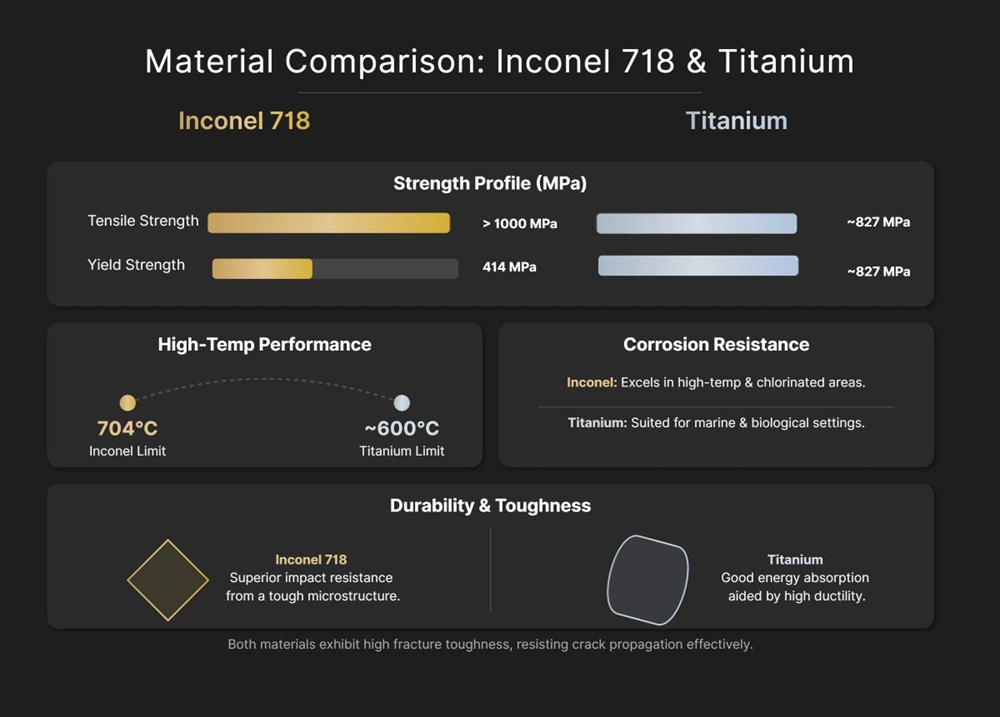
Looking at strength, Inconel 718 shows tensile strength of about 1,375 MPa and yield strength of 1,100 MPa after precipitation hardening. Ti-6Al-4V titanium alloy reaches tensile strength around 900-950 MPa and yield strength of 850-900 MPa. This means Inconel 718’s precipitation hardening makes it 55% stronger than Grade 5 titanium.
Inconel Melting Point vs Titanium: 1350°C+ vs 1660°C
Titanium has a higher melting point at 1668°C (3034°F). Inconel alloys typically melt between 1350°C and 1400°C. All the same, Inconel keeps its strength at higher operating temperatures.
Density and Weight: 8.4 g/cm³ vs 4.5 g/cm³
Titanium weighs much less with a density of 4.5 g/cm³, making it nowhere near as heavy as Inconel at 8.4 g/cm³. This huge weight difference lets titanium cut weight by 45% in aerospace parts.
High-Heat Performance and Corrosion Resistance
These two exceptional metals show their true differences at the time they face extreme thermal and chemical conditions.
Temperature Resistance: 2000°F vs 1100°F Thresholds
Inconel’s heat tolerance is extraordinary. It keeps its mechanical integrity at temperatures up to 2,000°F (1,093°C). Titanium starts to lose its strength at around 1,100°F (593°C). This difference becomes clear with Inconel 718, which stays structurally strong at 700°C (1,300°F). Ti-6Al-4V loses its mechanical properties beyond 350-400°C. This 900°F performance gap makes a decisive difference for high-temperature operations.
Oxidation and Chemical Resistance in Extreme Environments
These metals create protective oxide layers through different processes. Inconel’s nickel-chromium makeup builds a stable oxide scale that fights degradation even during long heat exposure. Titanium creates a tough oxide film that gives it excellent resistance to seawater and many acids.
Inconel performs well in oxidizing, reducing, and chloride environments. Titanium shines in marine applications but struggles with hot chlorine exposure. Both metals resist corrosion well, but their effectiveness changes based on the environmental chemistry.
Thermal Expansion and Stability Under Heat Cycling
Inconel beats titanium in creep resistance – the slow deformation that happens under sustained load and heat. On top of that, both materials expand similarly with heat, which reduces stress during temperature changes. Titanium keeps good fatigue properties for designs where weight matters, but Inconel handles creep better at high temperatures.
The temperature needs ended up driving material choice: Inconel works best for extreme heat (>650°C) applications, while titanium fits moderate temperatures where lightweight construction matters.
Manufacturing and Machining Challenges
Manufacturing excellence with high-performance metals comes at a price. These materials’ exceptional properties create unique processing challenges.
Machinability: Work Hardening in Inconel vs Galling in Titanium
Inconel’s remarkable strength creates tough machining obstacles. The material hardens faster during cutting and can damage tools and deform workpieces. Operators must stress-relieve Inconel through solutionizing before machining to reduce surface hardness. Ceramic tooling works best and enables quick, continuous cuts that minimize work hardening.
Titanium brings its own set of challenges. While it’s easier to machine than Inconel, titanium gets “gummy” during processing and forms long chips that interfere with cutting tools. This characteristic makes titanium prone to galling—metal sticks to cutting tools and creates torn surfaces. High-pressure coolant helps alleviate these problems by clearing chips quickly.
Welding Considerations: Shielding Gas and Heat Control
These metals just need specialized welding techniques. Inconel welds crack easily, so they require TIG welding with Inconel 625 as filler metal. Heat control plays a crucial role since warping and cracking happen readily during Inconel welding.
Titanium’s biggest problem lies in air contamination. It reacts strongly with oxygen, nitrogen, and hydrogen during welding and becomes brittle. Proper shielding with argon gas becomes vital, along with careful cleanliness.
Formability and Fabrication Differences
Each metal’s physical traits shape its fabrication approach. Inconel shows hardness and rigidity while titanium offers more flexibility. Titanium’s elasticity leads to springback and chatter during machining and can result in poor surface finishes. Titanium workpieces need secure gripping and the most rigid machine setups possible.
Application Suitability Across Industries
Inconel and titanium’s distinctive properties create specialized roles in industries of all types. Each metal finds its optimal niche based on operating conditions.
Aerospace: Jet Engines vs Airframes
Inconel dominates aerospace components exposed to extreme temperatures, particularly jet engine exhausts, turbine blades, and afterburner parts. The metal maintains its structural integrity at 2000°F (1093°C), making it irreplaceable for engine components. Titanium shines in airframe structures, landing gear, and engine frames because its weight is half that of steel, which improves fuel efficiency. Ti-6Al-4V makes up almost half of all alloys used in aerospace applications.
Medical: Implants and Surgical Tools
Titanium’s biocompatibility makes it the top choice for artificial joints, bone hardware, and implanted medical devices. Inconel serves well in surgical instruments that need extreme sterilization temperatures. Medical professionals value titanium’s strength without bulk—weighing half as much as traditional implant materials.
Marine and Offshore: Saltwater Resistance
Both metals excel in marine environments for different reasons. Titanium shows “virtually immune” corrosion resistance to even stagnant saltwater. Inconel proves valuable in marine propeller blades, fasteners, and components that face high-temperature seawater exposure. Titanium’s corrosion resistance lasts only up to about 500°F, while Inconel maintains this quality at higher temperatures.
Automotive and Racing: Exhausts vs Chassis
Performance vehicles use Inconel in exhaust systems that must withstand extreme heat cycling. Formula 1 racing teams select Inconel for parts under extreme stress and temperatures. Titanium’s strength-to-weight ratio makes it perfect for chassis, suspension components, and body panels where lighter weight directly improves performance.
Suppressors and Firearms: Signature Reduction and Durability
Inconel suppressors excel in rapid-fire use because their thermal stability prevents warping. The material handles sustained heat better, making it ideal for high-volume shooting scenarios. Titanium suppressors offer a critical advantage for hunters covering long distances by weighing 40% less. This weight difference matters significantly: titanium suppressors typically weigh 3-4 ounces compared to Inconel’s 10+ ounces.
Comparison Table
| Characteristic | Inconel | Titanium |
|---|---|---|
| Physical Properties | ||
| Density | 8.4 g/cm³ | 4.5 g/cm³ |
| Tensile Strength | 1,375 MPa (Inconel 718) | 900-950 MPa (Ti-6Al-4V) |
| Yield Strength | 1,100 MPa | 850-900 MPa |
| Melting Point | 1350-1400°C | 1668°C |
| Temperature Performance | ||
| Maximum Operating Temperature | 2000°F (1093°C) | 1100°F (593°C) |
| Temperature Strength Retention | Stays strong up to 700°C | Loses strength above 350-400°C |
| Material Composition | ||
| Main Components | 50-70% nickel, 14-23% chromium | Pure titanium or alloys (e.g., Ti-6Al-4V: 6% aluminum, 4% vanadium) |
| Manufacturing Characteristics | ||
| Machining Challenges | Hardens quickly during work | Shows galling issues, behaves “gummy” |
| Welding Considerations | Cracks easily, needs TIG welding | Needs argon shielding, sensitive to contamination |
| Corrosion Resistance | ||
| Environmental Performance | Excellent in oxidizing, reducing, and chloride environments | Performs well in marine environments, weak against hot chlorine |
| Primary Applications | ||
| Aerospace | Jet engine exhausts, turbine blades | Airframes, landing gear |
| Medical | Surgical instruments | Implants, bone hardware |
| Automotive | Exhaust systems, high-temp components | Chassis, suspension components |
| Firearms | Heavy-duty suppressors (10+ oz) | Lightweight suppressors (3-4 oz) |
Conclusion
A close look at Inconel and titanium reveals their unique advantages in high-temperature applications. The best choice between these metals ends up depending on specific operating conditions rather than one being better overall.
Inconel shines with its ability to keep structural integrity at temperatures up to 2000°F (1093°C) – about 900°F higher than titanium can handle. This impressive heat resistance makes Inconel the go-to choice for extreme temperature environments like jet engine parts and exhaust systems. On top of that, its high tensile strength and resistance to thermal cycling give it an edge in applications that need constant heat exposure.
Titanium proves its worth when weight becomes crucial. With almost half the density of Inconel, titanium delivers substantial weight savings essential for aerospace airframes, medical implants, and racing parts. While it might not handle heat as well, titanium really stands out in corrosive environments. This is especially true in marine applications where its natural oxide layer acts as excellent protection.
Manufacturing methods help distinguish these metals clearly. Inconel can be tricky to work with due to work hardening during machining. Titanium tends to gall and needs special care when welding because it reacts with atmospheric gasses. These processing requirements affect production costs and feasibility substantially.
These differences show up in many industries. Aerospace engineers pick Inconel for hot sections of engines but lean toward titanium for structural components. Medical professionals value titanium’s biocompatibility, while firearms manufacturers choose based on whether they need durability or lighter weight more.
Engineers need to weigh temperature requirements, weight limits, corrosion risks, and manufacturing capabilities carefully when choosing between these exceptional metals. Both Inconel and titanium stand as impressive achievements in metallurgy. Each metal excels within its sweet spot and continues to drive innovation in high-performance applications.
Key Takeaways
When choosing between Inconel and titanium for high-heat applications, understanding their distinct performance characteristics is crucial for optimal material selection.
• Inconel dominates extreme heat applications – maintains structural integrity at 2000°F (1093°C), nearly 900°F higher than titanium’s 1100°F threshold
• Titanium offers superior weight savings – at 4.5 g/cm³ density versus Inconel’s 8.4 g/cm³, titanium provides 45% weight reduction for aerospace and racing applications
• Temperature requirements drive material selection – choose Inconel for sustained high-temperature operation above 650°C, titanium for moderate temperatures requiring lightweight construction
• Manufacturing challenges differ significantly – Inconel work-hardens rapidly during machining while titanium becomes “gummy” and requires specialized welding with argon shielding
• Industry applications are highly specialized – Inconel excels in jet engines and exhaust systems, while titanium dominates airframes, medical implants, and lightweight suppressors
The decision ultimately depends on whether your application prioritizes extreme heat resistance (Inconel) or weight reduction with moderate temperature performance (titanium). Both metals represent pinnacle achievements in metallurgy, each serving irreplaceable roles in their optimal operating environments.
FAQs
Q1. What are the main differences between Inconel and titanium in terms of heat resistance? Inconel maintains structural integrity at temperatures up to 2000°F (1093°C), while titanium begins to lose strength at around 1100°F (593°C). This makes Inconel superior for extreme high-temperature applications.
Q2. How do Inconel and titanium compare in terms of weight? Titanium is significantly lighter than Inconel. With a density of 4.5 g/cm³ compared to Inconel’s 8.4 g/cm³, titanium offers about a 45% weight reduction, making it preferable for applications where weight savings are crucial.
Q3. Which material is better for aerospace applications? Both materials have their place in aerospace. Inconel is preferred for jet engine components and exhaust systems due to its extreme heat resistance. Titanium is widely used in airframes and structural components where its lightweight properties contribute to fuel efficiency.
Q4. How do Inconel and titanium differ in corrosion resistance? Both metals offer excellent corrosion resistance, but in different environments. Inconel excels in oxidizing, reducing, and chloride environments, even at high temperatures. Titanium performs exceptionally well in marine environments but can be vulnerable to hot chlorine exposure.
Q5. What are the main manufacturing challenges for Inconel and titanium? Inconel is challenging to machine due to rapid work hardening, often requiring specialized tooling and techniques. Titanium, while generally easier to machine, can be “gummy” during processing and is prone to galling. Both metals require careful attention during welding, with titanium being particularly sensitive to contamination.