

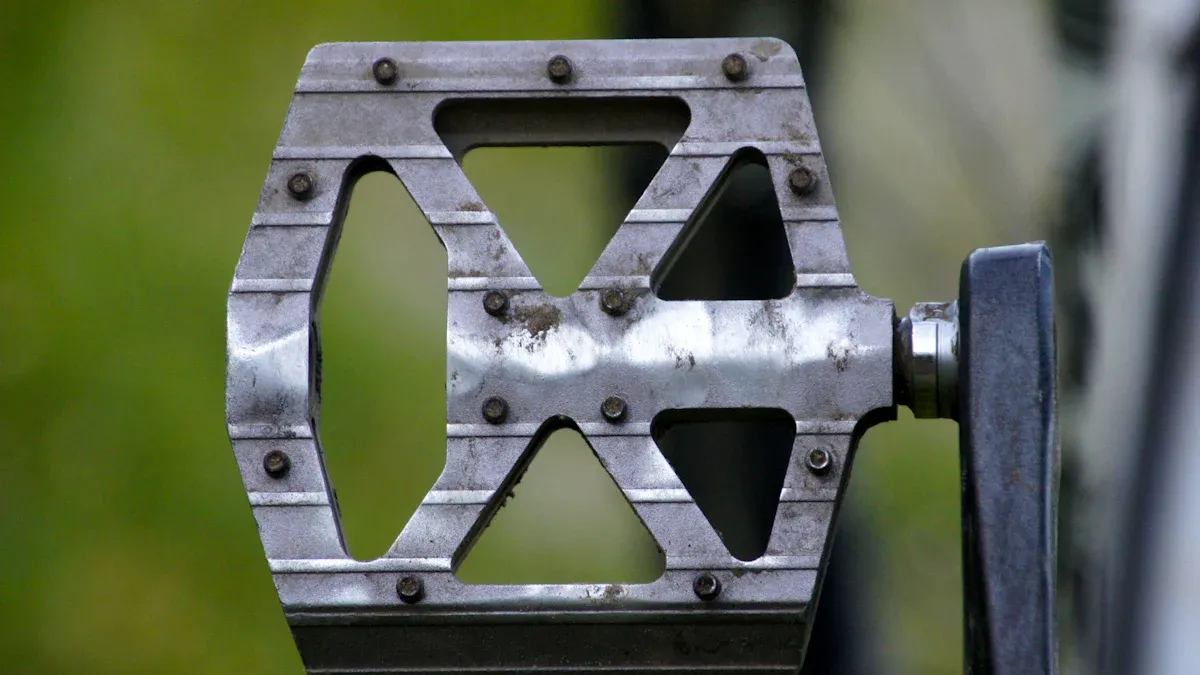
3D Printing fundamentally transforms titanium bicycle manufacturing. This innovative technology redefines how manufacturers approach production. It is a game-changer for titanium bicycle design, allowing for unprecedented complexity and precision. The immediate impact of 3D Printing on titanium bicycle performance is significant; it enables lighter, stronger, and more aerodynamic frames. This revolutionizes the cycling experience for riders.
Key Takeaways
- 3D printing changes how titanium bicycles are made. It allows for new designs and better performance.
- Traditional methods for making titanium bikes have many limits. These include design problems and high waste.
- 3D printing gives designers much freedom. They can create complex shapes and lighter parts.
- Bikes made with 3D printing fit riders perfectly. This makes them more comfortable and perform better.
- 3D printing helps make bike parts lighter and stronger. This is due to new design methods.
- Manufacturers save money and time with 3D printing. They can also create new designs faster.
- 3D printing helps the environment. It uses less material and allows local production.
- High costs and slow production are current problems for 3D printing. New technology will fix these issues.
Limitations of Traditional Titanium Bicycle Manufacturing
Traditional manufacturing methods for titanium bicycles present significant hurdles. These limitations impact design flexibility, production efficiency, and the ability to offer personalized products.
Constraints in Design and Geometry
Traditional processes impose strict limits on frame design. Manufacturers face challenges in creating intricate shapes and ensuring robust connections.
Complex Shape Restrictions
Creating complex shapes with traditional methods proves difficult. Machining struggles with intricate features and large dimensions. Maintaining the strength of thin walls during machining is also challenging. Furthermore, creating internal channels, especially deep or winding ones, becomes problematic. This often requires splitting parts or complex multi-axis setups. Early titanium frames also suffered from limited tubing variety. This constraint, combined with an initial tendency to adhere to traditional frame design parameters, often resulted in excessive flexibility. Titanium’s low modulus of elasticity (MOE) means it is less stiff compared to steel. This inherent characteristic required engineering solutions like increasing the tube diameter to achieve sufficient rigidity.
Joint and Weld Line Challenges
Traditional methods often require assembling multiple parts through welding, bolting, or bonding. Each connection point represents a potential failure point and adds weight or complexity. Welding titanium demands an oxygen-purged environment. This prevents the formation of oxides with oxygen, nitrogen, hydrogen, carbon, and other impurities. These oxides can compromise the structural integrity of the welds. This necessity means welding must occur in extremely clean, air-purged conditions, such as vacuum chambers or argon-gas shielding. This makes titanium construction the domain of well-resourced and highly-skilled manufacturers. Poor joint design can lead to stress concentrations and failure. This requires careful consideration of geometry and loading conditions.
Manufacturing Process Inefficiencies
Traditional titanium bicycle manufacturing also suffers from notable inefficiencies. These include high costs and significant material waste.
High Tooling Costs
Traditional manufacturing often necessitates specialized tooling for each unique frame design or component. This involves substantial upfront investment. These high tooling costs make small production runs or rapid design changes economically unfeasible. Manufacturers must amortize these costs over large volumes.
Material Waste
Machining titanium from solid billets generates considerable material waste. Much of the expensive raw material ends up as chips or scrap. This process is inherently inefficient. It contributes to higher production costs and environmental impact.
Customization Difficulties
Traditional manufacturing struggles with personalization. It offers limited options and extended lead times for bespoke frames.
Limited Personalization Options
Achieving true customization is difficult with traditional methods. The fixed nature of tooling and processes restricts variations in frame geometry or component integration. This limits the ability to tailor bicycles precisely to individual rider needs.
Extended Lead Times for Bespoke Frames
Producing a bespoke titanium frame traditionally involves a lengthy process. This includes design, tooling, and fabrication. These extended lead times can deter customers seeking personalized solutions. They also hinder manufacturers’ ability to respond quickly to market demands.
Unprecedented Design Freedom with 3D Printing Technology
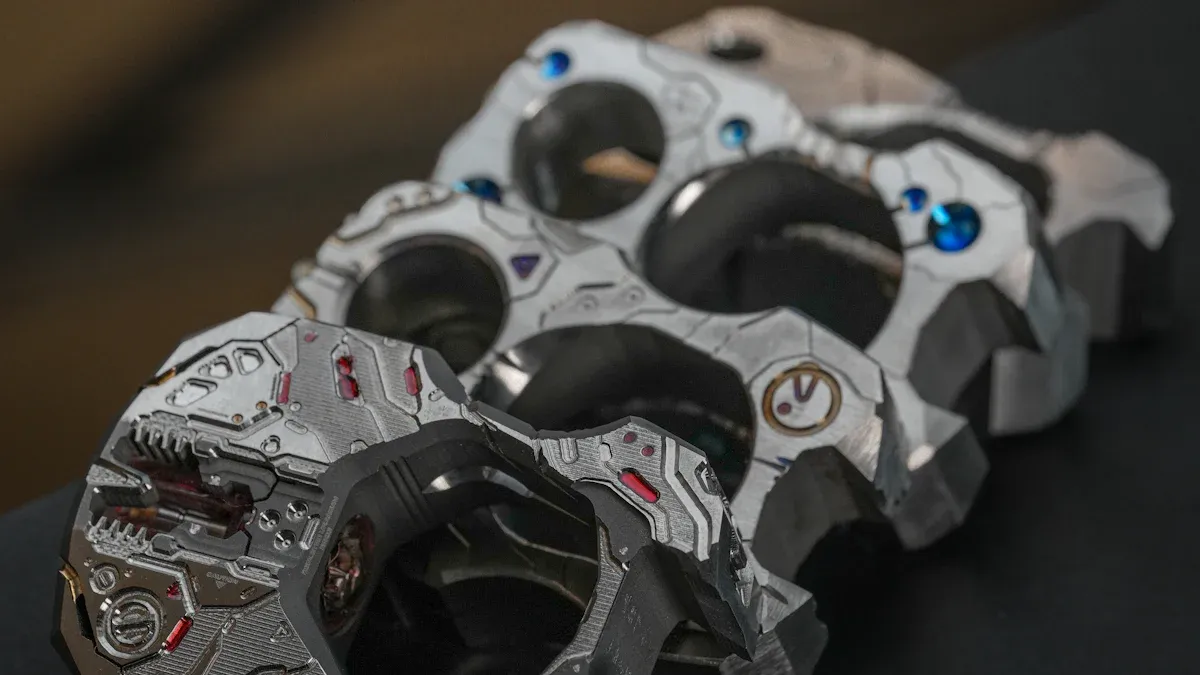
3D Printing fundamentally transforms the design landscape for titanium bicycles. This technology liberates designers from the constraints of traditional manufacturing. It opens new possibilities for creating complex, optimized, and highly integrated components.
Complex Geometries and Organic Structures
3D printing allows designers to explore complex geometries and organic shapes. These designs are impossible to achieve with traditional manufacturing methods. Molten metal, such as titanium, is meticulously deposited layer by layer to build the frame. This process results in seamless, organic forms. Integrating topology optimization and simulation analysis provides designers with unprecedented freedom. They can create and refine frame designs with extreme precision. Additive manufacturing produces structural parts with organic structural shapes.
Lattice Structures for Weight Reduction
Designers utilize lattice structures to reduce weight significantly. These intricate internal patterns remove unnecessary material while maintaining structural integrity. SRAM Prototype Cranks, developed with Autodesk, exemplify this approach. These titanium cranks feature an AI-optimized organic lattice structure. This design removes material while maintaining critical load-bearing pathways. Manufacturers produce the titanium versions using selective laser sintering technology. This process compacts the titanium powder layer by layer. The Mythos Elix Stem also uses a lattice design. It employs Scalmalloy and Selective Laser Melting.
| Product Name | Material Used | Key Features/Technology |
|---|---|---|
| SRAM Prototype Cranks | Titanium/Aluminum | AI-optimized design, selective laser sintering, lattice structure |
| Mythos Elix Stem | Scalmalloy | Selective Laser Melting, lattice design |
Integrated Internal Routing
3D printing enables the integration of complex internal routing for cables and hoses. Designers can embed these channels directly within the frame structure. This eliminates external cable guides. It results in a cleaner aesthetic and improved aerodynamics. This integration also protects cables from damage and dirt.
Optimized Component Integration through 3D Printing
3D printing allows for superior component integration. It creates parts that seamlessly connect and perform multiple functions.
Seamless Frame Junctions
3D printing facilitates optimized component integration and seamless frame junctions. It enables the use of titanium lugs in conjunction with carbon tubes. This approach leverages the inherent strengths of both materials. Titanium lugs provide robust and customizable connection points. Carbon tubes contribute lightweight stiffness to the main frame sections. This synergistic combination results in bicycle frames that are both strong and light. It effectively integrates different materials for enhanced performance and seamless connections.
Multi-functional Parts
Designers can consolidate multiple components into a single, multi-functional part. For example, a dropout can integrate the derailleur hanger, disc brake mount, and axle interface. This reduces part count, simplifies assembly, and often improves overall strength.
Rapid Prototyping and Iteration with 3D Printing
3D printing significantly accelerates the design and development process. It allows for quick testing and refinement of new ideas.
Accelerated Design Cycles
Rapid prototyping with 3D printing fast-tracks the design cycle. It allows transition from a CAD file to a physical part in days. This shortens feedback loops. It enables testing, tweaking, and refining before committing to production. This process also reduces costly redesigns. It identifies and addresses problems early in the development process. GT, a high-end bicycle manufacturer, significantly reduced their prototype delivery cycle by 50%. They also cut labor hours by 100% by integrating 3D printing into their design process. This allowed them to move from a multi-week prototype production time to just a few days. It enabled rapid design optimization and efficient remaking of components.
On-demand Part Production
Manufacturers can produce parts on demand. This eliminates the need for large inventories. It reduces storage costs and minimizes waste. This flexibility is particularly beneficial for custom or low-volume components.
Enhanced Customization and Performance via 3D Printing
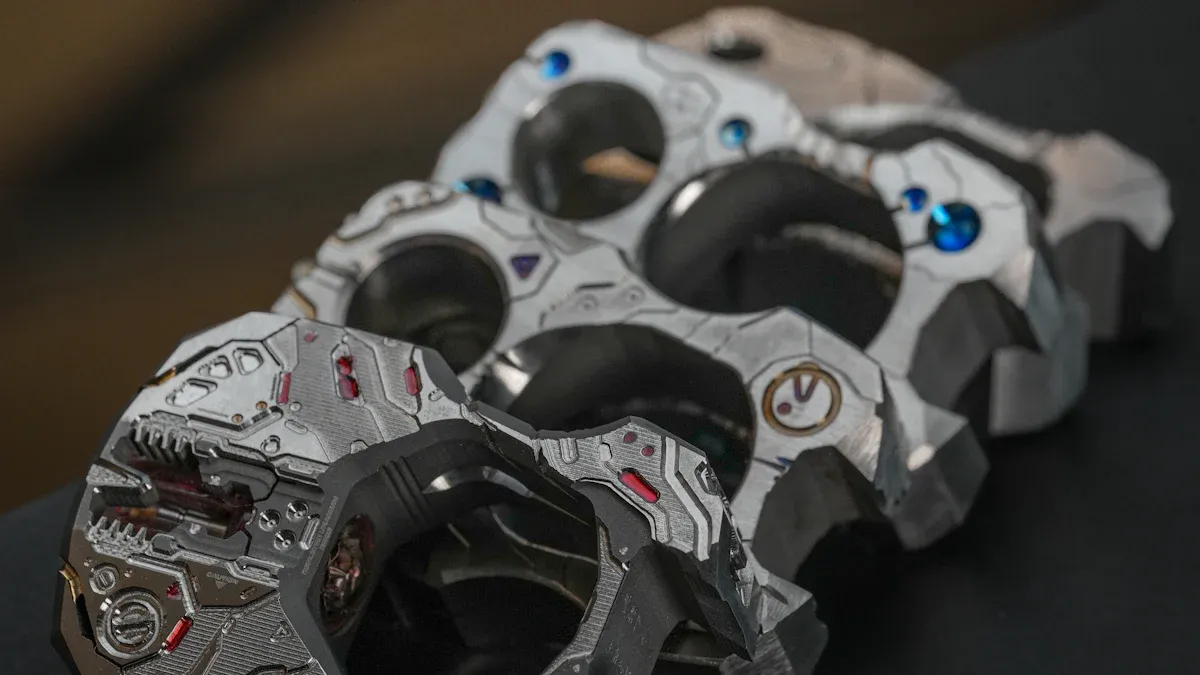
3D printing revolutionizes titanium bicycle manufacturing. It offers unparalleled customization and significantly boosts performance. This technology allows manufacturers to create bikes perfectly tailored to individual riders and optimized for peak athletic output.
Tailored Rider Fit and Ergonomics
3D printing excels at producing highly customized products with precision. This capability is especially valuable in the cycling industry. Ergonomic and anatomical considerations are crucial for rider comfort and efficiency.
Bespoke Frame Geometries
Manufacturers can design 3D-printed bicycle parts to fit individual riders perfectly. This enhances both comfort and performance. Traditional manufacturing methods cannot match this level of customization. For example, 3D scanning a rider’s body allows for the creation of a bicycle shape. This shape precisely balances the athlete’s strength, air penetration coefficient, and rider comfort. Each X23 Swanigami bicycle is specifically 3D-printed for the rider. This ensures optimal performance.
One of the standout features of 3D printing is its ability to produce highly customized products with precision. This is particularly beneficial in the cycling industry, where ergonomic and anatomical considerations are paramount. 3D-printed bicycle parts can be designed to fit individual riders perfectly, enhancing comfort and performance. This level of customization is unmatched by traditional manufacturing methods.
- 3D scanning of the rider’s body allows for the creation of a bicycle shape that balances the athlete’s strength, air penetration coefficient, and rider comfort.
- Each X23 Swanigami bicycle is specifically 3D-printed for the rider to achieve optimal performance.
- 3D printing enables precise control over the final geometry and material properties of the bicycle, which is crucial for ergonomic design.
- Romolo Stanco, co-founder of T°Red Bikes, emphasizes that they ‘designed the cyclist’ rather than just a new bike. This highlights the deep integration of rider data into the design.
Personalized Component Sizing
3D printing provides precise control over the final geometry and material properties of the bicycle. This is crucial for ergonomic design. This technology allows for personalized component sizing. Riders can receive handlebars, stems, and seatposts perfectly matched to their unique body dimensions and riding style. This level of personalization maximizes comfort and power transfer.
Performance Optimization through Topology
Topology optimization, combined with 3D printing, dramatically enhances bicycle performance. It creates parts that are both lighter and stronger.
Strength-to-Weight Ratio Improvements
Engineers achieve significant weight reduction in titanium bike components. They combine AI-powered generative design with advanced manufacturing techniques. This can result in a 40% weight reduction. Generative design, using AI tools like Fusion 360, creates thousands of design iterations. It strategically places material only where structurally necessary. This moves beyond traditional uniform material distribution. Additive manufacturing, specifically Laser Powder Bed Fusion (L-PBF) 3D printing, enables the creation of complex, intricate internal structures. Conventional manufacturing methods cannot produce these structures. This boosts productivity by 60%.
- Engineers achieved a 40% weight reduction in titanium bike components by combining AI-powered generative design with advanced manufacturing techniques.
- Generative design, using AI like Fusion 360, creates thousands of design iterations. It strategically places material only where structurally necessary. This moves beyond traditional uniform material distribution.
- Additive manufacturing, specifically Laser Powder Bed Fusion (L-PBF) 3D printing, enables the creation of complex, intricate internal structures. These are impossible with conventional manufacturing methods. This boosts productivity by 60%.
- Rigorous testing, including fatigue testing and stiffness-to-weight benchmarking, confirmed that these optimized parts maintain structural integrity despite significant mass reduction.
- Part consolidation, where multi-component assemblies integrate into single units, further simplifies assembly. It also improves reliability and reduces manufacturing costs.
Grade 5 titanium (Ti-6Al-4V) offers an exceptional strength-to-weight ratio. It has a density of 4.43g/cm³. This makes it 43% lighter than steel while maintaining a tensile strength exceeding 1000 MPa. This material choice allows for components that are structurally sound yet considerably lighter than those made from traditional materials. Grade 5 titanium provides an optimal balance between stiffness and weight reduction. It weighs approximately 4.51 g/cm³ (about 60% of steel’s weight) while retaining structural integrity. It performs well in extreme temperatures and resists degradation even after numerous stress cycles. This is crucial for bicycle components.
- By combining topology optimization with 3D printing, the weight of titanium bicycle frames can be reduced to 1.4kg. This is despite titanium alloy having a density of around 4.51g/cm³ (60% of steel’s density).
- These optimized parts successfully passed ISO4210-6 impact and fatigue testing. This ensures durability and contributes to increased speed and reduced physical exertion for cyclists.
- 3D printed titanium parts exhibit higher strength and elongation compared to ordinary forged parts made from the same titanium material.
- Performance tests on titanium bicycle parts printed with Farsoon FS350M-4 showed excellent mechanical properties. Tensile strength reached 1035MPa, yield strength 998MPa, and elongation at break 13.5%. This indicates a longer lifespan for the components.
Topology optimization is a mathematical approach. It uses the finite element method (FEM) to iteratively optimize material arrangement within a design space. It considers load cases and boundary conditions to achieve ideal performance. This process effectively determines where material is essential and where it can be omitted. This maximizes structural efficiency. Following topology optimization, shape optimization reduces local stress peaks in notch areas. This positively impacts the component’s service life. The final result of structural optimization integrates into a usable CAD model. Details are added to ensure practical applicability and manufacturability. This approach, combined with additive manufacturing’s design freedom, allows for the creation of efficient designs suitable for production. Florian Pfaff, CEO of struktur.form.design Engineering, highlights this benefit.
Aerodynamic Enhancements
3D printing technology enables the creation of complex, lightweight geometries. Traditional manufacturing methods cannot achieve these. This capability is crucial for designing aerodynamically optimized frames and components. 3D printed titanium bicycle frames, such as the Reactor Aero model, are projected to achieve a 30-40% reduction in drag. This is compared to traditionally manufactured frames like its predecessor, the Aurora model. This significant reduction in drag allows cyclists to maintain higher speeds with less effort.
| Design Strategy | Contribution to Aerodynamic Enhancement |
|---|---|
| Optimized Design | Enables complex geometries for maximum strength and stiffness, allowing for aerodynamically efficient shapes. |
| Weight Reduction | Produces lighter frames through complex internal structures without sacrificing strength, which can improve overall aerodynamic performance by reducing the energy required to move the bike. |
Material Efficiency and Sustainability in 3D Printing
3D printing offers significant advantages in material efficiency and sustainability. It drastically reduces waste and supports localized production.
Reduced Material Waste
3D printing can reduce the buy-to-fly ratio for titanium components from 25:1 (traditional methods) to as low as 3:1. Some projects demonstrated a reduction in material waste from 80% with traditional methods to less than 5% using 3D printing. For traditional methods of manufacturing titanium aircraft components, the average yield is 10%. This means 9 pounds of material are removed for every 10 pounds of incoming material. This indicates a 90% waste rate.
- 3D printing can reduce the buy-to-fly ratio for titanium components from 25:1 (traditional methods) to as low as 3:1.
- Some projects demonstrated a reduction in material waste from 80% with traditional methods to less than 5% using 3D printing.
Localized Production Benefits
3D printing facilitates localized production. Manufacturers can produce parts closer to the point of consumption. This reduces transportation costs and carbon emissions. It also allows for more agile supply chains and quicker responses to market demands. This localized approach supports a more sustainable and efficient manufacturing ecosystem.
Key Applications and Innovations in 3D Printing for Bicycles
3D Printing drives significant advancements in bicycle manufacturing. It enables the creation of components previously impossible to produce. This technology leads to lighter, stronger, and more integrated designs.
Lightweight Frame Components
3D printing allows manufacturers to produce exceptionally lightweight frame components. This process optimizes material use and structural integrity.
Hollow Structures and Internal Reinforcements
Designers now create hollow structures and internal reinforcements within titanium bicycle parts. Bastion’s titanium lugs, for example, are 96% air. This hollow design increases stiffness by 20-30% with only a 4% increase in mass compared to a solid hollow structure. Variable wall thickness further enhances these gains. This approach allows engineers to remove unnecessary material while maintaining structural integrity. The future holds the possibility of building even more intricate internal reinforcements within hollow sections of 3D printed metal parts.
Integrated Dropouts and Cable Guides
3D printing facilitates the integration of multiple functions into single components. Frame lugs and connectors can feature customized geometries and rider-specific dimensions. They also incorporate internal cable routing and lattice-like interiors for weight reduction. Dropouts, chainstays, and seat clamps provide exceptional durability and stiffness. Manufacturers can produce them as single units with built-in alignment. Flexible seat clamps can even include integrated tensioning systems.
Specialized Parts and Accessories
3D printing extends its capabilities beyond frame components to specialized parts and accessories. This allows for unprecedented customization and performance.
Custom Handlebars and Stems
Custom handlebars and stems benefit greatly from 3D printing. This technology enables mass reduction and ergonomic shaping. It also increases surface hardness. Designers can incorporate intricate lattice infills or hollow sections. This balances strength and weight for optimal rider comfort and control.
Unique Seatposts and Clamps
Unique seatposts and clamps are another area of innovation. Seat clamps provide exceptional durability and stiffness. They can include integrated tensioning systems. Angel Cycle Works’ ‘Heaven’ model features a 3D-printed titanium seatpost topper. This topper offers 5cm of adjustment and holds a 27.2mm carbon seatpost.
Pioneering Brands and Models Utilizing 3D Printing
Several pioneering brands actively embrace 3D printing technology. They push the boundaries of titanium bicycle design and performance.
Pioneering Design Innovations
Angel Cycle Works demonstrates pioneering design innovations with its ‘Heaven’ model. Its 3D-printed titanium seatpost topper showcases the potential for highly functional, integrated components. Faction Bike Studio, in collaboration with TRUMPF, uses 3D printing for critical rear derailleur components. They produce the parallelogram and cage from Ti64 Gd.23, a special titanium alloy. This enhances stability and design. Pinarello also incorporates 3D printing in their Bolide F HR 3D, utilizing both Scalmalloy and titanium components for specific parts.
Advanced Material Applications
These brands leverage advanced material applications through 3D printing. They use specialized titanium alloys like Ti64 Gd.23. This allows for precise material placement and complex geometries. The technology ensures optimal performance and durability in demanding cycling applications.
Advantages for Manufacturers and Consumers with 3D Printing
3D printing offers significant benefits for both manufacturers and consumers in the titanium bicycle industry. This technology streamlines production processes and enhances the final product for riders.
Manufacturer Benefits from 3D Printing
Manufacturers gain numerous advantages by adopting 3D printing in titanium bicycle production. This includes cost savings, faster production, and increased innovation.
Reduced Production Lead Times
3D printing significantly reduces production lead times for titanium bicycle frames. The HBD 400 3D printer, for example, cuts lead times by over 50% compared to traditional methods. Its multi-laser capability allows simultaneous manufacturing of different components within a single build. This transforms production from a sequential “order queue” to “parallel production.” This accelerates product innovation and market validation. Metal 3D printing simplifies the multi-step traditional manufacturing process for bicycle frames, which typically takes about 45 days. This simplification leads to a 40% reduction in processing steps and a 30% reduction in overall production cycles.
Lower Tooling and Inventory Costs
3D printing allows firms to reduce stock levels. It facilitates offering locally-made products, leading to faster market entry. These capabilities imply cost savings related to inventory management and potentially tooling due to more agile production methods. Manufacturers avoid the high upfront investment in specialized tooling required by traditional methods.
Accelerated Innovation Cycles
3D printing enables the creation of lighter, more complex, and highly customized bicycle parts. It provides greater flexibility and faster iteration. This helps cut down on costs and environmental impact for small-batch production. It speeds up delivery times and makes the overall process smoother and more efficient. This technology enables the production of higher-value products and positions companies at the forefront of innovation.
Consumer Advantages of 3D Printed Bicycles
Consumers experience a new level of personalization and performance with 3D printed titanium bicycles. These bikes offer superior characteristics and unique aesthetics.
Truly Bespoke Bicycles
Consumers receive truly bespoke bicycles. Manufacturers can tailor each frame and component precisely to the rider’s body measurements and riding style. This level of customization ensures optimal comfort, efficiency, and power transfer. Riders no longer need to compromise on fit.
Superior Performance Characteristics
3D printed titanium bicycles offer superior performance characteristics. They are lighter in weight than many counterparts, increasing ease-of-use and making them easy to carry. They offer the strength of aluminum and the lightness of carbon fiber. This delivers better sustainability. Manufacturers create lightweight, high-strength, and sustainable components. This technology also enables aerodynamically optimized designs, integration of parts, and improved ride quality.
Unique Aesthetic Appeal
3D printed bicycles often feature a unique aesthetic appeal. Their designs are very clean. One commuter noted, “From a design perspective this is a very well-designed bicycle. I have commuted to work by bicycle for years and I often think about what would be my ultimate commuter bike. I have to say they had nearly hit the bull’s-eye with this design. It contains the exact components I would use if I were to build a commuter bike. The frame design is very clean – for me less is more when it comes to bicycles.” This reflects the ability to create sleek, integrated designs.
Challenges and Future Outlook for 3D Printing in Bicycles
3D printing offers immense potential for the titanium bicycle industry. However, it faces several challenges before achieving widespread adoption. Future advancements promise to overcome these hurdles, paving the way for even greater innovation.
Current Hurdles to Widespread Adoption
The path to widespread 3D printing in bicycle manufacturing encounters significant obstacles. These include high costs, scalability issues, and material consistency concerns.
High Initial Equipment Costs
Businesses considering titanium 3D printing must prepare for a substantial initial investment. This includes the core printing machinery, essential ancillary equipment, and significant facility modifications. Industrial-grade Electron Beam Melting (EBM) machines also command high prices, often falling into a similar or even higher range than SLM systems. These machines are ideal for certain titanium alloys due to their use of an electron beam in a vacuum. The cost of these advanced printers presents a major barrier for many manufacturers.
| Machine Name | Technology | Price Range |
|---|---|---|
| Trumpf TruPrint 1000 | Selective Laser Melting (SLM) | >$170,000 – $300,000 |
| SLM 125 | Selective Laser Melting (SLM) | $400,000 – $500,000 |
| 3D Systems DMP Flex 350 | Direct Metal Printing (DMP) | >$575,000 |
Scalability for Mass Production
Current 3D printing technologies struggle with the demands of mass production. Several factors limit their scalability for titanium bicycle frames.
- Production Speed: 3D printing is significantly slower than traditional manufacturing methods like carbon fiber layup or aluminum welding. This hinders its suitability for mass production.
- Post-Processing: 3D printed titanium parts necessitate extensive post-processing steps. These include heat treatment and surface finishing, which increase both time and cost.
- Scalability: Current 3D printing technologies lack the scalability required for mass production. This restricts their application to high-end or custom bicycle frames.
The production time for a fully 3D printed titanium frame can take days. This contrasts sharply with the hours required for traditional welded frames. This makes it impractical for mass manufacturing where production speed is critical.
Material Property Consistency
Achieving consistent material properties across all 3D printed titanium parts remains a challenge. Variations in print parameters, powder quality, and post-processing can affect the final strength and durability of components. Manufacturers must implement rigorous quality control to ensure each part meets performance standards.
Technological Advancements and Trends in 3D Printing
The future of 3D printing in bicycles looks promising. Continuous innovation addresses current limitations and expands capabilities.
Improved Printer Speeds and Sizes
Technological advancements aim to boost printer speeds and sizes. This will make 3D printing more viable for larger-scale production.
- Continuous 3D Printing: This method eliminates layer-by-layer construction. It continuously extrudes materials without interruption, leading to unmatched speed and precision.
- Parallel 3D Printing: This technique involves using multiple print heads or beds simultaneously. It prints several objects at once, significantly reducing production time for batches of prototypes or custom parts.
- New Materials and Software Developments: Advancements in materials offer more rigid and resilient options. Software improvements optimize designs for additive manufacturing, reducing waste and increasing productivity.
New Titanium Alloy Developments
New titanium alloy developments are emerging. These innovations in material science, often driven by artificial intelligence, could impact 3D printing in the bicycle industry. AI explores new processing regions for titanium alloys. This allows for a balance of strength, flexibility, and efficiency. This approach significantly reduces the time needed to understand new material responses. It enables the rapid manufacturing of enhanced alloys with superior strength and elongation. For example, Farsoon 3D-printed titanium alloy components have demonstrated a tensile strength of 1035 MPa and an elongation at break of 13.5%. This surpasses the performance of conventionally forged parts.
Potential for Future Impact of 3D Printing
3D printing holds transformative potential for the bicycle industry. It promises mass customization and integrated smart features.
Mass Customization at Scale
Mass customization of additive titanium parts will be the next big step. 3D printing will grow in high-end markets within two to three years. Within a decade, additive manufacturing is expected to filter down to medium-range and everyday products. Metron Additive Engineering negotiates with bike manufacturers to provide 3D printed titanium parts at scale, defining this as ‘mass customization.’ The EBM process is efficient. It allows many components to be produced in one build, making products more price competitive. Metron aims to demonstrate the scalability of additive manufacturing by producing tens of thousands of bike parts annually. This proves its potential for mass customization.
Integrated Smart Features
Future 3D printed bicycles could integrate smart features directly into their frames. This includes sensors for performance monitoring, GPS tracking, and even self-adjusting components. 3D printing’s design freedom allows for embedding these electronics seamlessly. This creates a truly intelligent and personalized riding experience.
3D printing profoundly impacts titanium bicycle design and manufacturing. It enables unprecedented design freedom and efficiency. The future promises widespread adoption, with decreasing costs leading more brands to embrace this technology. Mass customization will become accessible, allowing consumers to obtain perfectly tailored bikes. Future designs will also integrate smart features directly into frames, enhancing the riding experience. Faster printers, new AI-driven alloys, and advanced post-processing techniques will streamline production. 3D printing is essential for the cycling industry’s evolution, driving innovation and personalized performance.
FAQ
What is 3D printing in the context of titanium bicycles?
3D printing builds titanium bicycle components layer by layer. It uses a digital design. This process allows for intricate shapes and precise structures. It transforms raw titanium powder into functional parts.
How does 3D printing enhance titanium bicycle design?
3D printing offers unprecedented design freedom. It enables complex geometries and lattice structures. This reduces weight and improves aerodynamics. Designers integrate internal routing seamlessly.
Can 3D printing create custom bicycles for individual riders?
Yes, 3D printing excels at customization. Manufacturers tailor frame geometries and component sizes. This ensures a perfect fit for each rider. It optimizes comfort and performance.
Are 3D-printed titanium parts stronger than traditionally manufactured ones?
3D printed titanium parts can exhibit superior strength. Topology optimization creates efficient structures. Rigorous testing confirms their durability. They often surpass conventionally forged parts in performance.
What benefits does 3D printing offer bicycle manufacturers?
Manufacturers gain several advantages. They experience reduced production lead times and lower tooling costs. 3D printing also accelerates innovation cycles. It supports efficient, on-demand production.
What challenges does 3D printing face in the bicycle industry?
High initial equipment costs present a hurdle. Scalability for mass production remains a challenge. Ensuring consistent material properties also requires careful control. These factors limit widespread adoption.
How does 3D printing contribute to sustainability in bicycle manufacturing?
3D printing significantly reduces material waste. It lowers the buy-to-fly ratio. Localized production also decreases transportation emissions. This supports a more environmentally friendly manufacturing process.