

Key Takeaways
Understanding why titanium dominates surgical applications reveals the sophisticated science behind modern medical implants and their remarkable success rates.
• Titanium’s spontaneous oxide layer formation creates exceptional biocompatibility, preventing protein denaturation and tissue rejection in surgical implants.
• Advanced surface treatments like plasma spray coating and hydroxyapatite enhance bone integration, achieving 95-98% implant success rates over 10+ years.
• Titanium’s strength-to-weight ratio and MRI compatibility make it ideal for load-bearing applications from joint replacements to cranial reconstruction.
• The material’s Young’s modulus closely matches bone properties, reducing stress shielding and preserving natural bone density better than steel alternatives.
• Specialized surface modifications enable antibacterial properties while promoting osseointegration, addressing dual challenges of infection prevention and bone healing.
Modern titanium implants represent a convergence of materials science and medical engineering, delivering solutions that integrate seamlessly with human biology while maintaining structural integrity for decades. No text was provided to humanize. Please provide content within the user_text tags so I can rewrite it according to the specified instructions.
Why titanium is the preferred metal for surgical implants
Surgeons select titanium for medical implants for its combination of mechanical, biological, and practical advantages that other metallic biomaterials cannot match. The material’s widespread adoption stems from specific measurable properties that address clinical requirements.
Biocompatible titanium and natural oxide layer formation
Titanium’s biocompatibility originates from its surface chemistry rather than the bulk metal itself. Titanium forms a protective titanium dioxide (TiO2) layer within about 1/100 of a second after oxygen exposure. This passive film measures only a few nanometers thick. It remains adhered, insoluble, and chemically impermeable.
The oxide layer consists of TiO2 with trace amounts of Ti2O3 and TiO, plus water and hydroxyl groups. This composition prevents unfavorable reactions between the metal and the surrounding biological environment. The surface forms hydroxyl groups that dissociate in body fluids, creating electric charges at specific pH levels. TiO2 has a relative permittivity of 82.1, comparable to water at 80.0. This minimizes electrostatic force on adsorbed proteins. So proteins maintain their natural conformation rather than denaturing upon contact with the implant surface.
Strength-to-weight ratio for load-bearing applications
Titanium delivers mechanical performance comparable to steel and weighs about half as much, with a density around 4.5 g/cm³. Ti-6Al-4V alloy provides tensile strength of about 900 MPa and outperforms stainless steel at roughly 600 MPa. This strength-to-weight ratio proves vital for load-bearing implants where reducing mass improves patient comfort without sacrificing structural integrity. Custom titanium parts ensure durability and precision with industry-leading strength-to-weight ratios for demanding surgical applications.
Corrosion resistance in body fluids
Titanium exhibits superior corrosion resistance compared to stainless steel, cobalt-chromium alloys, and nickel-titanium alloys in biological environments. The material demonstrates much lower passive currents and higher breakdown potentials without pitting both in vitro and in vivo. Type 316L stainless steel exhibits pitting corrosion due to anodic polarization in biological environments. Titanium maintains structural integrity thanks to its self-healing oxide layer that regenerates quickly even after mechanical disruption.
MRI compatibility and non-magnetic properties
Titanium functions as a paramagnetic material unaffected by MRI magnetic fields. Studies confirm that titanium implants induce less than 0.5°C of heating at 3 Tesla MRI strength, compared to 2-4°C for stainless steel counterparts. This non-ferromagnetic nature eliminates risks of implant movement or dislodgement during scanning procedures. Implants fixed to bone remain unaffected by MRI-induced displacement. Titanium is the material of choice for patients who need regular diagnostic imaging throughout their treatment.
The science behind medical grade titanium surface treatments
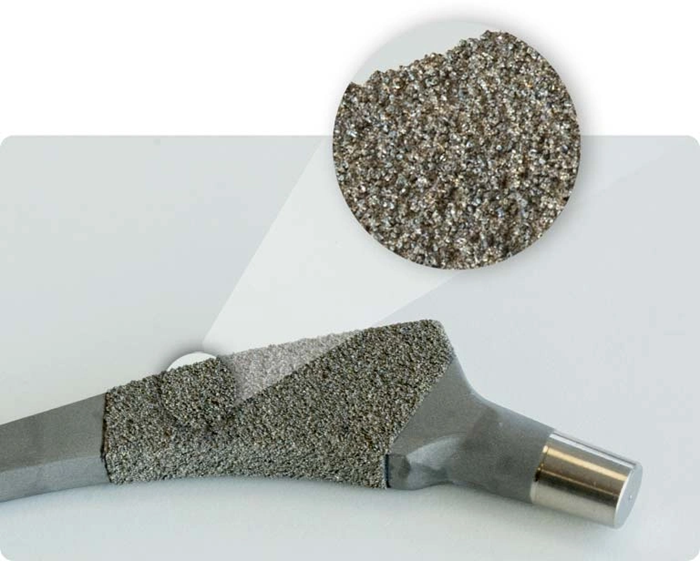
Medical grade titanium undergoes specialized surface modifications that transform its interface properties beyond what the natural oxide layer provides. These engineering processes create specific topographies and chemical compositions designed to accelerate bone attachment and prevent infection.
Plasma spray coating for bone integration
Titanium plasma spray (TPS) applies molten titanium particles onto implant surfaces using high-temperature plasma jets. This creates rough, porous coatings that boost mechanical interlocking with bone. TPS-coated implants showed higher peak loads by a lot during pullout testing at both 6 and 12 weeks compared to uncoated controls. Direct appositional osseointegration of trabecular bone measured higher for TPS-coated groups whatever the base material at both time intervals. This coating technique offers clinical benefit by improving biological fixation during the first 6 to 12 weeks after surgery, the critical healing period for implant-based procedures.
Anodization to boost oxide layer thickness
Anodization grows the titanium oxide layer from its natural nanometer scale to thicknesses ranging from hundreds of nanometers to hundreds of micrometers through electrochemical means. The process operates in either potentiostatic mode (constant voltage with changing current) or galvanostatic mode (constant current with changing voltage). Final oxide thickness shows a linear relationship with applied voltage and follows a growth constant of about 2 nm per volt. The process produces thick, porous oxide layers with complex structures through visible sparking and localized melting at voltages exceeding the dielectric breakdown limit.
Hydroxyapatite coating for faster osseointegration
Hydroxyapatite coatings demonstrate stronger bone response than single-layer treatments, especially when combined with titanium plasma spray as TPS/HA bilayers. A difference in bone contact measurements (P < 0.05) appeared between TPS/HA coated implants and other implant types. These coatings induce bone formation even on implant portions inserted into the sinus. Custom titanium parts meet exact specifications while ensuring durability and precision with industry-leading performance for demanding medical applications.
Nanostructured surface modifications
Hydrothermal pressure treatment (HPT) fabricates nanostructured titanium surfaces by creating nanopetal or nanoflake formations through controlled alkali solution exposure. This process increases surface roughness from about 20.7 nm for untreated titanium to 112.7 nm for samples treated under optimal conditions. Micro/nanostructured surfaces constructed through combined acid etching and hydrothermal treatment boosted MC3T3 cell proliferation and adhesion. Samples showed 2 to 3 times higher alkaline phosphatase activity compared to polished controls.
Antibacterial surface treatments
Ion-doped coatings incorporate elements like zinc or magnesium to provide antimicrobial properties alongside osteogenic benefits. Zinc-doped coatings increased osteoblast proliferation by 25% and boosted cell adhesion by 40%. They also inhibited Staphylococcus aureus growth by 24%. These multifunctional modifications address the dual challenge of promoting bone integration while preventing bacterial colonization on implant surfaces.
Why is titanium used in bone surgery and joint replacements
Orthopedic procedures with skeletal repair rely on titanium’s unique combination of mechanical compatibility and biological integration capabilities that directly address bone healing requirements.
Titanium medical implants in hip and knee replacements
Knee replacement components consist of metal alloys, including titanium and cobalt-chromium for femoral and tibial parts, with polyethylene plastic serving as cartilage replacement. These implants weigh between 15 and 20 ounces. Hip replacement systems employ titanium for stems and cups due to superior bone adherence properties. Materials must meet specific criteria: biocompatibility to avoid rejection and sufficient strength for weight-bearing loads while retaining structural integrity over extended periods.
Osseointegration process with bone tissue
Titanium establishes direct structural connection with living bone through a biological process called osseointegration. Blood forms between the fixture and bone at first and transforms into a clot that phagocytic cells remodel. Mesenchymal stem cells migrate to the implant site and begin proliferation approximately 3 days after surgery. The fibrin support makes cellular movement onto the implant surface possible where new bone forms directly through contact osteogenesis. Haversian bone calcifies and becomes dense enough to withstand masticatory and load-bearing forces.
Stress shielding reduction compared to stainless steel
Titanium’s Young’s modulus of 110 GPa sits closer to bone’s 10-30 GPa range than stainless steel’s 180-193 GPa or cobalt-chromium’s 210-230 GPa. A comparative study using rabbit tibiae showed that titanium alloy implants produced substantially less bone atrophy than stainless steel counterparts at 24 weeks. Titanium nitride-coated implants preserved bone mineral density better than cobalt-chromium and showed only 16.6% decrease versus 26.9% decrease in the medial tibial region at 2 years.
Long-term stability and implant lifespan
Modern knee and hip replacements achieve 80-85% success rates at 10-15 years post-surgery. Titanium implant posts demonstrate 95-98% success over 10-year periods, with many functioning for 20-30 years or longer. Our factory has rich experience in customizing titanium alloy products that meet exact specifications and ensure durability and precision with industry-leading corrosion resistance and strength-to-weight ratio for demanding surgical applications.
Why is a titanium plate used in brain surgery and other specialized procedures
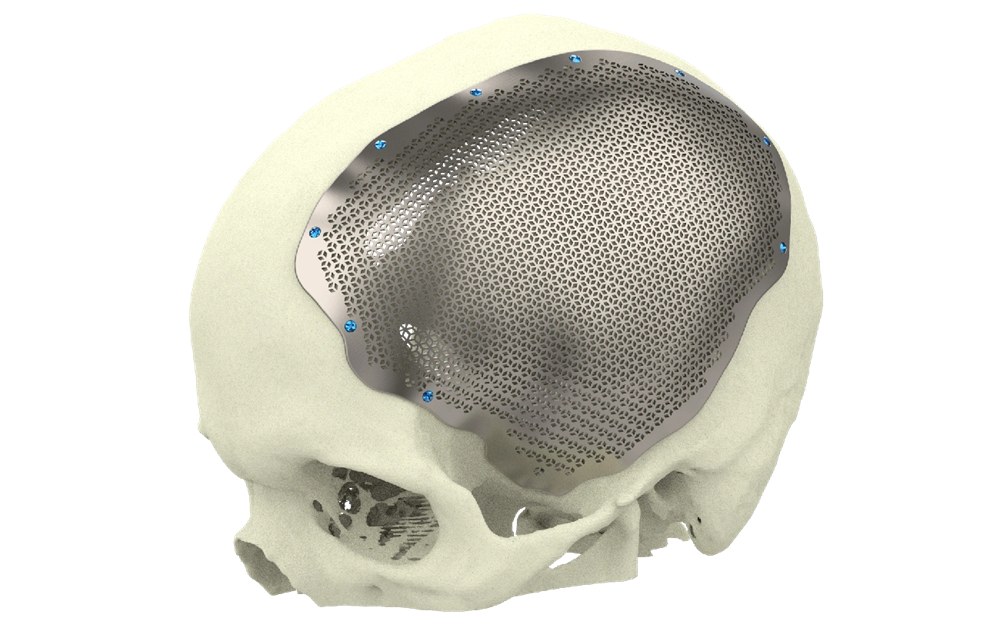
A titanium plate finds use in brain surgery and other complex anatomical reconstructions for reasons that go beyond orthopedic implants. The metal integrates with a variety of tissue types and maintains structural integrity in weight-sensitive locations.
Cranial and maxillofacial reconstruction applications
Cranioplasty procedures employ titanium plates or mesh to repair skull defects following trauma or neurosurgical intervention. Patient-specific 3D-printed titanium implants achieved 96.5% bone fusion at six months post-surgery in 28 implant sites. Mean surgical time was 82 minutes and patient satisfaction scores averaged 9 on a 10-point scale. Our factory has rich experience in customizing titanium alloy products that meet exact specifications for complex cranial geometries. We ensure durability and precision with industry-leading corrosion resistance and strength-to-weight ratio. Surgeons secure these implants using titanium screws onto surrounding bone.
Dental implant systems and tooth replacement
Grade IV commercially pure titanium contains 0.4% oxygen. This provides the mechanical strength necessary for dental implant posts and maintains biocompatibility. Titanium dental implants demonstrate clinical success rates up to 99% over extended periods. The material fuses with the jawbone through osseointegration and creates permanent tooth root replacements.
Cardiovascular devices and pacemaker casings
Pacemaker outer casings employ titanium for its resistance to body fluid corrosion and electromagnetic interference shielding properties. The material allows patients to operate microwave ovens safely without device malfunction. Artificial heart valves use titanium construction as well.
Spinal fixation systems
Titanium pedicle screws, plates and rods provide spinal fusion support. They enable high-quality MRI imaging and substantially reduced CT scan artifacts compared to stainless steel alternatives. Systems address degenerative disk disease, spondylolisthesis and trauma-related instability.
Conclusion
Titanium remains the gold standard for surgical implants. It combines biocompatibility and strength-to-weight advantages that other metals cannot match, along with superior corrosion resistance. Surface treatments boost osseointegration and antibacterial properties, which makes this material perfect for joint replacements and cranial reconstruction. In fact, custom titanium parts meet exact specifications and ensure durability with precision. Patients can rely on the stability these demanding medical applications deliver.
FAQs
Q1. What makes titanium suitable for use in surgical procedures? Titanium is chosen for surgical applications because it naturally bonds with bones and tissues through osseointegration, resists corrosion in body fluids, and is non-magnetic, making it safe for MRI scans. Its protective oxide layer forms instantly when exposed to oxygen, preventing adverse reactions with the body while maintaining exceptional strength.
Q2. Can titanium implants cause any health complications? While titanium is highly biocompatible, some individuals may experience sensitivity reactions. The material’s excellent corrosion resistance and stable oxide layer minimize the risk of metal ion release into surrounding tissues. Modern medical-grade titanium implants are designed to integrate safely with the body with minimal adverse effects.
Q3. How does titanium’s strength compare to natural bone? Titanium alloys are significantly stronger than natural bone, with tensile strength around 900 MPa compared to bone’s much lower values. However, titanium’s Young’s modulus (110 GPa) is closer to bone (10-30 GPa) than other metals like stainless steel, reducing stress shielding effects and preserving surrounding bone density better than stiffer alternatives.
Q4. What is the typical lifespan of titanium implants in the body? Titanium implants demonstrate exceptional longevity, with dental implants lasting 20-30 years or longer and achieving 95-98% success rates over 10-year periods. Hip and knee replacements show 80-85% success rates at 10-15 years post-surgery, with many patients experiencing decades of reliable function.
Q5. Why are titanium plates specifically used in brain surgery? Titanium plates are ideal for cranial reconstruction because they are lightweight, strong, and compatible with diagnostic imaging like MRI and CT scans. Patient-specific 3D-printed titanium implants achieve 96.5% bone fusion rates at six months, providing secure skull repair while allowing clear post-operative imaging without significant artifacts.