

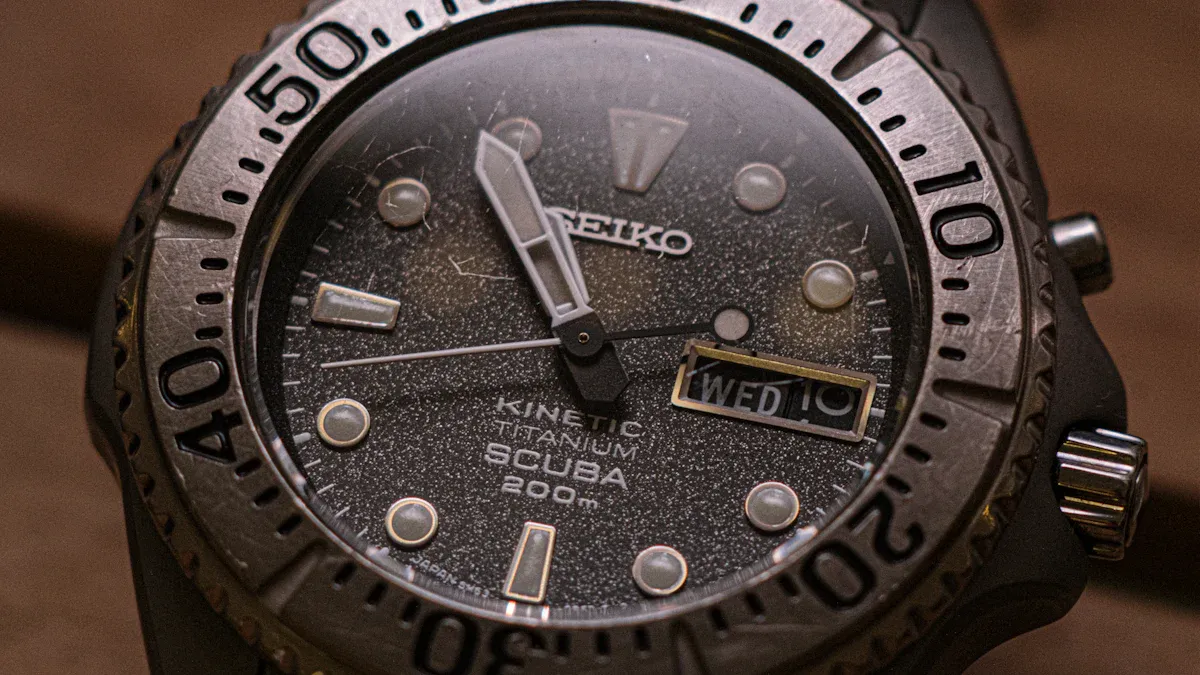
Yes, titanium is highly suitable for Metal Injection Molding (MIM), offering significant advantages for specific applications. The global Metal Injection Molding market reached USD 4.65 billion in 2024. Market projections indicate growth to USD 8.99 billion by 2032, showing an 8.60% Compound Annual Growth Rate. Titanium falls within the ‘special material’ segment of the MIM market. This segment anticipates the fastest growth, projected at 10.8% from 2025 to 2032. This strong market trajectory underscores titanium’s exceptional fit for advanced manufacturing processes like MIM.
Key Takeaways
- Titanium is very good for Metal Injection Molding (MIM) because of its strong and light nature.
- TIMIM makes complex titanium parts that are hard to make with other methods.
- Titanium parts made with TIMIM are strong, do not rust, and are safe for the human body.
- TIMIM helps save money by using less material and making many parts at once.
- TIMIM is used in medical tools, airplane parts, and fancy electronics.
- Making titanium parts with TIMIM can be costly and requires special machines and skilled workers.
- TIMIM is better than old ways of making parts because it wastes less material and makes smoother parts.
Understanding Titanium Injection Molding (TIMIM)
What Makes TIMIM a Suitable Process?
Blending MIM and Titanium for Optimal Results
Titanium Injection Molding (TIMIM) combines the advanced capabilities of Metal Injection Molding with the exceptional properties of titanium. This blend offers significant advantages for manufacturing complex components. MIM provides high design flexibility. It enables the production of intricate titanium parts. Creating these parts through machining from wrought stock would be challenging, wasteful, or expensive. This capability allows manufacturers to achieve near-net-shape components. It also reduces the need for costly secondary machining. Titanium itself possesses several inherent material advantages. It has a high strength-to-weight ratio, making it ideal for applications where weight is a critical factor, such as in aerospace. Titanium also exhibits exceptional corrosion resistance. A stable oxide layer (TiO₂) resists corrosion from seawater, chlorine, acids, and body fluids. Furthermore, titanium is biocompatible. It is non-toxic and the human body does not reject it, making it suitable for medical implants. Titanium also features a high melting point. Pure titanium melts at 1,668°C (3,034°F), allowing its use in high-temperature environments like turbine blades and exhaust systems.
The Unique Process Overview for Titanium
TIMIM represents a specialized manufacturing approach. It leverages the precision of injection molding for a high-performance metal like titanium. The process begins with fine titanium powder. Manufacturers mix this powder with a binder system. This creates a feedstock. They then inject this feedstock into a mold cavity. This forms a “green” part. Subsequent steps remove the binder and densify the titanium. This unique process allows for the creation of small, complex titanium parts with high accuracy. It offers a cost-effective alternative to traditional methods for specific applications.
The TIMIM Process Steps for Titanium Components
Powder Preparation and Mixing for Titanium
The TIMIM process begins with meticulous powder preparation. Manufacturers select high-purity titanium powder. Titanium powder purity is typically specified as ≥99.5%. Spherical titanium powder is explicitly used in metal injection molding (MIM). This spherical powder often boasts a purity of 99.9%. Particle sizes range from 40 to -500 mesh, with customized options also available. Common particle size ranges include:
- 15-45 µm
- 15-53 µm
- 20-63 µm
- 45-106 µm
- Customized granularities can be provided based on customer requirements. Manufacturers then blend this fine titanium powder with a polymeric binder. This mixture forms the feedstock. The binder provides flowability during injection molding.
Injection Molding Phase for Titanium
During the injection molding phase, manufacturers heat the titanium feedstock. They then inject it under high pressure into a mold cavity. The mold defines the final shape of the component. The binder allows the titanium powder to flow like a plastic. This enables the creation of intricate geometries. Once cooled, the part solidifies. This forms a “green” part. This green part holds its shape but remains fragile.
Debinding and Sintering Titanium Parts
The debinding process removes the binder from the green part. Manufacturers achieve this through thermal, solvent, or catalytic methods. Removing the binder leaves a porous “brown” part. This brown part consists primarily of titanium powder. The final step is sintering. Manufacturers heat the brown part to a high temperature, below titanium’s melting point. This causes the titanium particles to fuse together. The part densifies and shrinks. Sintering transforms the porous brown part into a dense, strong titanium component.
Why Titanium’s Properties Make It Suitable for MIM
Titanium’s unique properties make it exceptionally well-suited for Metal Injection Molding (MIM). The material’s inherent characteristics align perfectly with the advantages offered by the MIM process. This combination makes titanium suitable for producing high-performance components across various industries.
Inherent Material Advantages of Titanium
High Strength-to-Weight Ratio in Titanium
Titanium possesses an outstanding strength-to-weight ratio. This property makes it highly desirable for applications where weight reduction is critical. Components made from titanium offer robust performance without adding excessive mass. This characteristic is particularly valuable in the aerospace and automotive industries.
Exceptional Corrosion Resistance of Titanium
Titanium naturally resists corrosion. It forms a passive oxide layer on its surface. This layer protects the metal from aggressive environments. It withstands exposure to seawater, chlorine, and various acids. This resistance ensures longevity and reliability for parts used in harsh conditions.
Biocompatibility and Inertness of Titanium
Titanium exhibits excellent biocompatibility. The human body does not reject it. This makes it an ideal material for medical and dental implants. MIM Ti-64 alloys meet the specification requirements of implantable ASTM F1472 and ASTM F2885 for MIM implantable grades. Biocompatibility testing for MIM Ti-64 includes:
- Hemocompatibility (ISO 10993-4)
- Cytotoxicity (ISO 10993-5)
- Sensitization (ISO-10993-10)
- Irritation (ISO 10993-10)
- Systemic toxicity (ISO 10992-11)
- Implantation (ISO 10993-6)
Manufacturers also produce various MIM CP-Ti and Ti6Al4V materials to meet specific medical standards:
| Material | Specification |
|---|---|
| MIM CP-Ti | ASTM F2989 MIM 1 |
| MIM CP-Ti | ASTM F2989 MIM 2 |
| MIM CP-Ti | ASTM F2989 MIM 3 |
| MIM CP-Ti | ISO 22068 MIM Ti-400 |
| MIM Ti6Al4V | ASTM F2885 Grade 5 |
| MIM Ti6Al4V | ISO 22068 MIM-Ti6Al4V-600 |
This inertness ensures patient safety and long-term implant success.
Thermal and Mechanical Characteristics of Titanium
High Melting Point Considerations for Titanium MIM
Titanium has a high melting point. Pure titanium melts at approximately 1670°C. This high temperature complicates its preparation. It often requires special methods like high-temperature melting or powder metallurgy. This property also contributes to titanium’s high thermal stability. It resists deformation at elevated temperatures. It maintains stable mechanical properties, including good tensile strength and elastic modulus. Furthermore, the high melting point means titanium materials are less prone to phase transformation during heat treatment. This leads to excellent heat treatment performance and a stable microstructure. Factors like purity, crystal form, and alloying elements can influence the melting point. This characteristic makes titanium suitable for high-temperature applications.
Ductility and Toughness of MIM Titanium
MIM titanium parts exhibit good ductility and toughness. Ductility allows the material to deform under tensile stress without fracturing. Toughness indicates its ability to absorb energy and plastically deform before fracturing. These properties are crucial for components experiencing dynamic loads or impacts. They ensure the parts can withstand operational stresses. This enhances the reliability and lifespan of the final product.
Benefits of Choosing TIMIM for Titanium Components
Titanium Injection Molding (TIMIM) offers numerous advantages for manufacturing titanium parts. This process provides significant benefits in design flexibility, cost-efficiency, and overall part quality. Manufacturers can leverage TIMIM to produce high-performance components across various industries.
Design Freedom and Complexity with Titanium
TIMIM unlocks unprecedented design freedom for titanium components. Engineers can create intricate and complex geometries previously unattainable with traditional manufacturing methods. This capability allows for innovative product designs and improved functionality.
Producing Intricate Geometries with TIMIM
TIMIM excels at producing intricate geometries. It creates complex features that are challenging or impossible to achieve through conventional machining. This includes:
- Intricate Internal Features: TIMIM forms structures with internal channels, cavities, and lattice structures. These designs are difficult or impossible to machine or mold.
- Organic Shapes and Curves: The process enables designs mimicking natural forms, including smooth curves and biomimetic structures.
- Topology Optimized Designs: TIMIM produces components optimized for weight and strength. These often result in non-standard shapes that minimize material usage while maintaining structural integrity.
- Multi-Material and Functionally Graded Structures: Parts composed of different materials or with varying material properties throughout their volume offer tailored mechanical or thermal characteristics.
- GE Aviation’s Fuel Nozzles: TIMIM consolidated these into a single piece with complex internal channels for optimized fuel-air mixing. This reduced the weight by 25% and increased durability fivefold. Traditional methods would have required multiple parts.
- Airbus Bionic Partition: This design, inspired by natural structures, achieved a 45% weight reduction while maintaining strength. It showcases biomimetic designs.
- Customized Implants and Prosthetics: TIMIM creates patient-specific designs like titanium jaw implants and prosthetic limbs. These precisely match unique anatomies for better fit, faster recovery, or improved comfort and functionality.
- Bugatti’s Brake Caliper: The world’s first 3D-printed titanium brake caliper featured intricate internal cooling channels. It was 40% lighter than traditional aluminum counterparts, a feat difficult to achieve with conventional methods.
- Nike’s Flyprint Shoes: These shoes feature 3D-printed textile uppers with optimized structures for breathability, flexibility, and support. This allows for rapid prototyping and customization.
- 3D-Printed Sculptures and Art Installations: TIMIM enables intricate, organic forms impossible to create by hand.
- Architectural Models and Facades: Examples like the MX3D Bridge in Amsterdam, a fully functional steel bridge with complex geometries and organic designs, demonstrate large-scale construction capabilities.
Consolidating Multiple Titanium Parts
TIMIM effectively consolidates multiple titanium parts into a single component. This reduces assembly steps and simplifies product designs. A medical device company successfully employed Metal Injection Molding (MIM) to produce titanium components for surgical tools. This approach enabled the creation of complex geometries with thin walls. Achieving these designs using traditional machining methods would have been prohibitively expensive. Furthermore, multi-material Metal Injection Molding (MIM) is utilized by medical device companies to develop multi-functional medical implants. For instance, orthopedic implants are designed with a titanium core to provide structural support. A porous outer layer is integrated to promote bone integration. This dual-material structure enhances patient outcomes and accelerates recovery. It also streamlines production and ensures consistent quality by combining materials in a single process.
Cost-Effectiveness for Specific Titanium Parts
TIMIM offers significant cost advantages for specific titanium parts, particularly those with complex geometries or high production volumes. It optimizes material usage and reduces post-processing requirements.
Reducing Machining Waste for Titanium
TIMIM significantly reduces material waste compared to traditional machining. Traditional methods often start with a large block of material, removing much of it as scrap. TIMIM uses a near-net-shape approach, minimizing waste.
| Manufacturing Method | Material Utilization Rate (Buy-to-Fly Ratio) | Material Waste Reduction | Cost Reduction (Compared to Traditional Machining) |
|---|---|---|---|
| Traditional Machining | 12-25:1 | N/A | N/A |
| Metal 3D Printing | 3:1 (as low as 2.5-3.5:1 for aerospace) | Up to 90% | 40-60% (overall advanced methods) |
| Near-Net-Shape (NNS) Forming (e.g., Isothermal Forging) | 60% (reduces raw material needs by up to 70%) | N/A | 40-60% (overall advanced methods) |
This table highlights the efficiency of near-net-shape processes like TIMIM. They drastically improve material utilization.
Scalability for Mass Production of Titanium
TIMIM is highly scalable for mass production. Once manufacturers establish the tooling and process parameters, they can produce thousands or millions of identical titanium parts efficiently. This makes TIMIM an ideal choice for industries requiring high volumes of complex titanium components, such as consumer electronics or medical devices. The consistent replication of parts ensures uniform quality across large batches.
Enhanced Performance and Quality of MIM Titanium
TIMIM produces titanium parts with enhanced performance and quality characteristics. The process achieves precise dimensions, excellent surface finishes, and consistent mechanical properties.
Achieving Near-Net Shape Titanium Parts
TIMIM consistently achieves near-net shape titanium parts. This means the final component requires minimal or no post-processing. TiMIM components achieve a high-quality surface finish that facilitates hermetic seals. This finish is also compatible with glass-to-metal seal processes. Additive manufacturing and investment casting often require more post-processing. TiMIM is also capable of producing parts with tight tolerances, especially for small dimensions and applications requiring hermetic sealing. It achieves a net shape with minimal waste and post-processing. This precision reduces manufacturing steps and overall production costs.
Consistent Part Properties in TIMIM
TIMIM ensures consistent part properties throughout the production run. The controlled process parameters lead to uniform microstructure and mechanical performance.
| Property | Material/Condition | Value |
|---|---|---|
| Ultimate Tensile Strength (UTS) | ASTM F2885 Ti-6Al-4V MIM | 900 MPa (130 ksi) |
| Praxis MIM Ti-6Al-4V Typical | 965 MPa (144 ksi) | |
| Praxis MIM Ti-6Al-4V Heat Treated | 1070 MPa (155 ksi) | |
| Elongation at Break | Ti-6Al-4V (Sintered at 1150°C) | 9.61% |
| Ti-6Al-4V (Sintered at 1250°C) | 6.57% | |
| Ti-6Al-4V (Typical) | 10% | |
| Ti-6Al-7Nb (Typical) | 10% | |
| Hardness | Pure Titanium | 95 HRB |
| Titanium (HIP) | 195 VHN | |
| Ti-6Al-4V | 35 HRC | |
| General MIM Titanium | 30 HRC |
Titanium MIM parts can achieve strength levels comparable to wrought titanium. This is especially true with optimized processing and post-sintering treatments like Hot Isostatic Pressing (HIP). MIM parts may exhibit slightly lower ductility compared to wrought titanium due to residual porosity or microstructural variations. However, advancements are narrowing this gap. Additive manufactured titanium bars have been found to possess higher yield strength, ultimate tensile strength, and hardness compared to wrought titanium bars. These differences in properties are attributed to variations in microstructure resulting from the different processing conditions. This consistency is vital for critical applications where reliability is paramount.
Applications Where TIMIM is Particularly Suitable
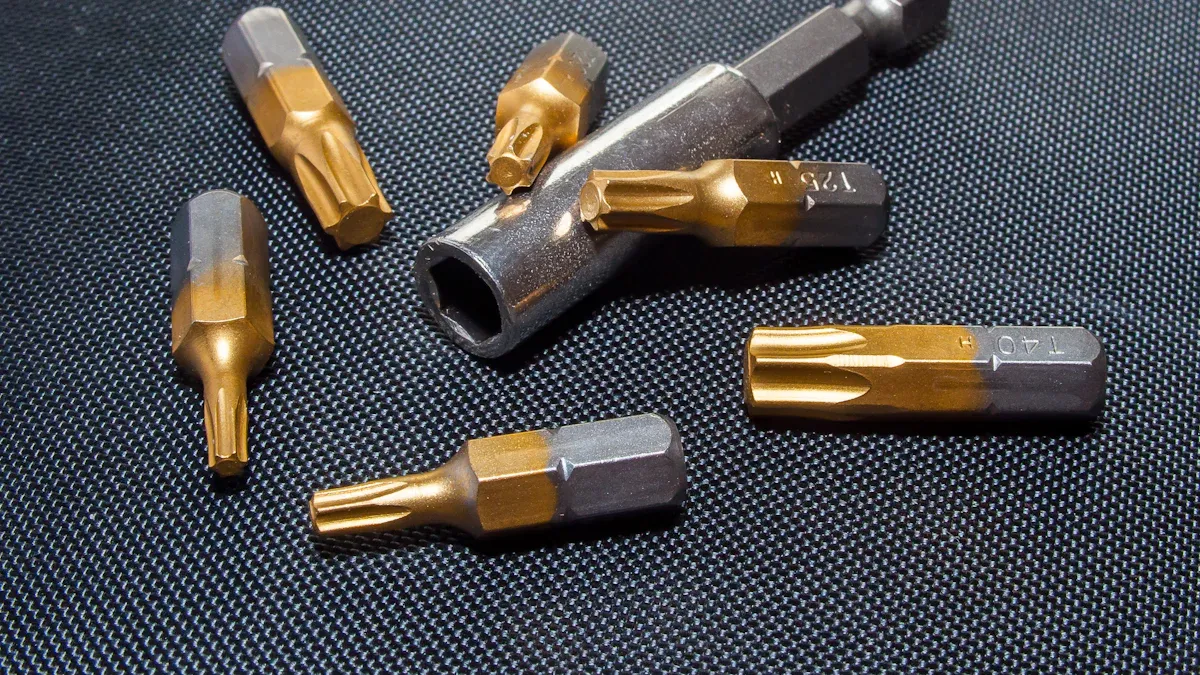
Titanium Injection Molding (TIMIM) finds extensive use across various industries. Its unique combination of titanium’s properties and MIM’s manufacturing advantages makes it ideal for critical applications.
Medical and Dental Implants Utilizing Titanium
The medical and dental fields significantly benefit from TIMIM. Titanium’s biocompatibility and corrosion resistance are crucial for implantable devices.
Orthopedic Devices from TIMIM Titanium
TIMIM produces complex orthopedic devices. These include bone plates, screws, and joint replacement components. The process creates intricate shapes with high precision. This precision ensures a better fit and improved patient outcomes. Manufacturers can also achieve porous structures. These structures promote bone ingrowth, enhancing implant stability.
Dental Prosthetics and Tools in Titanium
Dental applications also leverage TIMIM. It manufactures dental implants, crowns, bridges, and specialized surgical tools. Titanium’s inertness prevents adverse reactions in the oral cavity. Its strength ensures durability for long-term use. TIMIM allows for customized designs, fitting individual patient needs precisely.
Aerospace and Defense Components from TIMIM
The aerospace and defense sectors demand lightweight, high-strength materials. TIMIM provides an excellent solution for these stringent requirements.
Lightweight Structural Titanium Parts
TIMIM creates lightweight structural components for aircraft and spacecraft. These parts contribute to fuel efficiency and increased payload capacity. Examples include brackets, housings, and connectors. The process achieves complex geometries while maintaining structural integrity. This reduces overall weight without compromising performance.
High-Performance Engine Components in Titanium
Engine components often operate under extreme conditions. TIMIM produces high-performance titanium parts for jet engines and other propulsion systems. These include impellers, turbine blades, and sensor housings. Titanium’s high melting point and strength at elevated temperatures are critical here. TIMIM ensures precise dimensions and consistent material properties for these demanding applications.
Consumer Electronics and Luxury Goods with Titanium
TIMIM also caters to markets requiring both aesthetic appeal and robust performance. This includes consumer electronics and luxury items.
Watch Cases and Bezels in TIMIM Titanium
Luxury watch manufacturers utilize TIMIM for cases and bezels. Titanium offers a premium feel, scratch resistance, and lightweight comfort. TIMIM enables intricate designs and fine details. This enhances the aesthetic value of high-end timepieces. The process delivers consistent quality for these precision components.
High-End Device Housings from Titanium
High-end consumer electronics, such as smartphones and laptops, use TIMIM for device housings. Titanium provides durability and a sleek finish. It protects internal components while maintaining a slim profile. TIMIM allows for complex internal structures within the housing. These structures optimize space and integrate various functionalities.
Automotive and Industrial Uses for TIMIM Titanium
Titanium Injection Molding (TIMIM) extends its utility to the automotive and industrial sectors. These industries demand components with high strength, low weight, and excellent resistance to harsh operating conditions. TIMIM provides an effective manufacturing solution for these critical parts.
Specialized Engine Parts in Titanium
Automotive manufacturers increasingly seek lightweight materials for engine components. Titanium offers a superior strength-to-weight ratio. This property directly contributes to improved fuel efficiency and enhanced performance. TIMIM produces specialized engine parts such as valve retainers, connecting rods, and turbocharger wheels. The process creates complex geometries with high precision. These intricate designs optimize airflow and reduce rotational mass. For example, lighter valve train components allow engines to rev higher and respond faster. TIMIM also ensures consistent part quality across large production runs. This consistency is crucial for the reliability of high-performance engines.
Corrosion-Resistant Valves from TIMIM
Industrial applications often involve corrosive environments. Chemical processing plants, marine industries, and oil and gas operations require materials that withstand aggressive media. Titanium exhibits exceptional corrosion resistance. It forms a stable passive oxide layer. This layer protects the metal from various acids, chlorides, and seawater. TIMIM manufactures corrosion-resistant valves and valve components. These parts ensure long service life and reduce maintenance costs. The process creates complex valve designs. These designs optimize fluid flow and sealing performance. TIMIM also produces intricate internal channels within valve bodies. This capability enhances functionality and efficiency in demanding industrial systems.
Challenges and Considerations for Titanium-Suitable MIM
While Titanium Injection Molding (TIMIM) offers many advantages, manufacturers face several challenges. These challenges require careful consideration and specialized approaches to ensure the successful production of high-quality titanium components.
Material Cost and Availability of Titanium Powders
The initial investment in raw materials presents a significant hurdle for TIMIM. Titanium powders are considerably more expensive than many other metal powders.
High Raw Material Expense for Titanium
Titanium’s high raw material expense impacts the overall cost of TIMIM parts. Specialized titanium powders for MIM, such as Ti-6Al-4V, typically cost between $50 and $150 per kilogram. Commercially pure titanium powders range from $40 to $100 per kilogram. This makes titanium alloys significantly more expensive than common metal powders. For example, 316L Stainless Steel costs $12 – $25/kg, and 4605 Steel costs $10 – $20/kg.
| Material | Cost per Kilogram ($) |
|---|---|
| Ti-6Al-4V | 50 – 150 |
| Commercially Pure Ti | 40 – 100 |
| 316L Stainless Steel | 12 – 25 |
| 17-4PH Stainless Steel | 18 – 35 |
| 4605 Steel | 10 – 20 |
| 4140 Steel | 15 – 28 |
| Pure Copper | 15 – 30 |
| Bronze | 20 – 40 |
| Nickel-Based Alloys | 60 – 200 |
| Cobalt-Chrome Alloys | 80 – 250 |
Nickel-based alloys can be comparable or higher in cost, ranging from $60 – $200/kg. Cobalt-chrome alloys are among the most expensive at $80 – $250/kg.
Sourcing Specialized Titanium Powders
Sourcing specialized titanium powders also presents challenges. Manufacturers require fine particle size, high sphericity, and tight particle size distribution for MIM. These specific characteristics often command a premium. Exotic materials like titanium tend to be more expensive than common options like stainless steel. Different suppliers might also have varying pricing structures.
Process Complexity and Control for TIMIM
TIMIM involves intricate process steps. These steps demand precise control to achieve desired material properties and part quality.
Debinding and Sintering Optimization for Titanium
Debinding and sintering are critical steps in TIMIM. Manufacturers must carefully optimize these processes for titanium. Titanium’s reactivity at high temperatures requires inert or vacuum atmospheres during sintering. Improper control can lead to contamination, affecting mechanical properties. Achieving the correct temperature and time profiles is essential for successful densification.
Achieving Desired Density in TIMIM Titanium
Achieving the desired density in TIMIM titanium parts is crucial for performance. Incomplete densification can result in porosity, which reduces strength and fatigue resistance. Manufacturers must precisely control sintering parameters to maximize density. This ensures the final component meets stringent application requirements.
Equipment and Expertise Requirements for TIMIM
Implementing TIMIM requires significant investment in specialized equipment and highly skilled personnel.
Specialized MIM Equipment for Titanium
TIMIM requires specialized MIM equipment. This includes high-temperature vacuum furnaces capable of handling titanium’s reactivity. Manufacturers also need dedicated injection molding machines and debinding systems. These systems must prevent contamination and ensure process stability. The equipment often carries a higher cost compared to standard MIM setups.
Skilled Operators and Engineers for TIMIM
TIMIM demands skilled operators and engineers. They must possess expertise in powder metallurgy, materials science, and process control. Their knowledge ensures proper feedstock preparation, molding, debinding, and sintering. This specialized expertise is vital for troubleshooting and optimizing the complex TIMIM process. It ensures the production of high-quality, Titanium Suitable components.
Comparing TIMIM to Other Manufacturing Methods for Titanium
Titanium Injection Molding (TIMIM) offers a distinct set of advantages when compared to other common manufacturing methods for titanium. Understanding these differences helps manufacturers choose the most suitable process for their specific needs.
TIMIM vs. Traditional Machining for Titanium
Traditional machining involves removing material from a solid block of titanium. This method is versatile but often inefficient for complex parts.
Cost Savings for Complex Titanium Parts
TIMIM significantly reduces costs for complex titanium parts. Machining intricate geometries from solid titanium is time-consuming and expensive. It requires specialized tools and skilled labor. TIMIM produces these complex shapes in a single molding step. This drastically lowers per-part costs, especially for higher volumes.
Material Waste Reduction for Titanium
Traditional machining generates substantial material waste. Manufacturers often discard a large percentage of the raw titanium block as chips and scrap. TIMIM is a near-net-shape process. It uses almost all the raw material. This minimizes waste and improves material utilization. This reduction in waste is particularly important given the high cost of titanium.
TIMIM vs. Additive Manufacturing (3D Printing) for Titanium
Additive Manufacturing (AM), or 3D printing, builds parts layer by layer. It offers immense design freedom but has different strengths than TIMIM.
Production Volume Advantages for TIMIM Titanium
TIMIM excels in mass production. Once manufacturers create the mold, they can produce thousands or millions of identical titanium parts quickly and cost-effectively. Additive manufacturing is generally slower. It is better suited for prototyping, small batches, or highly customized parts. TIMIM offers a clear advantage for high-volume applications.
Surface Finish and Tolerances in TIMIM
TIMIM typically achieves a superior surface finish and tighter tolerances compared to as-printed additive manufacturing parts. AM parts often require extensive post-processing to achieve the desired surface quality and dimensional accuracy. TIMIM parts emerge from the mold with a good surface finish. They require minimal secondary operations. This reduces overall production time and cost.
TIMIM vs. Conventional Powder Metallurgy for Titanium
Conventional Powder Metallurgy (PM) involves compacting powder and then sintering it. TIMIM is a more advanced form of PM.
Geometric Complexity in TIMIM Titanium
TIMIM offers far greater geometric complexity than conventional PM. Conventional PM uses uniaxial pressing. This limits part shapes to those that can be pressed in a die. TIMIM uses injection molding. This allows for intricate, three-dimensional shapes with undercuts, internal features, and thin walls.
Density and Mechanical Properties of TIMIM
TIMIM generally achieves higher densities and superior mechanical properties compared to conventional PM. The binder system and high-temperature sintering in TIMIM lead to better particle packing and fusion. This results in stronger, more ductile titanium parts. Conventional PM parts often have higher porosity. This can compromise their strength and fatigue resistance.
Titanium is indeed highly suitable for Metal Injection Molding, offering a powerful combination of material properties and manufacturing advantages. TIMIM enables the production of complex, high-performance titanium parts. These parts are difficult or impossible to achieve with other methods. The process makes titanium suitable for demanding applications. The future of TIMIM is promising. Ongoing advancements expand its applications and accessibility, making more designs suitable for this innovative process.
FAQ
What is Titanium Injection Molding (TIMIM)?
TIMIM combines Metal Injection Molding with titanium. It produces complex titanium components. Manufacturers blend fine titanium powder with a binder. They inject this mixture into a mold. Subsequent steps remove the binder and densify the titanium.
Why is titanium suitable for MIM?
Titanium offers a high strength-to-weight ratio, exceptional corrosion resistance, and biocompatibility. These properties make it ideal for demanding applications. MIM efficiently processes titanium into intricate shapes.
What are the main benefits of TIMIM?
TIMIM provides significant design freedom. It allows for complex geometries and part consolidation. The process also offers cost-effectiveness for specific parts. It reduces material waste and scales well for mass production.
Which industries commonly use TIMIM?
TIMIM finds extensive use in the medical and dental fields for implants. Aerospace and defense sectors use it for lightweight components. Consumer electronics and luxury goods also utilize TIMIM for high-end parts.
What challenges exist in TIMIM?
High material cost and limited availability of specialized titanium powders pose challenges. The process also requires complex control during debinding and sintering. Specialized equipment and expert personnel are necessary.
How does TIMIM compare to traditional machining for titanium?
TIMIM offers cost savings for complex parts. It significantly reduces material waste. Traditional machining often generates substantial scrap. TIMIM is a near-net-shape process, maximizing material utilization.
Can TIMIM produce parts with high density?
Yes, TIMIM aims for high density in titanium parts. Manufacturers precisely control sintering parameters. This maximizes densification. High density ensures optimal strength and fatigue resistance in the final components.