

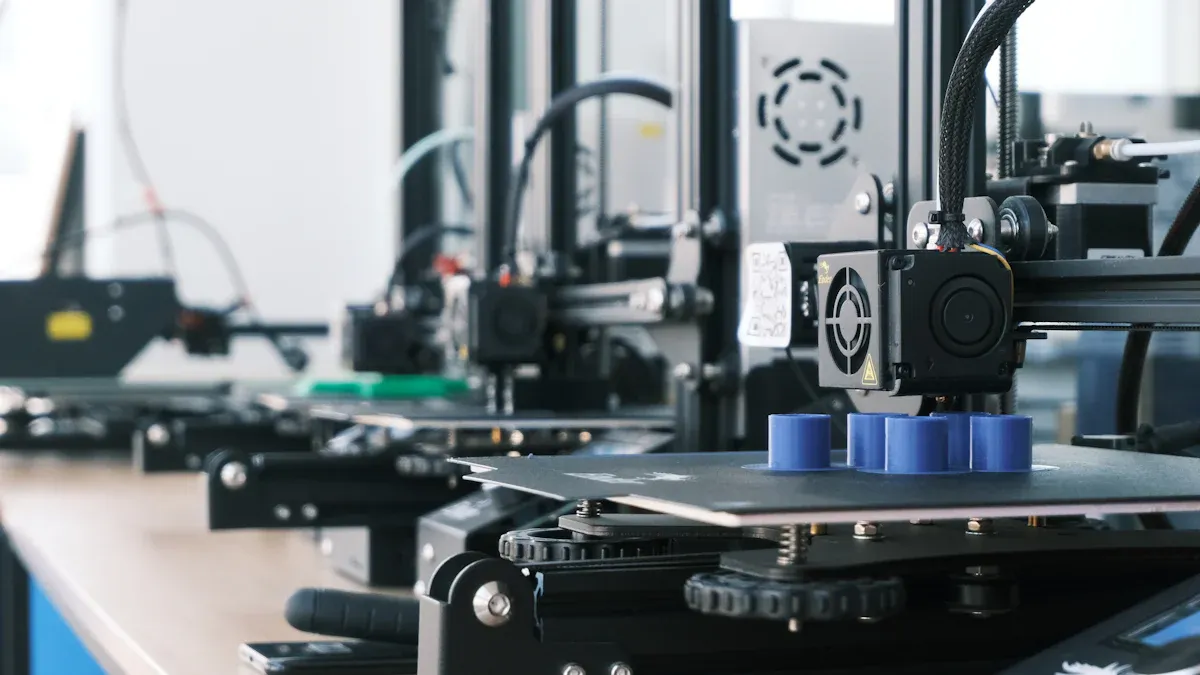
Engineers often question the durability of components produced through additive manufacturing. 3D printed metal parts demonstrate remarkable strength. They frequently match or surpass the performance of metals created by conventional methods. This advanced manufacturing technique offers robust solutions for demanding applications across various industries. The inherent properties and precise control during printing contribute significantly to their impressive mechanical characteristics.
Key Takeaways
- 3D printed metal parts are very strong. They often perform better than metals made in old ways.
- Fine grain structures and careful control during printing make these parts strong. This helps them resist wear and corrosion.
- Engineers can make parts lighter with special designs. These designs are called lattice structures.
- The right materials and printing settings are important. They make sure the metal parts are strong and do not have flaws.
- After printing, special treatments make parts even stronger. These treatments include heating and pressing.
- 3D printed metal parts are used in planes and cars. They are also used for medical implants.
- These parts can be made to fit exact needs. This helps them work best for each use.
The Inherent Strength of 3D Printed Metal Parts
The strength of components produced through additive manufacturing often surprises those accustomed to traditional methods. 3D printed metal parts possess inherent characteristics that contribute significantly to their robust nature. This strength stems from precise control over material microstructure and the unique advantages of the additive manufacturing process itself.
Understanding Material Microstructure
The internal structure of a material dictates its mechanical properties. Additive manufacturing offers unprecedented control over this microstructure.
Fine Grain Structures
One key to enhanced strength lies in the formation of fine-grained structures. The rapid solidification inherent in many 3D printing processes, such as those using high-power, short-duration pulse lasers, promotes the growth of very fine crystalline structures. For example, the Meld Manufacturing process produces grains one to two orders of magnitude smaller than the input metal. These finer grains contribute to higher strength, improved corrosion resistance, and better wear resistance. Adjusting laser parameters during printing also leads to stronger microstructures. This allows for the creation of parts with superior mechanical properties.
Anisotropic Properties
3D printed metal parts often exhibit anisotropic properties. This means their strength varies depending on the direction of applied force. This characteristic arises from the layer-by-layer consolidation process. While conventional layer-by-layer construction might result in a uniform internal stress structure, advanced 3D printing techniques can influence internal stress and crystal formation. This allows for the potential to produce ultra-high-strength products. However, engineers must account for anisotropy in design and build orientation to optimize performance. Micro-pores and interlayer interfaces can also exist at the microscopic level, which require careful process control or post-processing to mitigate their impact on overall strength.
Advantages of Additive Manufacturing Processes
Additive manufacturing processes offer distinct advantages that directly translate into stronger, more efficient metal components.
Layer-by-Layer Consolidation
The layer-by-layer consolidation method is fundamental to additive manufacturing. This approach allows for the creation of unique and complex internal structures. Designers can produce objects as a single unit, rather than assembling multiple joined parts. This monolithic construction inherently leads to greater strength and efficiency. Metal additive manufacturing technologies often create elements with greater mechanical strength than those obtained through traditional forging or casting processes. This method also enables the determination and production of specific internal structures, which can reduce operational stress and extend a component’s service life.
Reduced Material Waste
Additive manufacturing inherently minimizes material waste. The process builds parts directly from a digital model, adding material only where needed. This contrasts sharply with subtractive manufacturing methods, which remove material from a larger block. While primarily an economic and environmental benefit, reduced waste also reflects the precision of the process. This precision allows for the creation of extremely thin yet strong walls and complex geometries like honeycombs or meshes, replacing solid sections without compromising structural integrity. The ability to print parts with metals typically hard to process, such as superalloys, further enhances the range of strong, efficient components available.
Factors Influencing the Strength of 3D Printed Metal Parts
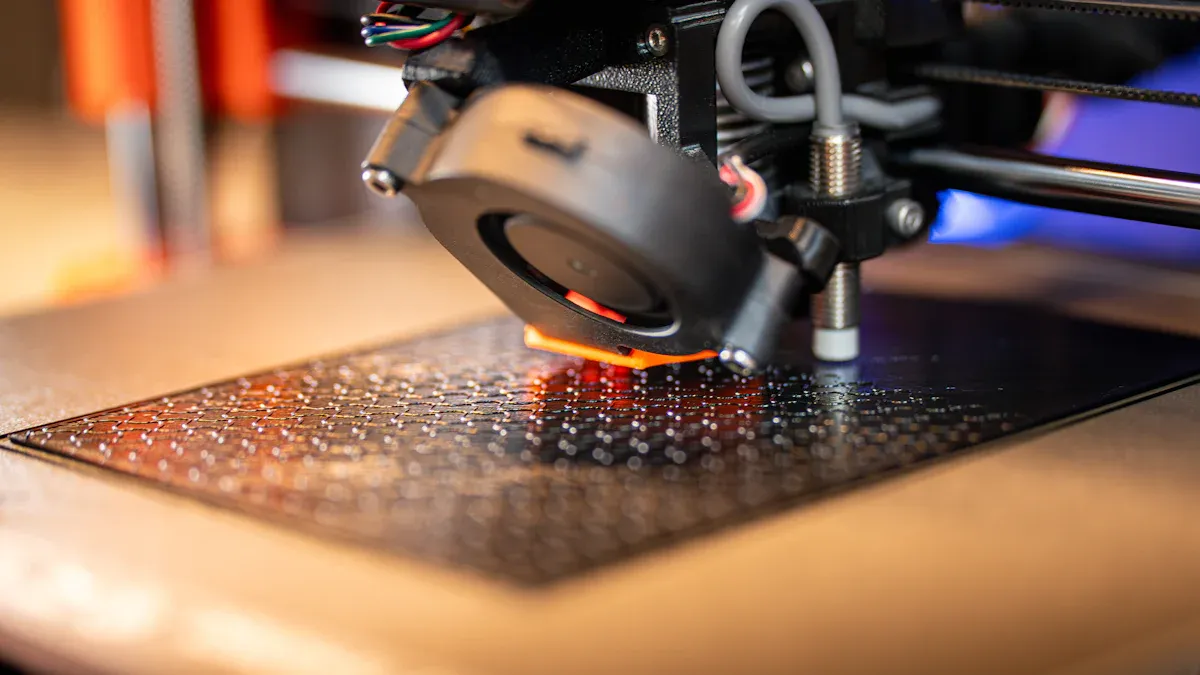
Several critical factors determine the ultimate strength and performance of components produced through additive manufacturing. These elements range from the raw materials used to the specific parameters of the printing process and subsequent treatments.
Material Selection and Quality
The choice and quality of the metal powder significantly impact the final part’s mechanical properties.
Alloy Composition
Different alloy compositions profoundly influence the mechanical properties of 3D printed metal parts. Superalloys, such as Inconel and Cobalt Chrome, offer excellent mechanical properties, heat resistance, good surface stability, and corrosion resistance. Inconel 718 is stronger and tougher, while Inconel 625 provides more heat resistance. Cobalt Chrome also boasts a high strength-to-weight ratio and biocompatibility. Titanium alloys, like Ti64, are known for their high strength-to-weight ratio, heat resistance, and chemical resistance. Ti64 (Ti-6Al-4V) surpasses 17-4 PH stainless steel in strength and density, performing well in corrosive and high-temperature environments. Commercially Pure Titanium (CP Ti) is highly biocompatible, though less strong than its alloy counterparts. Copper, both pure and alloyed, is primarily valued for thermal and electrical conductivity. Pure copper offers superior conductivity but presents printing challenges. Alloyed copper, such as C18150 with chromium and zinc, is more printable but has slightly inferior conductivity. Aluminum alloys, while less common in 3D printing, offer low weight, durability, and ductility.
Cornell researchers discovered that modifying alloy composition can control metal solidification transformations. This leads to stronger and more reliable 3D printed parts. By adjusting manganese and iron proportions in their starting material, they successfully disrupted columnar grain growth, significantly reduced grain size, and improved the final metal’s yield strength. This approach allows control over microstructural features, like grain size, which are fundamental to material performance.
Research also indicates that adjusting alloy composition can mitigate microsegregation. This defect occurs when metal ingredients precipitate during rapid cooling in 3D printing, compromising mechanical properties. A study investigated the solidification of four nickel-based alloys, analyzing phase diagrams to identify compositions that minimize microsegregation. This methodology, combined with machine learning models, allows for predicting segregation based on solidification range, material properties, and laser parameters. This enables the successful use of various alloy compositions without introducing defects, benefiting industries like aerospace, automotive, and defense.
Powder Characteristics
The size, shape, and purity of the metal powder particles are crucial. Consistent powder characteristics ensure uniform melting and solidification, which prevents defects and promotes a dense, strong microstructure. Impurities or inconsistent particle sizes can lead to porosity and weak points within the printed part.
Printing Process Parameters
Precise control over printing parameters is essential for achieving desired mechanical properties.
Laser Power and Scan Speed
Laser power and scan speed significantly influence the formation behavior, surface quality, porosity, microstructure, and mechanical characteristics of 3D printed components. For steel 1.2709, increasing laser power generally increases impact strength, with 347W identified as optimal. However, ultimate tensile stress (UTS) decreases with increasing laser power, with 255W being optimal. Increasing laser scan velocity sharply declines the impact strength of 1.2709 steel, making 800 mm/s the optimal lowest value. For steel 1.4542, impact strength shows a slight increase with increasing laser power, with 340W being optimal. UTS initially increases slightly then declines with increasing laser power, with 292W being optimal. Laser power exceeding 350W can lead to defects in 1.4542 steel. Laser scan velocity has almost no effect on the impact strength or UTS of 1.4542 steel. Neither steel’s UTS is affected by increasing laser scan velocity.
Research by Kaya et al. achieved 99.99% relative density with optimal parameters (80W laser power, 1125 mm/s laser scan velocity). Liu et al. reported a 99.1% relative density without significant pores at 350W laser power and 275 mm/s laser scanning velocity. Hukpati et al. found that a laser scan velocity of 750 mm/s resulted in the lowest porosity for 316L stainless steel.
Layer Thickness and Build Orientation
Layer thickness and build orientation also play a vital role. Thinner layers generally lead to finer resolution and potentially denser parts, but they increase print time. The orientation of the part during printing can influence anisotropic properties, as the layer-by-layer deposition creates directional characteristics. Engineers must carefully consider build orientation to align the strongest direction of the part with the primary stress direction in its application.
Post-Processing Techniques
After printing, various post-processing techniques can further enhance the strength and durability of metal parts.
Heat Treatment and Stress Relief
Heat treatment and stress relief involve heating metal parts to remove internal stresses from printing. This improves ductility and prevents warping. It is crucial for the integrity of all metal 3D prints. Heat treatment alleviates residual stresses, enhances part stability, and improves mechanical properties and overall structural integrity.
Hot Isostatic Pressing (HIP)
Hot Isostatic Pressing (HIP) subjects metal parts to high pressure and temperature. This eliminates internal porosity, thereby increasing density and improving mechanical properties. HIP is ideal for high-performance metal parts requiring maximum density and strength, such as those in aerospace and medical fields. HIP enhances the mechanical properties of 3D printed metal parts by improving strength, toughness, and fatigue resistance. It refines the microstructure, eliminates porosity, leading to fully dense components, and reduces residual stresses, which improves dimensional stability and reduces distortion. HIP improves mechanical properties through densification, where high temperatures and external gas pressure cause plastic deformation in porous regions, leading to metallurgical bonding and pore elimination. The high-temperature heating in HIP is similar to annealing, transforming supercooled or metastable structures into high-temperature annealed structures. For example, after HIP, the fatigue limit strength of 3D printed Ti-6Al-4V alloy can reach 550 MPa (after 10^7 cycles), comparable to annealed and forged material. HIP generally improves toughness and fatigue crack propagation resistance.
Surface Finishing and Polishing
Surface finishing techniques, such as shot peening, enhance surface quality, reduce roughness, increase material strength, and improve fatigue resistance. This extends part lifespan.
Comparing Strength: 3D Printed Metal Parts vs. Traditional Methods
Engineers often evaluate new manufacturing techniques against established methods. 3D printed metal parts frequently demonstrate mechanical properties that rival or exceed those of traditionally manufactured components. This comparison highlights the advancements in additive manufacturing.
Tensile and Yield Strength Comparisons
Tensile and yield strength are fundamental measures of a material’s ability to withstand pulling forces and resist permanent deformation. 3D printed metals show impressive performance in these areas.
Outperforming Cast Metals
Additive manufacturing processes can produce metal parts with superior strength compared to casting. For instance, 3D printed nickel super alloys achieve material properties that surpass those of various casting processes. These alloys find use in high-temperature and high-strength applications. Examples include gas turbine parts (IGT), exhaust systems, machinery, and process industry components. The controlled solidification during printing often results in finer grain structures and fewer defects than traditional casting. This contributes to their enhanced mechanical performance.
Comparison with Forged Parts
Forging is a traditional method known for producing strong, dense metal parts. It refines grain structure and eliminates porosity. 3D printed metal parts can approach or even match the strength of forged components, especially with optimized printing parameters and post-processing. While forging inherently aligns grain flow for maximum strength in specific directions, additive manufacturing offers the advantage of creating complex geometries not achievable through forging. This allows for optimized designs that distribute stress more effectively.
Fatigue Resistance and Durability
Fatigue resistance measures a material’s ability to withstand repeated loading cycles without failure. Durability refers to a component’s ability to last over time. 3D printed metal parts exhibit excellent performance in these critical areas.
3D printed metal parts demonstrate significantly higher fatigue resistance compared to printed composite parts. Printed composite parts may endure around 10,000 cycles. However, printed metal parts can withstand over a million cycles. This highlights their superior longevity for applications requiring high cycle fatigue resistance. Advanced 3D printing methods, such as Laser Wire Additive Manufacturing (LWAM) used by ADDere, produce dense and homogeneous metal parts. These parts feature optimal microstructure and fewer defects. This results in superior mechanical properties, including high tensile strength, fatigue resistance, and hardness. LWAM addresses common issues like porosity and weak points often found in traditional manufacturing. It ensures the final product is robust and reliable. This enhances its ability to endure repeated loading and unloading cycles.
X-ray diffraction (XRD) is a crucial tool for advancing the use of 3D printed metal parts. It ensures their fatigue resistance matches that of traditionally machined counterparts. Residual stress significantly impacts fatigue life. Controlling it is essential to prevent premature failure. Compressive stress is generally beneficial. It helps close cracks, slows their propagation, and delays failure. XRD measures residual stresses after fabrication. This allows for evaluation and necessary post-processing like heat treatment or shot peening to modify these stresses. Studies show 3D printed parts can have different residual stresses than machined parts. This makes XRD valuable for ensuring their safety and reliability as replacements.
Impact of Internal Defects
Internal defects significantly impair fatigue properties. These defects include inclusions, gas pores, and keyholes. They are inherent to metal additive manufacturing processes. Incomplete fusion can lead to cracks. These cracks critically affect the mechanical behavior and fatigue life of 3D printed parts. 3D printed materials frequently contain internal voids, such as trapped gas or lack of fusion. Engineers must analyze their distribution, size, and position to improve component reliability. Analyzing void location through surface fracture analysis and correlating it with cycles to failure helps understand the influence of voids on fatigue life. A comparison between Ti6Al4V and Inconel revealed varying defect sensitivities. Inconel demonstrated greater tolerance to defects.
Porosity, caused by powder quality or energy levels during printing, leads to low density, cracking, and reduced fatigue resistance. Solutions include using high-quality metal powder and optimizing printing energy. Residual stress, caused by heating and cooling cycles, can lead to cracking or warping. This compromises integrity. Solutions involve correctly heating the printing bed and accurately estimating metal parameters during printing.
Surface Roughness Considerations
The intrinsic rough surface of Additive Manufacturing (AM) parts acts as crack initiation sites. This significantly affects fatigue performance. This rough surface, combined with near-surface defects, is particularly detrimental for as-built or net-shaped surfaces. The effect of surface roughness on fatigue performance is dominant. This holds true even when relatively large internal defects and various microstructures are present. A decrease in the arithmetic mean surface roughness parameter (Ra) generally leads to an increase in the fatigue limit. Cracks often initiate at multiple locations on rough surfaces and can coalesce. This phenomenon is less common in machined surfaces where cracks typically start from a single defect.
Engineers employ various post-processing methods to address surface roughness and improve fatigue strength:
| Post-Processing Method | Effect on Surface Roughness | Effect on Fatigue Strength | Notes |
|---|---|---|---|
| Surface Machining | Removes rough features | Significantly improves (can double) | Most effective, but difficult for complex geometries |
| Heat Treatment (e.g., HIP) | Does not eliminate | Does not eliminate surface defects or roughness | May not fully eliminate defects close to the surface |
| Shot Peening | Not effective | Worsens due to tensile residual stresses | Creates tensile residual stresses further in-depth |
| Electropolishing | Removes material | Improves | |
| Ultrasonic Abrasion | Improves | Improves | Recently proposed method |
Hardness and Abrasion Resistance
Hardness measures a material’s resistance to indentation or scratching. Abrasion resistance indicates its ability to withstand wear from friction. 3D printed metal parts can achieve high levels of hardness and abrasion resistance. The rapid cooling rates during additive manufacturing often result in fine microstructures. These microstructures contribute to increased hardness. Post-processing techniques, such as heat treatment and surface finishing, further enhance these properties. This makes 3D printed components suitable for applications requiring wear-resistant surfaces.
Enhancing Strength Through Advanced Design for 3D Printed Metal Parts
Advanced design methodologies significantly boost the strength of 3D printed metal components. Engineers leverage sophisticated software and innovative structural concepts. These approaches optimize material use and enhance mechanical properties. This section explores how advanced design principles unlock the full potential of additive manufacturing.
Lattice Structures for Optimized Performance
Lattice structures represent a key innovation in optimizing part performance. These intricate internal networks offer significant advantages.
Weight Reduction Benefits
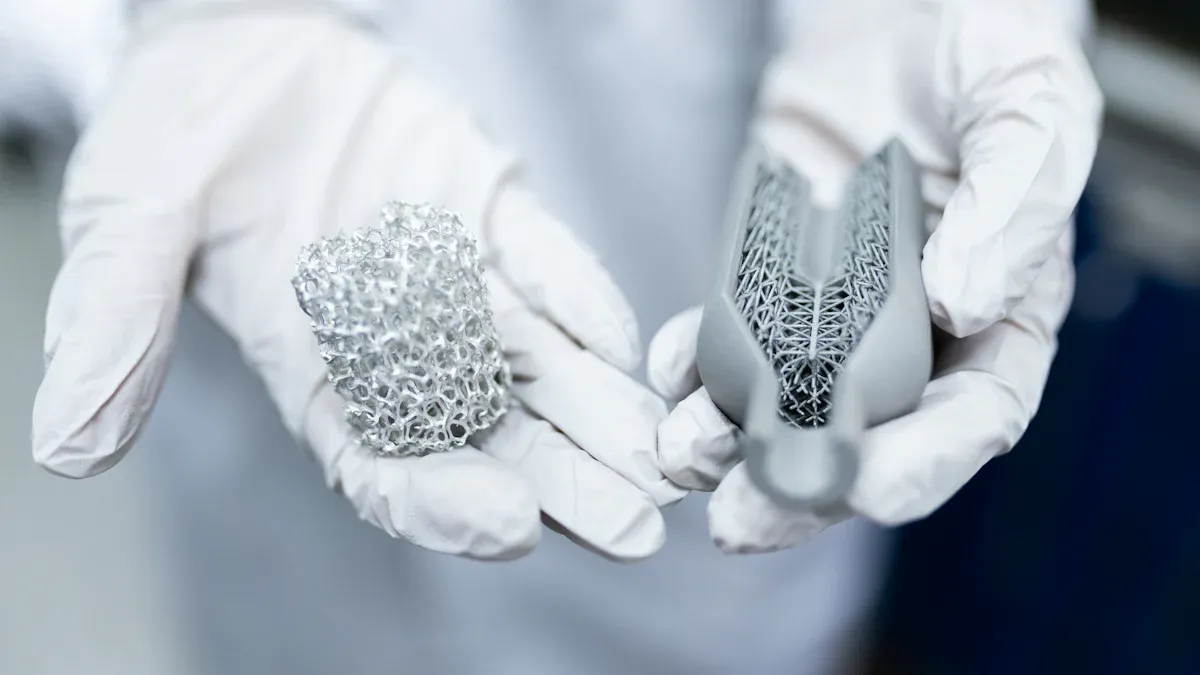
Lattice structures dramatically reduce component weight. They achieve this by removing material from non-critical areas, creating open spaces. Additive manufacturing is crucial for creating these complex, micro-scale designs, which traditional methods cannot produce. The University of Nottingham used 3D printed complex metal lattice structures to reduce automobile component weight and increase fuel efficiency. The Nanyang Venture 8 electric car incorporates a honeycomb structure for its outer shell, enhancing strength while reducing weight. 3D printing offers unparalleled control over internal geometries, enabling intricate lattice structures that retain structural integrity. This technology precisely controls hollow sections, essential for forming tiny nodes, beams, and struts. This detail is unachievable with subtractive manufacturing. Latticing techniques can reduce a part’s overall mass by 90% or more, significantly improving the strength-to-weight ratio.
Improved Energy Absorption
Lattice structures also excel at absorbing energy. Their cellular networks deform controllably under impact, dissipating energy effectively. This property makes them ideal for applications requiring crashworthiness or shock absorption. The intricate arrangement of struts and nodes allows for progressive collapse, protecting the main structure from damage.
Topology Optimization for Material Efficiency
Topology optimization is a powerful software-driven process. It analyzes loads and forces on a component to generate design-specific geometries.
Performance-Driven Geometries
Topology optimization ensures material placement only where essential, leading to optimal effectiveness. This method develops lightweight forms, enhancing performance and reducing assembly weight. Engineers explore numerous design options to create lightweight, resilient structures. For example, BMW used topology optimization and 3D printing for an i8 Roadster roof bracket. This component became 10 times stiffer and 44 percent lighter, a design impossible to cast traditionally. Metal 3D printing, specifically Selective Laser Melting (SLM), was the only viable manufacturing method. This approach reduces aircraft fuel consumption and improves racecar performance. Topology optimization uses mathematical calculations to optimize geometry. It defines a ‘design space’ and analyzes it based on load, deformation, and stiffness constraints. This identifies areas for material removal without compromising function.
Stress Distribution Optimization
Topology optimization inherently optimizes stress distribution. It strategically places material to bear loads efficiently. This results in parts with evenly distributed stress, preventing localized concentrations that lead to premature failure. Software-generated designs ensure every part of the material contributes optimally to component strength.
Custom Geometries and Complex Designs
3D printing excels at producing custom geometries and complex designs. These designs leverage the inherent strength of 3D printed metal parts. Engineers create bespoke parts like custom impellers and nozzles, which require complex geometries and low production volumes. Aerospace benefits from lightweight lattice structures and complex geometries for satellite components, brackets, and heat exchangers. These achieve significant weight savings while meeting stringent mechanical performance standards. Automotive and racing vehicles use optimized topology components made from aluminum and titanium, balancing strength and weight reduction. Medical applications benefit from complex, customized geometries in biocompatible materials for spinal injury treatment, prostheses, and dental implants. Porous structures allow for better tissue growth. Specialty brackets, from simple shelf brackets to International Space Station mounting points, also showcase this capability.
Real-World Applications of Strong 3D Printed Metal Parts
Strong 3D printed metal parts find extensive use across various industries. Their unique properties and design flexibility make them indispensable for demanding applications. Engineers leverage these components to achieve superior performance, weight reduction, and customization.
Aerospace and Defense Components
The aerospace and defense sectors heavily rely on 3D printed metal parts. These components meet stringent requirements for strength, durability, and heat resistance.
Lightweight Structural Parts
3D printing enables the creation of lattice structures and other lightweight geometries. This significantly reduces part weight without compromising strength. This capability benefits components such as airframes, support structures, mount points, and housings. It leads to improved fuel efficiency, lower operating costs, and enhanced environmental sustainability. End-use metal parts in aerospace include turbine blades, engine components, and structural hardpoints. Materials like titanium, stainless steel, and Inconel are critical for aircraft and spacecraft performance. Aerospace companies utilize Electron Beam Melting (EBM) to produce high-strength, lightweight components, especially with reactive materials like titanium. Binder Jetting (BJ) fabricates lightweight, complex structures such as brackets and cabin interior elements. Other examples of lightweight structural components include wing brackets, actuator components for aircraft, drone rotor blades, fuel nozzles, and combustion chambers. Titanium alloys offer a high strength-to-weight ratio and corrosion resistance. Aluminum alloys provide a similar strength-to-weight ratio with lower costs. Nickel alloys deliver extreme performance at high temperatures, while stainless steel offers strength and exceptional corrosion resistance.
High-Performance Engine Components
3D printed metal parts also contribute to high-performance engine components. Manufacturers successfully print turbochargers, valves, and connecting rods. These parts benefit from the ability to create complex internal structures and use advanced materials.
Medical and Dental Implants
The medical and dental fields extensively use 3D printed metal implants. This technology offers patient-specific solutions and enhanced biocompatibility.
Biocompatible Orthopedic Devices
3D printing enables the creation of porous metal scaffolds with tunable mechanical properties. These properties, such as Young’s modulus and compressive strength, match those of natural bone. This is crucial for achieving mechanical biocompatibility and avoiding stress shielding. Structures like stochastic, TPMS, and graph lattice designs optimize implants for successful integration. The technology also develops complex geometries, such as trabecular lattices, which actively encourage bone ingrowth and osseointegration. Patient-specific implants reduce excessive mechanical strength and eliminate stress-shielding effects. They also improve biocompatibility and functionality, boosting cell and nutrient permeability.
Custom Prosthetics
3D printing allows for the creation of implants that precisely match a patient’s unique anatomical structures. This leads to ‘tailor-made’ solutions for orthopedic and dental implants, improving surgical precision and success rates. The technology utilizes materials like titanium alloys and cobalt-chromium alloys. These offer excellent biocompatibility and mechanical properties. Titanium alloys provide superior corrosion resistance, high strength, and low density. Cobalt-chromium alloys offer exceptional wear resistance. MPBF printing technology enables the production of complex, patient-specific implants with intricate designs. This process minimizes material waste and decreases production expenses. Metal-based materials are a focal point in 3D printed scaffold development for dental applications due to their affordability and ease of manufacturing.
Automotive and Industrial Applications
The automotive and industrial sectors leverage 3D printed metal parts for performance-critical components and specialized tooling.
Performance-Critical Parts
3D printed metal parts allow for precise control over strength and weight. This enables better management of static, dynamic, and inertial loads. Additive manufacturing solutions facilitate quicker design, production, testing, and validation of components. This leads to optimized quality of metal structural parts. The technology provides access to a broad portfolio of materials, allowing for pinpoint control over weight, strength, and inertia. This maximizes performance. 3D printing enables the creation of lightweight parts with complex geometries, such as internal lattice structures. BMW utilizes 3D printing for lightweight components in its electric and high-performance vehicles. General Motors uses 3D printing for robust and lightweight structural components. Ford Motor Company employs 3D printing for lightweight and stronger engine covers. Metal alloys like aluminum and titanium offer exceptional strength, durability, and precision for components such as engine parts, brackets, and suspension parts.
Tooling and Fixtures
3D printed metal parts also find use in tooling and fixtures. They offer rapid prototyping and production of custom tools. This improves manufacturing efficiency and reduces lead times in industrial settings.
The strength of 3D printed metal parts is significant, highly dependent on specific material, process, and application requirements. Engineers now recognize their robust capabilities. Advancements in materials and processes continue to push the boundaries of what is possible. These include new high-performance alloys, multi-material printing, and AI-driven process optimization. Such innovations make 3D printed metal parts a viable and often superior option for demanding applications. They offer unparalleled design freedom, enabling lightweight, complex geometries for critical components across various industries.
FAQ
How does 3D printing enhance metal part strength?
3D printing allows for fine grain structures and precise control over microstructure. It enables complex geometries like lattice structures. These features optimize material distribution and improve mechanical properties. Post-processing techniques further enhance strength and durability.
What materials are commonly used for strong 3D printed metal parts?
Common materials include titanium alloys (e.g., Ti64), nickel superalloys (e.g., Inconel), and stainless steel. These materials offer high strength-to-weight ratios, excellent heat resistance, and corrosion resistance. Material selection depends on specific application requirements.
Are 3D printed metal parts stronger than cast metals?
Yes, 3D printed metal parts often surpass cast metals in strength. The controlled solidification during printing results in finer grain structures and fewer defects. This leads to enhanced mechanical performance compared to traditional casting processes.
How do lattice structures contribute to strength and weight reduction?
Lattice structures significantly reduce weight by removing non-critical material. They also improve energy absorption by deforming controllably under impact. This intricate design, only possible with 3D printing, optimizes the strength-to-weight ratio.
What post-processing methods improve the strength of 3D printed metal parts?
Heat treatment and stress relief alleviate internal stresses. Hot Isostatic Pressing (HIP) eliminates internal porosity, increasing density. Surface finishing techniques, like shot peening, enhance surface quality and fatigue resistance.
What role does topology optimization play in strengthening 3D printed parts?
Topology optimization creates performance-driven geometries. It places material only where essential to bear loads efficiently. This process optimizes stress distribution, preventing localized concentrations and leading to stronger, more material-efficient parts.
Can 3D printed metal parts be used in critical aerospace applications?
Absolutely. Aerospace and defense sectors heavily use 3D printed metal parts. They create lightweight structural components and high-performance engine parts. These parts meet stringent requirements for strength, durability, and heat resistance.