

3D printing cost in 2026 ranges from as little as $3 for a small part to over $1,000 for complex projects. The 3D printer printing cost depends on multiple variables that most people overlook when asking how much does it cost to 3d print. Desktop FDM printers now start under $200 and make home prototyping available. Professional metal services operate on different economics, though. How much does 3d printing filament cost? Standard PLA typically runs $20 to $30 per kilogram. Compare that with 3d printer material cost for aerospace-grade titanium powder at $250 to $600 per kg. You’ll see why a 3d printing cost calculator alone won’t capture the full picture. This piece breaks down expense factors and strategic decisions that determine whether 3D printing makes financial sense for your project.
Quick Breakdown: What 3D Printing Actually Costs
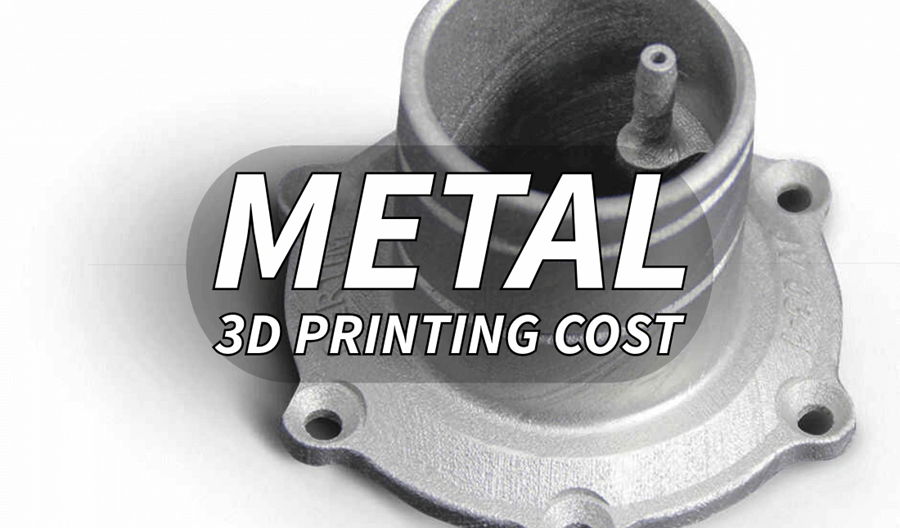
The gap between a hobbyist printing phone stands and an aerospace supplier producing titanium brackets spans orders of magnitude. Three distinct cost tiers exist in 2026, and each operates under different economic rules.
Simple Desktop Prototyping (FDM Polymers)
Entry-level FDM printers start between $150 and $1,000. Desktop models run 50 to 150 watts per hour. 2026 electricity rates sit at around 17.3 cents per kWh, which puts operating cost at $0.01 to $0.03 per hour. Standard PLA filament costs $20 to $30 per kilogram. This is the workhorse material for home printing. Bulk options can drop to $12 to $15 per kg. PETG sits at $20 to $30 per kg. ABS and ASA climb to $25 to $35 per kg.
A typical small functional part uses 50 grams of PLA and costs about $1 in material. Add $0.10 in electricity for four hours of printing and $0.20 in nozzle wear. The Benchy test model weighs 15 grams and takes 45 minutes. Total cost runs roughly $0.32. Specialty materials shift these numbers quite a bit. Carbon-fiber-infused filaments reach $100+ per kilogram. Industrial PEEK and PEI command $300 to $500 per kg.
Desktop FDM delivers the lowest barrier to entry. The per-print economics depend on print success rates though. Modern machines achieve 95% first-print success with default settings. That 5% failure buffer still affects material budgets for beginners.
Professional & Engineering-Grade Services (SLA/SLS)
SLA desktop printers start around $500. Industrial-grade systems reach $5,000 and beyond. SLS equipment represents a much larger commitment and exceeds $50,000. Professional powder bed fusion introduces complex material economics. This differs from FDM’s straightforward filament costs. PA12 (Nylon 12) costs $50 to $80 per kilogram and is the most common SLS powder. SLA resins range from $50 to $150 per liter for standard grades. Engineering resins climb to $100 to $250 per liter.
Machine operation becomes a main cost driver at this tier. Industrial SLS systems consume $10 to $30 per hour to operate. This factors in depreciation, energy and maintenance. Build cycles span 8 to 24 hours for printing. Add up to 12 hours of cooling time before parts can be removed. The thermal management required for consistent powder sintering creates overhead that doesn’t exist in FDM workflows.
Post-processing adds another layer. Parts emerging from SLS builds need depowdering, cleaning and often surface finishing. These steps increase project cost by 20 to 50% of the base printing expense. SLA parts need washing, curing and support removal. Labor demands sit lower than SLS though. Batch efficiency matters here. SLS allows parts to nest vertically and horizontally within the powder bed. This spreads machine time across multiple components and reduces per-part costs by 20 to 50% when builds are optimized.
Industrial-Grade Metal Amortization (SLM/DMLS Titanium & Alloys)
Titanium 3D printing operates on different economics. Parts cost $5 to $20 per cubic centimeter in 2026. Raw titanium powder runs $300 to $600 per kilogram. Material represents only a fraction of total expense though. Machine time dominates the cost structure at 40 to 70% of total project cost. Post-processing claims 20 to 50%. This includes support removal, heat treatment and surface finishing. Material consumption accounts for just 10 to 30%. Labor and handling take 5 to 15%, and setup overhead sits at 5 to 10%.
Machine time carries such weight because industrial SLM systems represent capital investments in the hundreds of thousands. A tall or geometrically complex part occupies the build chamber longer than a bracket of equivalent weight. This inflates costs. Build orientation affects expenses more than part mass. Two 500-gram components can carry different price tags based on Z-height, support requirements and thermal stress management needs.
Powder handling adds hidden expenses. Metal AM requires inert gas chambers, high-powered fiber lasers, powder recycling systems and stress relief heat treatment. Recycling systems improve powder reuse rates. Some degradation occurs with each cycle though. This requires fresh powder injection to maintain consistent properties.
Main Factors That Drive 3D Printer Printing Cost
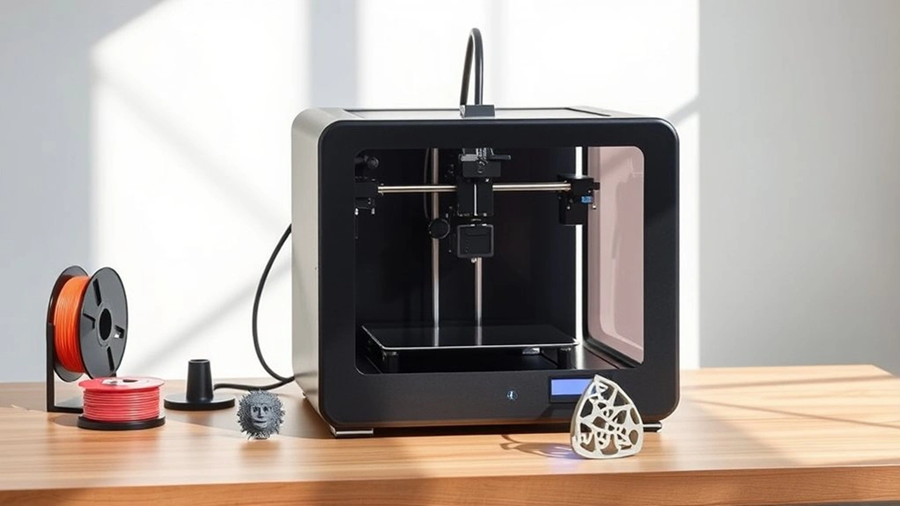
Five key variables separate a $2 print job from a $2,000 one. Understanding how each factor compounds reveals why 3d printing cost varies so much across applications.
Technology Selection: Polymer FDM vs. Metal Powder Bed Fusion (SLM)
Equipment infrastructure creates the first major cost divide. FDM just needs minimal supporting systems beyond the printer itself, with no processing stations required. Metal powder bed fusion demands controlled inert gas environments, high-powered fiber lasers, powder recycling systems and stress relief heat treatment. Desktop FDM machines consume 50 to 250 watts during operation. Heated chambers can push consumption to 500 watts or higher. Industrial SLS systems carry machine operation costs of $10 to $30 per hour when you account for depreciation, energy and maintenance.
Depreciation represents a hidden expense that most users miss when calculating 3d printer printing cost. Print heads need replacement every 500 to 2,000 hours at $50 to $200 each. Build surfaces need replacing every 200 to 1,000 prints at $20 to $100. Metal systems face steeper wear patterns because of thermal cycling and abrasive powder handling.
Material Grades: From $20/kg Plastics to Aerospace-Grade Titanium Powder
Production methodology determines material pricing as much as the base element. Standard PLA costs $20 to $30 per kilogram. Engineering-grade PEEK climbs to $200+ per kilogram. The Hydride-Dehydride (HDH) process produces titanium at $35 to $65 per kilogram for metal powders, which is 60 to 75% cheaper than plasma atomization routes. Gas atomization reaches $95 to $160 per kilogram at scale for spherical powder production. PREP technology delivers the highest quality spherical powder but carries production costs of $200 to $350 per kilogram. This limits economic viability to demanding aerospace and medical applications where certification requirements justify the premium.
Titanium alloy powders represent the fastest-growing segment because of superior corrosion resistance and thermal stability, especially Ti-6Al-4V used in aerospace and medical implants. Medical-grade titanium powder demand reached about 1,050 metric tons in 2025, up from 620 metric tons in 2020.
Print Size, Build Volume, and Nesting Efficiency
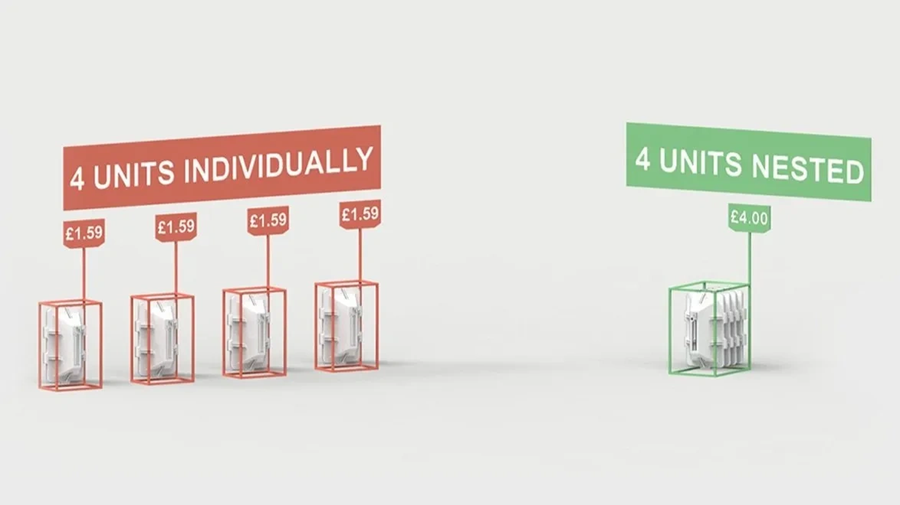
Geometry affects how much does it cost to 3d print more than raw mass. A tall part that occupies significant Z-height costs more than a complex lightweight lattice of similar weight. Machine time scales with build height, not material volume. SLS and powder bed fusion technologies benefit from nesting optimization. Parts can be stacked vertically and horizontally throughout the build chamber, which spreads setup costs across multiple components. Nesting software saved one manufacturer 800 hours of production time, 47 kilograms of powder and 50 hours of labor across 100 print jobs. Nested orders provide 30% savings. Parts designed for nesting achieve savings upwards of 60%.
Post-Processing Requirements
Surface finishing dominates post-production expenses. Metal parts need support removal, which can be labor-intensive depending on geometry complexity. Heat treatment follows to relieve residual stresses from rapid heating and cooling cycles. CNC machining often refines critical surfaces to meet tolerance specifications. These steps consume 20 to 50% of total project cost together. SLA parts need washing in solvents, UV post-curing and manual support removal. FDM parts with complex geometries need extensive manual support removal. Smooth finishes demand lengthy sanding and surface preparation.
Labor and Setup Time
Skilled operators command $15 to $25 per hour for machine operation in the United States. Specialized 3D design work lifts costs to $30 to $60 per hour. File preparation, build monitoring, part removal and quality control all add labor expenses that scale with project complexity rather than part count.
How Much Does It Cost to 3D Print at Home vs. Outsourcing?
Ownership economics move dramatically based on print frequency and technology requirements. Desktop polymer printing offers available entry points, whereas industrial metal systems create insurmountable barriers for individual operators.
DIY Home Polymer Printing Expense Breakdown
Original investment for home FDM printing starts at $200 to $400 for entry-level machines and climbs to $800 to $2,000+ for prosumer equipment. Resin printers fall between $300 and $1,000, though operators must budget for curing stations as additional infrastructure. These figures represent just the equipment threshold.
Material expenses for PLA and PETG run $20 to $30 per 1-kilogram spool. One kilogram of PLA produces roughly 30 to 40 small phone stands, which translates to less than $1 in raw material per unit. Efficiency losses from supports and failed prints reduce this theoretical yield.
Electricity costs prove minor but measurable. Average FDM printers consume 50 to 250 watts during operation and generate roughly $0.50 to $1 in electricity expense for a 10-hour print cycle. Maintenance creates more recurring expenses. Nozzles clog, belts wear, and build plates warp. Replacement nozzles cost $15 to $20, but downtime represents the real expense.
A phone stand printed at home costs approximately $0.70 in filament, $0.10 in electricity, and $0.20 in wear and tear, totaling roughly $1. That same stand retails for $7 to $10 online. Yet the apparent savings become less clear when you factor in setup time, potential reprints after failures, and post-processing labor.
One client attempted printing PETG parts in-house and spent nearly twice the quoted outsourcing cost after accounting for filament jams, wasted spools, and troubleshooting hours. Hidden costs accumulate through power consumption, replacement tools, calibration time, scrapped parts, and storage for rarely-used materials.
The Technology Barrier: Why Industrial Metals Require Professional Outsourcing
Metal 3D printing remains firmly out of reach for home operators due to upfront costs and required technology infrastructure. The cheapest dedicated commercial metal 3D printers start in the tens of thousands of dollars. Industrial systems range from $10,000 to $100,000 or more.
Equipment represents only part of the barrier. Metal powder bed fusion systems just need controlled atmospheres, high-powered fiber lasers, powder recycling infrastructure, and heat treatment capabilities. Desktop printers lack the industrial HVAC and finishing stations that professional metal operations require. Safety protocols for handling reactive metal powders add another layer of complexity, unsuitable for typical workspaces.
At JHMIM Titanium, we don’t force your designs to fit our machines; instead, we select the perfect process to fit your engineering blueprints. Review our capability framework below to see how our integrated Ti 3d Printing and Ti Metal Injection technologies can optimize your production costs, refine component tolerances, and streamline your global supply chain.
When Each Option Makes Financial Sense
Break-even analysis reveals clear thresholds. Service bureaus charge $0.05 to $0.15 per gram plus $3 to $10 setup fees for FDM work in 2026. A 100-gram part lands between $8 and $25 before shipping. A $200 Bambu A1 mini recoups its investment against service bureau pricing within 25 to 40 prints, while a $549 K1C breaks even at 60 to 100 prints.
Print frequency determines financial viability. Below one print per week, service bureaus win on pure economics. Above two prints per week, ownership makes sense. The middle range remains close, making either choice defensible.
Desktop printers excel for rapid prototyping when organizations print frequently. Multiple desktop units cost less and scale more easily than single industrial machines. Outsourcing delivers professional-grade equipment access and consistent quality without long-term commitment. Lead times favor in-house printing at hours versus weeks for outsourced work, though service bureaus eliminate maintenance overhead, failed print waste, and operator training requirements.
How to Calculate Your 3D Printing Cost
Accurate estimation requires either automated tools or manual formulas that account for every cost component. Both approaches deliver reliable results when applied correctly.
Using a 3D Printing Cost Calculator
Online calculators automate the estimation process by accepting inputs like filament type, weight, electricity rates and print duration. Tools such as 3dprintingcostcalculator.com allow users to enter part names, select materials (PLA or PETG), add slicer-generated filament weight and print time, include machine hourly rates and power consumption, then factor in labor, hardware components and packaging costs. The calculator produces itemized breakdowns showing material, energy, machine wear and total project expenses.
Slicer software including Cura, PrusaSlicer and Simplify3D provides built-in cost estimation features that analyze 3D models against printer settings to calculate material usage and print time. These tools show estimated filament weight in grams and filament length after slicing. This enables accurate 3d printing cost calculations. Services like JLC3DP offer live pricing when users upload CAD files for metal parts, with quotes based on geometry and material selection.
Manual Cost Calculation Method
Manual calculations follow structured formulas. Material cost equals filament weight divided by 1,000, then multiplied by price per kilogram. Energy cost multiplies power consumption by print duration and electricity rate. Machine depreciation adds hourly wear calculated by dividing printer cost over expected lifespan, typically 3,000 to 10,000 print hours.
To name just one example, a print using 15 grams of filament priced at $20 per kilogram, consuming 0.1 kWh per hour over four hours yields: filament cost of $0.30, electricity cost of $0.05 (at $0.12/kWh), totaling $0.35 before depreciation. Metal calculations prove more complex. A 10 cm³ titanium part at 4.43 g/cm³ density consumes 44.3 grams of powder. At $0.45 per gram, material alone costs $19.94, yet this represents just 10 to 30% of total expense.
Ground 2026 Case Study: Cost Breakdown of a 3D-Printed Titanium Joint Gear for Robotics
A custom titanium hip stem project demonstrates ground metal AM economics. The 300-gram component required $75 in material, eight hours of EBM machine time at $960, post-processing including polishing and biocompatibility certification at $600, plus $200 overhead. Total project cost reached $1,835 per unit. This delivered 27% savings versus traditional casting at $2,500 while maintaining 100% compliance and five-day lead times. Machine time dominated expenses at 52%, with post-processing claiming 33% and material just 4% of the total budget.
The Hidden Costs Most People Miss

Budgets often implode after the first invoice arrives. Four categories of expenses remain invisible during original 3d printing cost calculations yet affect final expenditures.
Failed Prints, Support Material Waste, and Titanium Powder Recyclability
33% of all 3D prints result in waste. Failed prints account for more than 80% of that waste stream, with support structures contributing another major portion. 41% of operators identified support material as the biggest waste problem. Material consumption increases 20 to 50% when support structures are required. Each gram of support material costs $0.15 to $0.30 in raw feedstock and adds $0.40 to $0.80 in labor to remove.
Titanium powder recyclability offers better economics than polymer materials. AMS Ltd.’s proprietary process recycles scrap metal into powder meeting quality requirements at 97% efficiency. You can reuse recycled powder many times without bad effects on mechanical properties, creating sustainable cost advantages for metal operations.
Post-Processing Hardened Metals (Support Removal & CNC Surface Refinement)
CNC machining and post-processing represent nearly three-quarters of total metal 3D printing expenses. Support removal time spans 3 to 5 hours per part before DFM optimization. Post-processing accounts for 76% of production time and 50% of total costs in metal material extrusion. Stress relief treatments cost $500 to $600 per batch. Heat treatment adds $500 to $2,000, depending on material and batch size.
Design, File Preparation, and DFM Engineering Support
Over 85% of concealed 3D printing costs stem from original design problems. Professional DFM analysis reduces material usage by 15 to 25% per part and cuts support material ratios from 25-35% down to 8-12%.
Shipping, Handling, and Global Logistics Under Strict Lead Times
Manufacturing inventory represented $537 billion in 2011, equal to 10% of annual revenue. Transportation costs are high in traditional supply chains. 3D printing’s on-demand capability reduces these burdens when production occurs near end-users.
Strategic Cost Reduction: When 3D Printing Isn’t the Right Choice
Strategic decisions around 3d printing cost optimization determine whether projects remain financially viable. Three approaches reduce expenses or signal when alternative manufacturing routes deliver better economics.
Optimizing Topologies and Lattice Structures to Save Expensive Metal Powder
Topology optimization removes material from low-stress regions and maintains structural integrity. Aerospace applications achieve 25-50% weight reduction through geometries impossible to mold or machine. Lattice structures deliver similar benefits by replacing solid material with patterned voids. Lattice designs reduce scan area per slice from 100 cm² to 6.2 cm² when comparing cross-sectional areas. This decreases scanning time per layer and overall manufacturing time. Material cost dominates production expenses at build volume rates above 20 mm³/sec. Topology optimization becomes financially significant for expensive powders.
Batch Printing for Better Economics
Nesting multiple parts within a single build chamber spreads fixed costs across higher output. Sub-normal machine utilization guides to higher unit costs, while full build volume use maximizes efficiency.
Slashed Production Costs: Transitioning from 3D Printing to Titanium MIM for High Volume
Metal 3D printing costs $50-80 per part whatever the volume with zero tooling investment. Metal injection molding breaks even at 20,000-30,000 parts per year and delivers $3-5 per part at scale but requires $50,000-$100,000 upfront tooling. AM maintains economic advantage below 10,000 units. MIM becomes strongly favorable above 50,000-100,000 annual volume.
JHMIM Titanium doesn’t force your designs to fit our machines. We select the perfect process to fit your engineering blueprints. Review our capability framework below to see how our integrated Ti 3d Printing, Ti Metal Injection and Titanium Machining technologies can optimize your production costs and refine component tolerances while streamlining your global supply chain.
Conclusion
Understanding 3d printing cost in 2026 just needs looking beyond sticker prices and material expenses. Machine time and post-processing determine whether projects achieve financial viability, along with failed prints and design optimization. Desktop FDM delivers available entry points to prototype and handle low-volume production. Industrial metal systems just need professional infrastructure that makes outsourcing the practical option for most operations.
Calculate total expenses using both automated tools and manual formulas. Factor in every hidden cost. Additive manufacturing maintains economic advantages when volumes stay below 10,000 units annually. Traditional methods like MIM deliver superior unit economics beyond 50,000 parts. Choose the technology that matches your actual production requirements, not theoretical capabilities.
FAQs
Q1. Is 3D printing a profitable business opportunity in 2026? Starting a 3D printing business in 2026 can be profitable depending on your niche and volume. Desktop FDM printers break even against service bureau pricing within 25-40 prints for entry-level machines, while professional operations benefit from batch printing that reduces per-part costs by 20-50%. Success depends on print frequency, material selection, and whether you focus on prototyping or production runs. Below 10,000 annual units, additive manufacturing maintains economic advantages over traditional methods.
Q2. What price range should I expect for 3D printers in 2026? 3D printer prices in 2026 vary dramatically by technology. Entry-level FDM desktop printers start between $150-$1,000, while resin printers range from $300-$1,000. Professional SLA systems begin around $500 and reach $5,000+, whereas industrial SLS equipment exceeds $50,000. Metal 3D printing systems remain out of reach for most individual operators, starting in the tens of thousands and ranging up to $100,000 or more for industrial-grade machines.
Q3. What constitutes a reasonable price for 3D printing services? Fair 3D printing pricing depends on technology and complexity. Service bureaus typically charge $0.05-$0.15 per gram plus $3-$10 setup fees for FDM work, meaning a 100-gram part costs $8-$25 before shipping. Professional metal services price titanium parts at $5-$20 per cubic centimeter. Small polymer parts can cost as little as $3, while complex metal projects exceed $1,000. Always request itemized quotes that break down material, machine time, and post-processing costs.
Q4. What are the main factors that increase 3D printing costs? Five primary factors drive 3D printing expenses: technology selection (FDM vs. metal powder bed fusion), material grades (from $20/kg plastics to $300-$600/kg titanium powder), part geometry and build volume, post-processing requirements, and labor costs. Machine time dominates metal printing at 40-70% of total cost, while post-processing claims 20-50%. Hidden costs include failed prints (33% waste rate industry-wide), support material removal, and design optimization services.
Q5. When should I choose traditional manufacturing over 3D printing? 3D printing makes financial sense below 10,000 units annually, but traditional methods like metal injection molding become cost-effective at 20,000-30,000 parts per year, delivering $3-5 per part versus $50-80 for additive manufacturing. Above 50,000-100,000 annual volume, conventional manufacturing strongly outperforms 3D printing economics. Consider transitioning to traditional methods when you need consistent high-volume production, simpler geometries, or when tooling costs ($50,000-$100,000) can be amortized across large production runs.