

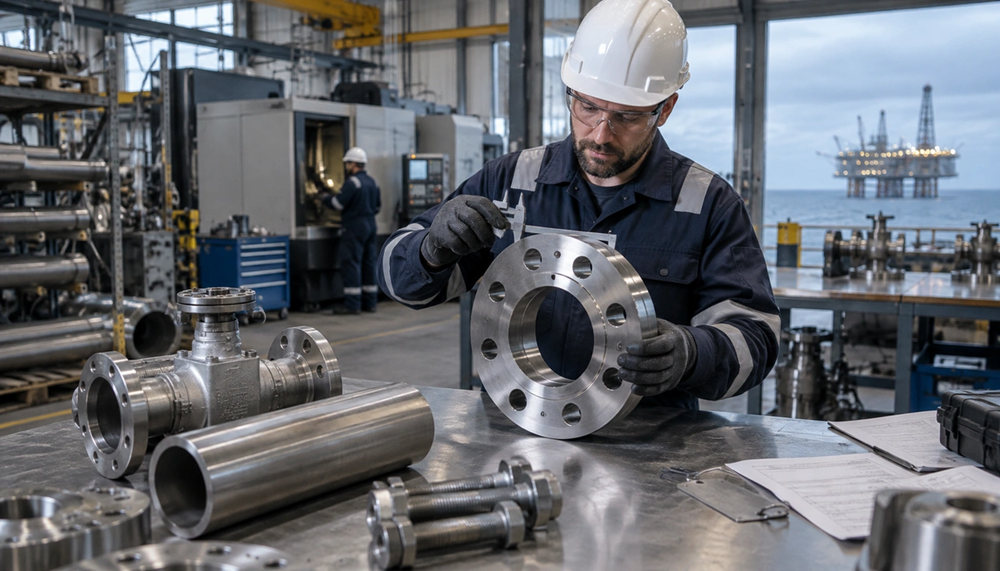
Titanium components used in oil and gas can face severe cracking risks in sour environments, and a grade name alone does not establish compliance. NACE MR0175/ISO 15156 provides a framework to select and qualify materials for oil and gas production that contains H₂S. This piece connects NACE MR0175 titanium and ISO 15156 titanium with titanium for oil and gas, titanium sour service, titanium subsea components, titanium grade 5 oil and gas, and titanium grade 29 sourcing decisions. It also addresses service conditions, hydrogen uptake, fabrication, traceability, and supplier records.
What NACE MR0175/ISO 15156 Covers for Titanium
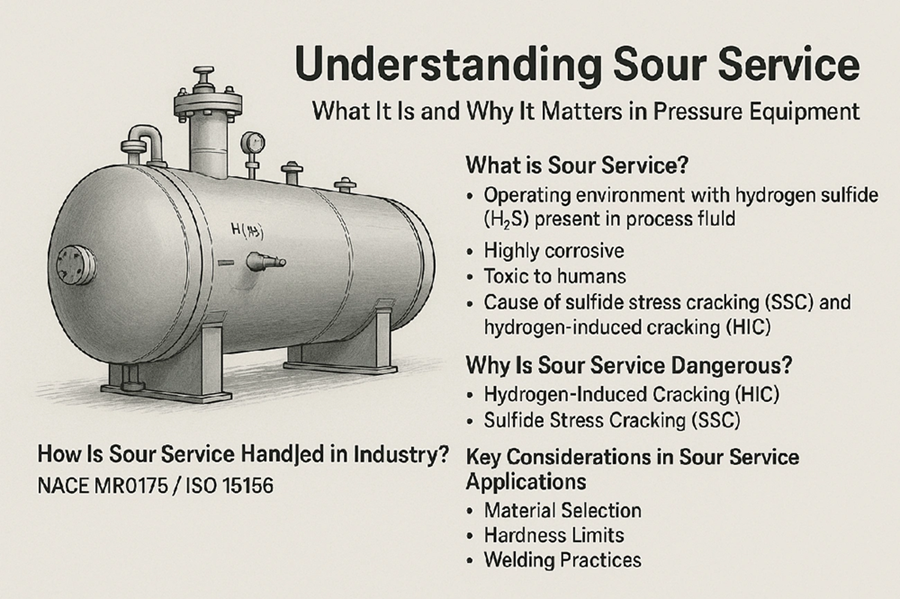
The standard applies to a defined service problem, not to a titanium grade by itself. For Titanium Components for Oil & Gas, NACE MR0175/ISO 15156 sets requirements and recommendations to select and qualify metallic materials exposed to H₂S-containing environments in oil and gas production and natural gas treatment. The material must match the documented environment, metallurgical condition, mechanical loading, and component application.
ISO 15156-3: Titanium and Other Corrosion-Resistant Alloys
ISO 15156 has three parts. Part 1 sets out general principles, Part 2 covers cracking-resistant carbon and low-alloy steels, and Part 3 covers cracking-resistant corrosion-resistant alloys and other alloys, including titanium alloys. A supplier assessing nace mr0175 titanium must review the requirements for the specific titanium grade, product condition, and service limits. A general statement that the material is “NACE compliant” is not enough.
Part 3 focuses on titanium’s resistance to cracking from sour exposure in oil and gas service. The listed mechanisms include sulfide stress cracking, stress-corrosion cracking, and galvanically induced hydrogen stress cracking. A component can experience these mechanisms if H₂S, tensile stress, hydrogen charging, galvanic coupling, and the material’s metallurgical condition interact.
The standard has clear limits. ISO 15156-3 addresses cracking but does not set requirements for resistance to general mass-loss corrosion or localized corrosion. An ISO 15156 titanium selection alone does not prove resistance to pitting, crevice corrosion, erosion, or every other corrosion mode that may occur in production equipment. The component design requires a separate assessment of chlorides, water chemistry, temperature, and contact with other metals.
The standard adds to the requirements in applicable design codes, material specifications, regulations, and equipment standards. It does not replace them. It also applies to equipment designed under conventional elastic design criteria. Designs that use plastic criteria, strain-based methods, or limit-state methods must follow the principles in Part 1 instead of relying on Part 3 alone.
Pre-qualified materials may be selected if the grade and condition fall within the applicable standard entry and the service environment stays within the stated limits. An alloy or condition not listed in the standard may require application-specific qualification through suitable laboratory testing, field experience, or a documented technical evaluation. This difference affects titanium sour-service records, especially when a purchase order specifies titanium grade 5 oil and gas components or titanium grade 29 without stating the exact condition.
Production Service vs. Refining: At the Time MR0103 Applies
NACE MR0175/ISO 15156 was developed for oil and gas production and natural gas treatment. It is not a universal standard for all H₂S-containing process equipment. Refining and downstream environments fall outside its intended scope. A producing well, wellhead, production valve, or other field item may use MR0175/ISO 15156. Equipment within a refinery or related processing unit may require NACE MR0103, also identified as ISO 17945 for refinery sour service.
MR0103 addresses resistance to sulfide stress cracking in sour petroleum refining and related processing environments that contain H₂S as a gas or dissolved in an aqueous phase, with or without hydrocarbons. It covers equipment such as pressure vessels, heat exchangers, piping, valve bodies, and pump or compressor cases. Unlike the production standard, MR0103 was designed for refinery conditions and does not use MR0175’s production-service H₂S partial-pressure thresholds as the same basis for applicability.
The purchaser should identify the titanium component’s operating location before citing either standard. Titanium subsea components in an oil production system and titanium parts in a refinery may both encounter H₂S, but different material documents may govern them. The RFQ should identify the process sector, applicable standard edition, service environment, titanium grade, product condition, and qualification basis. For titanium grade 29, the exact material entry and condition require verification because the grade name alone does not establish acceptance under either standard.
Define the Sour Service Conditions Before Choosing Titanium
A reliable selection starts with the actual sour-service envelope, not a catalog grade. The purchaser should document the water phase, H₂S partial pressure, pH, chloride concentration, temperature, pressure, flow, oxygen availability, tensile stress, residual stress, and cathodic-protection potential. These conditions determine whether titanium used in oil and gas remains passive, absorbs hydrogen, or develops localized corrosion.
H₂S Partial Pressure, pH, Chlorides, and Temperature
H₂S partial pressure shows the severity of sour gas, while pH controls hydrogen generation and passive-film stability. Lower pH generally increases hydrogen evolution, while higher temperatures accelerate electrochemical reactions and diffusion. A request for titanium sour service should therefore specify operating and upset temperatures, aqueous-phase pH, H₂S partial pressure, chloride level, and exposure duration instead of citing H₂S alone.
Titanium resists general corrosion and stress-corrosion cracking in the standard NACE test solution that contains 3,000 ppm dissolved H₂S, 5% NaCl, and 0.5% acetic acid at pH 3.5. This result supports strong cracking resistance under those test conditions, but it does not confirm performance in every production fluid.
Chlorides and temperature need separate review. Near-neutral chloride brines can cause crevice attack in commercially pure titanium above approximately 80°C, especially when pH falls below about 9. Grade 12 reduces the reported crevice-corrosion threshold to about pH 3, while palladium-containing grades offer greater resistance in more acidic brines. Flange faces, gasket interfaces, deposits, threaded areas, and shielded joints then need the same attention as exposed surfaces.
The passive titanium oxide film needs oxygen in the liquid or vapor phase to regenerate after damage. Anhydrous service without an oxygen source can prevent film repair, so the process description should identify deaeration, stagnant zones, shutdown conditions, and possible oxygen ingress. These details affect the suitability of both titanium grade 5 oil and gas components and titanium grade 29.
Hydrogen Uptake and Cracking Risks in Titanium
H₂S, acidic water, active corrosion, and cathodic protection can generate atomic hydrogen at the metal surface. The hydrogen can diffuse into titanium, collect at microstructural defects, and form brittle hydrides. Tensile or cyclic stress can then reduce ductility and fracture toughness, which may cause delayed cracking.
Titanium generally has low susceptibility to stress-corrosion cracking in neutral chloride environments because its oxide film remains stable. Hydrogen charging changes the assessment, though. Titanium alloys may crack under excessively negative cathodic-protection potentials, in deep sour wells, or under other conditions that promote hydrogen uptake. Subsea components therefore need a review of both seawater chemistry and the selected cathodic-protection potential. Seawater may be benign for titanium, but excessive protection can increase hydrogen activity at the surface.
Why Cracking Compliance Does Not Prove Overall Corrosion Resistance
A qualifying cracking result addresses one specific failure mechanism. It does not prove immunity to general corrosion, pitting, crevice corrosion, erosion-corrosion, or deposit attack. Titanium can show negligible general corrosion, yet localized attack may occur inside a tight crevice where the chemistry is different from the bulk fluid.
This difference matters because ISO 15156 titanium acceptance concerns cracking resistance, while chloride tolerance and service life need separate corrosion evaluation. Laboratory test data may not reflect deposits, heat-transfer surfaces, impurities, flow conditions, or weld geometry in service. The final review of Titanium Components for Oil & Gas should therefore match the exact grade, product condition, fabrication state, fluid chemistry, joint design, and protection system with the documented service envelope.
Compare Titanium Grades for Oil and Gas Components
Grade selection starts once the service envelope is defined because each alloy has a different strength level, microstructure, corrosion response, and qualification record. The purchase specification for Titanium Components for Oil & Gas should identify the grade, UNS designation, product form, heat-treatment condition, and applicable iso 15156 titanium entry.
Grade 2 for Commercially Pure Titanium Components
Titanium Grade 2, UNS R50400, is commercially pure titanium that is commonly supplied in the annealed condition. Its simple metallurgy and strong resistance to H₂S-related cracking make it a practical choice for lower-strength components in titanium sour service. Typical applications include corrosion-resistant parts with moderate loads and wet H₂S exposure.
The grade still needs review for chloride concentration, temperature, crevice geometry, and fabrication condition. A certificate that identifies Grade 2 does not confirm acceptance in every brine or at every temperature. The buyer should therefore match the exact product form and annealing condition to the applicable standard entry.
Titanium Grade 5: Strength Needs and Sour Service Restrictions
Grade 5, Ti-6Al-4V, UNS R56400, provides higher strength than commercially pure grades. This can reduce section size or support highly loaded components. Higher strength does not remove hydrogen-related concerns, but. The annealed condition is identified for sour-service use, and hydrogen uptake requires control in high-chloride environments.
The design review for titanium grade 5 oil and gas components should cover tensile loading, cathodic-protection potential, chloride level, temperature, and exposure duration. Grade 5 may meet a nace mr0175 titanium requirement, but the purchaser must confirm that the specific condition and service limits suit the component.
Titanium Grade 29: Check the Exact Material Entry and Condition
Grade 29 is Ti-6Al-4V-0.11Ru-ELI, UNS R56404. Its ruthenium addition improves resistance in reducing acidic, chloride-containing media. The ELI chemistry and fully transformed-beta condition also support demanding energy applications. Qualification records cover wrought and welded forms, including sour brines. Reported resistance qualification extends to 330°C, with sour-service hardness up to HRC 35.
These figures define documented qualification scopes rather than automatic approval for every purchase. The RFQ should state the exact titanium grade 29 entry, product form, microstructure, weld procedure, and post-weld treatment. A generic Grade 29 label leaves the acceptance basis incomplete.
Titanium Subsea Components: Seawater Exposure and Cathodic Protection
Seawater exposure introduces a galvanic variable. Titanium usually does not require cathodic protection, but coupling it to cathodically protected steel can create excessive hydrogen activity. Titanium absorbs hydrogen at potentials below -0.8 V versus Ag/AgCl in seawater. Grade 2 and Grade 5 therefore need review for isolation, anode settings, potential monitoring, and sustained mechanical stress. Alloy selection and cathodic-protection control for titanium subsea components must be assessed together.
Verify Titanium Qualification Through Fabrication
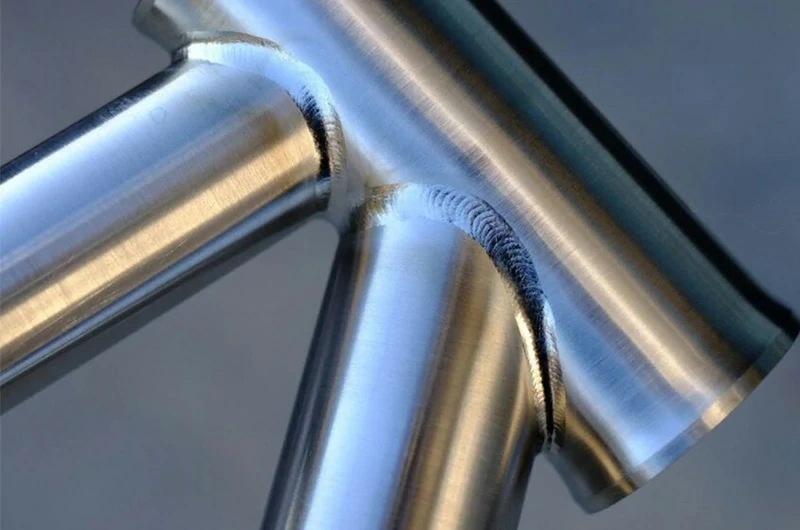
Qualification must follow a component throughout manufacturing because the condition tested at the mill may differ from the condition delivered after forming, machining, welding, or heat treatment. Titanium Components for Oil & Gas require buyers to verify the finished product instead of relying on a generic nace mr0175 titanium statement.
Listed Materials vs. Qualification by Field Experience or Testing
A listed iso 15156 titanium material remains acceptable only if its exact product form, metallurgical condition, strength, hardness, heat treatment, microstructure, and cold-work level comply with the applicable entry and documented service envelope. Part 3 provides qualification options rather than universal approval for every fabrication route.
An unlisted grade, condition, or production route may qualify through documented field experience or laboratory testing. Field evidence must identify the material, cracking mechanism, and service conditions. The intended service must not exceed the severity of the documented experience. The documented field period must last at least two years and should include an examination after use. Laboratory samples must represent the commercial product and the condition most susceptible to cracking. The equipment user should approve the sampling method, test severity, preparation, and acceptance criteria.
Welding, Heat Treatment, and the Finished Component Condition
Welding can change hardness, microstructure, residual stress, and hydrogen sensitivity in titanium sour service. The supplier should provide a qualified WPS, supporting PQR, and welder qualification record for each applicable joint and process. Titanium requires clean joint surfaces and effective inert-gas protection because oxygen, nitrogen, and hydrogen contamination can embrittle weld metal and adjacent heat-affected zones. Shielding equipment, purge arrangements, heat input, cleaning, and essential variables must comply with the qualified procedure.
Post-weld heat treatment applies only if the drawing or WPS specifies it. Some hardware is delivered as-welded, while specified assemblies require controlled thermal treatment. Therefore, titanium grade 5 oil and gas, titanium grade 29, and titanium subsea components require final inspections and records tied to their supplied condition. Records must document weld examinations and heat-treatment data, with complete material traceability.
Source Titanium Components With Clear Compliance Records
Procurement records must link the selected Titanium Components for Oil & Gas to a controlled requirement, rather than relying only on a supplier’s declaration. The RFQ should state the agreed NACE MR0175/ISO 15156-3 edition, project addenda, product form, grade, heat-treatment condition, service envelope, design code, and acceptance hierarchy. The RFQ must also define H₂S partial pressure and pH, along with chloride levels, temperature, water phase, pressure, and upset conditions. This prevents bidders from applying different assumptions to titanium sour service.
RFQ Checklist: Agreed Edition, Product Form, and Service Envelope
Ask bidders to provide a component-level schedule that identifies the manufacturing route, offered condition, deviations, and qualification evidence. A general certificate cannot cover each valve body, stem, weld, or fastener.
Supplier Review: Titanium Processing Skills and Heat Traceability
Review the supplier’s titanium processing capabilities, including forging, machining, welding, finishing, heat treatment, and inspection. Confirm that the quality system covers the specified product form and process. Heat traceability must follow the material from melt through processing and marking. The heat number on the product, MTR, packing list, and final component must match, including work completed by subcontractors.
Material Test Reports, Required Tests, and Final Acceptance
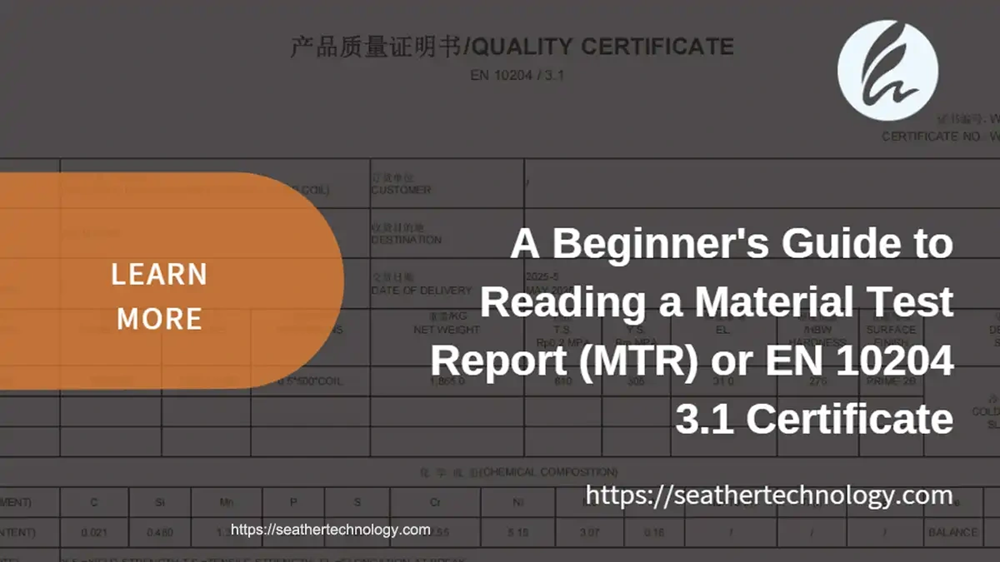
Require MTRs that show the alloy, heat number, specification, product form, size, condition, chemistry, mechanical properties, hardness, heat-treatment records, PMI, required examinations, and a signed compliance statement. Final acceptance should confirm markings and document links, along with deviations and the supplied condition.
Conclusion
Reliable sourcing of Titanium Components for Oil & Gas starts with the service environment rather than the alloy name. Purchasers must separate production requirements from refinery requirements and define H₂S, pH, chlorides, temperature, stress, and cathodic-protection conditions before confirming the exact grade and metallurgical condition. Grades 2, 5, and 29 have different strength levels and qualification requirements. Fabrication and welding, along with heat treatment and hydrogen exposure, can affect the finished component’s performance. Clear RFQs, qualified procedures, MTRs and heat traceability, plus final inspections, are required. A documented review of each component gives titanium sour-service decisions a defensible technical foundation.
FAQs
Q1. What does NACE MR0175/ISO 15156 require for titanium components?
It requires matching the titanium grade, product form, metallurgical condition, and qualification evidence to the intended sour-service conditions. Key factors include H₂S partial pressure, pH, chlorides, temperature, and mechanical stress.
Q2. What does NACE compliance mean for titanium?
It means the specific titanium component meets the applicable cracking-resistance requirements for its documented service conditions. It does not guarantee resistance to all corrosion types, such as pitting or crevice corrosion.
Q3. Which NACE standard applies to oil and gas production versus refining?
NACE MR0175/ISO 15156 applies to H₂S-containing oil and gas production and natural gas treatment. Refinery sour-service equipment may instead require NACE MR0103/ISO 17945.
Q4. Is a supplier’s “NACE-certified titanium” statement enough?
No. Buyers should verify material test reports, heat traceability, the exact grade and supplied condition, and supporting qualification records. Welding and heat-treatment documentation should also be checked where applicable.
Q5. Are titanium Grades 2, 5, and 29 automatically suitable for sour service?
No. Grade 2 can suit moderate-strength applications, Grade 5 offers higher strength, and Grade 29 offers improved resistance in certain acidic chloride environments. Each still requires verification against the applicable standard entry, finished condition, and service limits.