

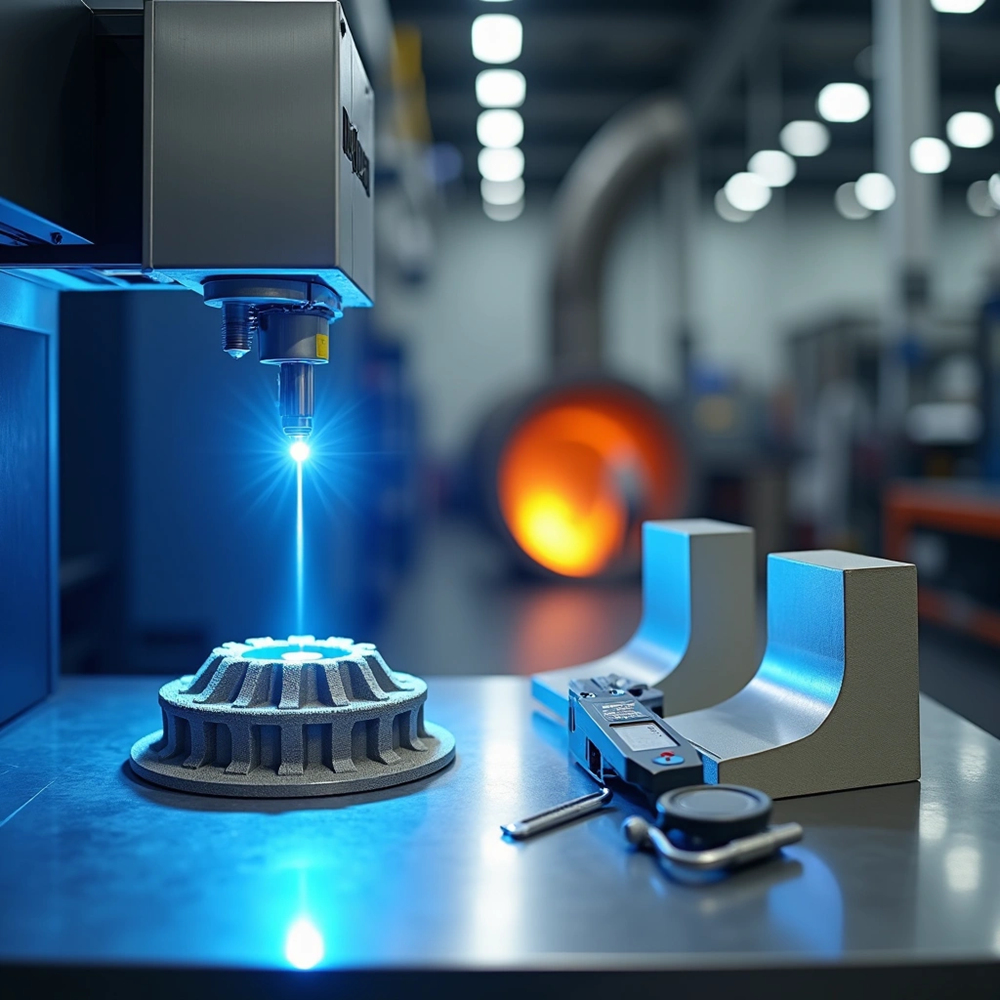
Boeing 3D printing technology achieved a notable milestone at the time detailed engine brackets printed via laser powder bed fusion delivered 20% weight reduction without compromising resolution, as documented in Boeing’s 2023 sustainability report. The aerospace industry stands as one of the earliest commercial adopters of 3D printing in aerospace. Commercial airplanes now fly with over 1000 3D printed airplane parts. 3D printed aerospace parts offer rapid prototyping advantages and reduce iteration time by 70%. However, investment casting remains deeply embedded in aircraft manufacturing for high-volume production. The question facing manufacturers isn’t whether Boeing 3D printing parts can replace traditional casting. It’s about when each method delivers optimal results for specific applications.
Why Boeing Uses Both 3D Printing and Investment Casting
3D Printing in Aerospace Industry Growth
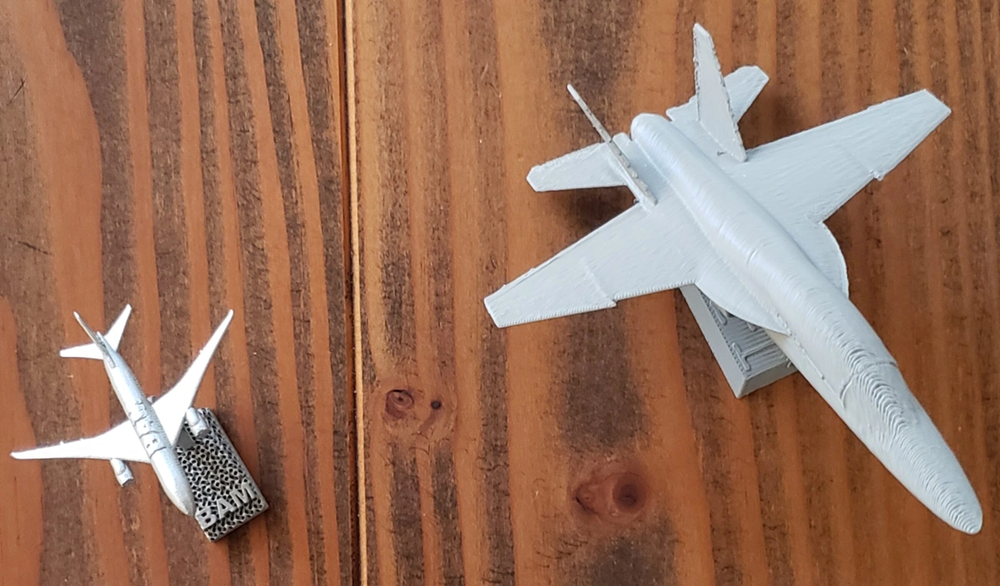
The aerospace 3D printing market expanded from $3.58 billion in 2020 to a projected $13.01 billion by 2028, representing a compound annual growth rate of 19.51%. North America captured 36.31% of market share in 2020. Defense expenditure and early adoption by manufacturers like Boeing and General Electric drove this growth. Boeing incorporated more than 150,000 3D printed parts across its portfolio. This included over 1,000 radio-frequency components on each Wideband Global SATCOM satellite and multiple small-satellite product lines with structures that were 3D printed. Airbus deployed over 1,000 3D printed parts on its A350 XWB aircraft using Stratasys FDM 3D Production Systems.
The aviation segment held the highest share in 2020. Growing use of boeing 3d printing parts for complex aircraft engines and cabin accessories drove this trend. Metal alloy materials factored in the largest market share due to their strength-to-weight ratio and heat resistance. Titanium and aluminum alloys proved ideal for engine parts and structural elements.
Investment Casting’s Legacy in Aircraft Manufacturing
Investment casting serves as the life-blood of aerospace manufacturing and offers dimensional precision of ±.005 inches per inch. Surface finishes of 125 RMS or better come in as-cast condition. Engineered Precision Casting Company holds AS9100D Accreditation and NADCAP Certification for non-destructive testing, welding, and heat treating. The process accommodates every aerospace alloy family, including precipitation hardening stainless steels like 17-4 PH that achieve tensile strengths exceeding 180 ksi.
The Certification Challenge for 3D Printed Aerospace Parts
Certification presents the main barrier for 3d printed aerospace parts production. The FAA requires consistent manufacturing with controlled key process parameters that govern final part performance. Norsk Titanium produced and tested roughly two tons of materials at a cost of $700,000 to get certification for Boeing 787 fittings. This required 2,000 individual specimens. There’s another reason: high energy consumption. 3D printers consume 50 to 100 times more energy than injection molding for melting plastic.
Performance Comparison: Weight, Strength, and Reliability
Titanium and Aluminum Alloy Capabilities
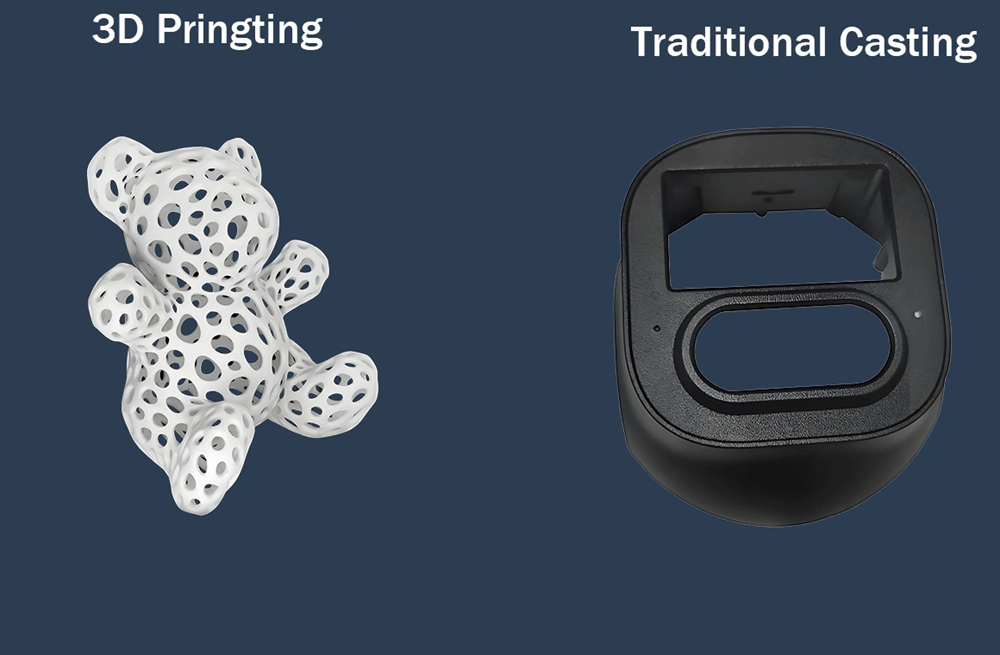
Titanium alloys constitute 50% of global titanium supply, with Ti6Al4V offering high strength, fatigue resistance and low density. Al alloys with added scandium achieved maximum tensile strength of 530 MPa and showed 20% reduction in cross-sectional area and 14% elongation. Metal 3D printing processes produce parts at 99.5% density or higher, with hot isostatic pressing further reducing porosity to require maximum fatigue resistance.
Porosity and Defect Detection Methods
Keyhole porosity remains the most challenging defect in laser powder bed fusion and occurs stochastically beneath the surface. Impulse excitation technique detects porosity through damping increases, the most sensitive indicator that responds to pore structures before resonance frequency changes become measurable. Radiographic testing and X-ray scanning provide non-destructive inspection for both 3d printed aerospace parts and cast components.
Anisotropic Properties in 3D Printed Parts
Metal AM parts express anisotropy due to directional heat extraction, repeated melting and rapid solidification. Crystallographic texture causes anisotropic modulus and yield strength, while anisotropic elongation stems from microstructure morphologies and lack of fusion defects. Specimens printed vertically display lower strength, as the building plane constitutes the weakest plane in all cases.
Investment Casting’s Uniform Mechanical Properties
Investment castings deliver isotropic character and create more favorable longitudinal-to-transverse property relationships. Cast specimens express consistent mechanical properties when adequately gated and heat-treated, with tempered martensite microstructures showing minimal traces of dendritic structure. Interdendritic porosity in investment castings reduces yield and tensile strength in proportion to load-bearing cross-section reduction.
Testing Standards: ASTM and AMS Compliance
ASTM International standards define terminology, measure production process performance and specify calibration procedures for additive manufacturing machines. AMS specifications, developed by SAE, focus on materials requiring high performance under extreme conditions, with over 8,500 active aerospace standards ensuring airworthiness certification.
Long-Term Durability in Flight Conditions
Aerospace materials require exceptional performance, strength and heat resistance coupled with long-term reliability to resist fatigue loading. Titanium alloy turbine blades produced via AM expressed up to 30% improved fatigue life due to refined microstructures and optimized residual stress profiles. Post-processing such as heat treatment improves detailed mechanical properties of metal AM parts to be comparable or superior to cast equivalents.
Production Strategy: Prototyping vs Mass Manufacturing
Rapid Prototyping with 3D Printing: 5-10 Days
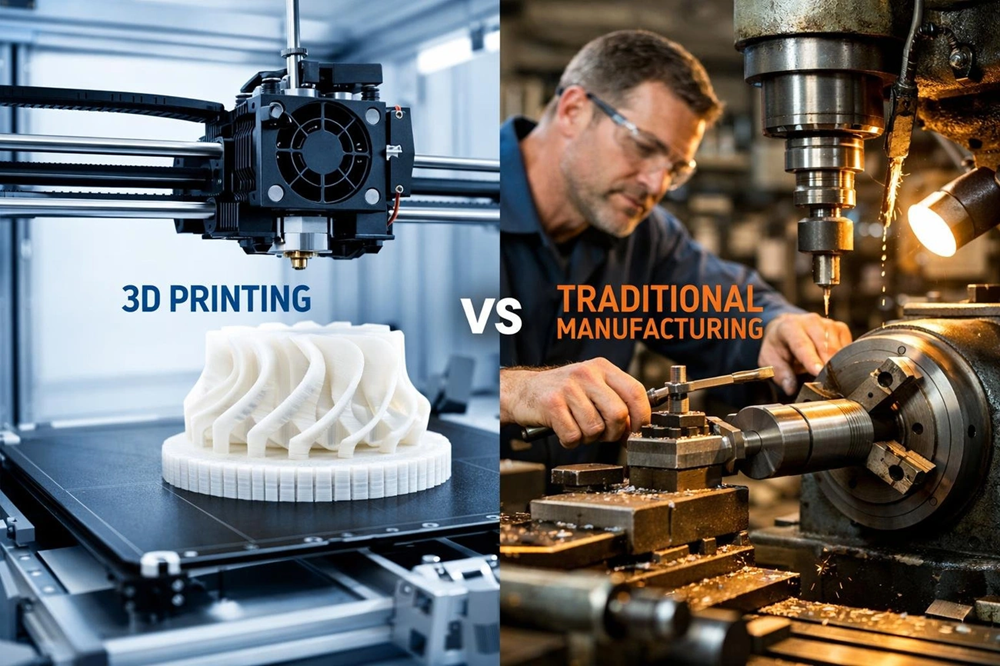
Additive manufacturing reduces iteration cycles from weeks to days or even hours. Manufacturers produce parts and prototypes in days instead of weeks or months. Design iterations require one to two weeks. Additive manufacturing can reduce manufacturing lead times by 90% and lets you print and deliver parts within hours or days after ordering.
High-Volume Production with Investment Casting
Investment casting mass produces high-strength castings with fine detail and strict tolerance requirements. The process converts expensive multi-part fabrications into single-piece aerospace castings and reduces manufacturing cost and delivery times. Techniques like injection molding have high upfront costs for tooling when making thousands of parts, but per-part cost plummets as volume rises.
Design Iteration Speed and Flexibility
Direct CAD-to-printing lets teams iterate prototypes quickly, speeding validation and reducing risk before full production. 3D printing proves economical for low-volume and complex parts. Other processes such as molding become more affordable for large volumes.
From MIM to SLM: JHMIM’s Integrated Approach
JHMIM Titanium is the only manufacturer in China offering MIM, SLM 3D Printing, and CNC Machining under one roof. This matrix shows which material-process combinations we support and allows smooth transitions from prototyping to mass production.
You can accomplish short-run and prototype parts by employing 3D wax printing technology to build patterns. This saves valuable time when speed to market is critical.
The Future: Hybrid Solutions and Industry Trends
3D Printed Patterns for Investment Casting Molds
Stereolithography patterns eliminate tooling expenses that range from $5,000 to $25,000. Lead times drop from two months to days or hours. The 3D Systems QuickCast solution produces hollow casting patterns strong enough to resist deformation during shelling. These patterns collapse under expansion to allow complete drainage with virtually no ash residue. Stratasys Somos WaterShed AF material addresses sensitivities in casting specialty alloys. The material produces patterns without antimony and meets requirements for investment casting workflows. Foundries can produce patterns that serve as prototypes for form and fit evaluation in a single day.
Boeing’s Supplier Network Rise
Boeing’s supplier network influences global aerospace manufacturing. It sets standards for quality, advancement and collaboration. Strategic collaborations between prime contractors and specialized suppliers have become more important as technical requirements increase in complexity. Suppliers provide engineering support and rapid prototyping capabilities. Aerospace manufacturers value suppliers who offer design for manufacturability expertise throughout product development cycles.
Regulatory Changes and Material Standardization
ASTM International’s F42 committee develops four standards. These cover feedstock materials, finished part properties, system performance and reliability, and qualification principles. The FAA drafted an Additive Manufacturing Strategic Roadmap that addresses policies for manufacturing, maintenance and certification over seven to eight years. EASA Certification Memorandum CM-S-008 Issue 04 outlines certification policies for design, manufacture, maintenance and repair of 3d printed aerospace parts.
Comparison Table
Comparison Table: 3D Printing vs Investment Casting for Aerospace Parts
| Attribute | 3D Printing (Additive Manufacturing) | Investment Casting |
|---|---|---|
| Weight Reduction | 20% weight reduction achieved (Boeing engine brackets) | Not mentioned |
| Dimensional Precision | 99.5% density or higher with post-processing | ±.005 inches per inch |
| Surface Finish | Requires post-processing | 125 RMS or better in as-cast condition |
| Prototyping Timeline | 5-10 days; hours to days for delivery | Weeks to months |
| Lead Time Reduction | 90% reduction in manufacturing lead times | Not mentioned |
| Design Iteration Speed | 70% reduction in iteration time; 1-2 weeks per iteration | Weeks to months |
| Production Volume Suitability | Economical for low-volume and complex parts | Ideal for high-volume mass production (thousands of parts) |
| Tooling Costs | No tooling required; eliminates $5,000-$25,000 in tooling expenses | High upfront tooling costs, but lower per-part cost at volume |
| Mechanical Properties | Anisotropic (directional properties); weaker in vertical build plane | Isotropic (uniform properties in all directions) |
| Material Density | 99.5% or higher with HIP post-processing | Consistent when gated and heat-treated properly |
| Porosity Issues | Keyhole porosity (stochastic, beneath surface) | Interdendritic porosity (reduces strength proportionally) |
| Fatigue Life | Up to 30% improved fatigue life (titanium turbine blades) | Standard fatigue performance |
| Certification Cost | $700,000 for Boeing 787 fittings (2,000 specimens, 2 tons material) | Proven certification processes |
| Energy Consumption | 50-100 times more energy than injection molding | Not mentioned |
| Market Size (2020) | $3.58 billion (aerospace segment) | Not mentioned |
| Projected Market (2028) | $13.01 billion (19.51% CAGR) | Not mentioned |
| Boeing Parts Deployed | 150,000+ parts in portfolio; 1,000+ per satellite | Deeply embedded in aircraft manufacturing |
| Material Capabilities | Titanium, aluminum alloys with scandium (530 MPa tensile strength) | All aerospace alloy families including 17-4 PH (180+ ksi) |
| Standards Compliance | ASTM F42 standards; FAA Strategic Roadmap; EASA CM-S-008 | AS9100D, NADCAP Certification; AMS specifications |
| Best Use Case | Rapid prototyping, complex geometries, low-volume production, weight-critical parts | High-volume production, uniform properties required, proven designs |
Conclusion
The Boeing 3D printing versus investment casting debate doesn’t just need you to pick a side. Manufacturers benefit most from smart deployment: 3D printing to rapidly prototype, create complex geometries and build weight-critical components. Investment casting works best for high-volume production that requires uniform properties.
JHMIM Titanium positions clients well by offering MIM, SLM 3D Printing and CNC Machining under one roof. This allows smooth transitions from prototype to mass production without switching suppliers.
FAQs
Q1. What are the main applications of 3D printing in aerospace manufacturing today? 3D printing is primarily used for producing aircraft jigs, fixtures, guides, templates, and gages, delivering 60-90% reductions in cost and lead time compared to conventional manufacturing. It’s also employed for rapid prototyping, complex geometries, and weight-critical components where design flexibility is essential.
Q2. Why do aerospace companies still rely on CNC machining instead of switching entirely to 3D printing? CNC machining remains the industry standard because it offers superior dimensional precision, uniform mechanical properties, and established certification processes. Most aerospace parts require tight tolerances and proven reliability, which CNC machining consistently delivers. Additionally, even 3D printed parts typically require post-print machining to meet final specifications.
Q3. What makes certification so challenging for 3D printed aerospace parts? Certification requires extensive testing and material qualification to ensure consistent manufacturing and controlled process parameters. For example, obtaining FAA certification for Boeing 787 fittings required testing approximately 2,000 specimens and two tons of material at a cost of $700,000, demonstrating the rigorous standards aerospace parts must meet.
Q4. Can 3D printing achieve the same mechanical properties as investment casting? With proper post-processing like hot isostatic pressing and heat treatment, 3D printed metal parts can achieve mechanical properties comparable or even superior to cast equivalents. However, 3D printed parts exhibit anisotropic (directional) properties, whereas investment castings provide isotropic (uniform) properties in all directions, which is often preferred for critical applications.
Q5. Which manufacturing method is more cost-effective for aerospace parts production? The answer depends on production volume and complexity. 3D printing is more economical for low-volume production, prototypes, and complex geometries, eliminating tooling costs of $5,000-$25,000. Investment casting and CNC machining become more cost-effective for high-volume production of thousands of parts, where per-part costs decrease significantly despite higher initial tooling investments.