

Introduction
Luxury watchmaking is moving beyond the limits of milled metal. With additive manufacturing, brands can build titanium cases layer by layer, placing material only where strength, comfort, or design impact is needed. The result is a new class of lightweight, durable, and visually distinctive timepieces shaped by technologies once reserved for aerospace and medical manufacturing. This article explores how 3D printed titanium changes case architecture, why hybrid production still matters, and how small-batch economics are opening the door for independent makers as well as established luxury houses. For collectors, engineers, and material buyers, the shift signals a practical rethinking of how modern watches are designed and produced.
Why 3D Printed Titanium Watches Matter
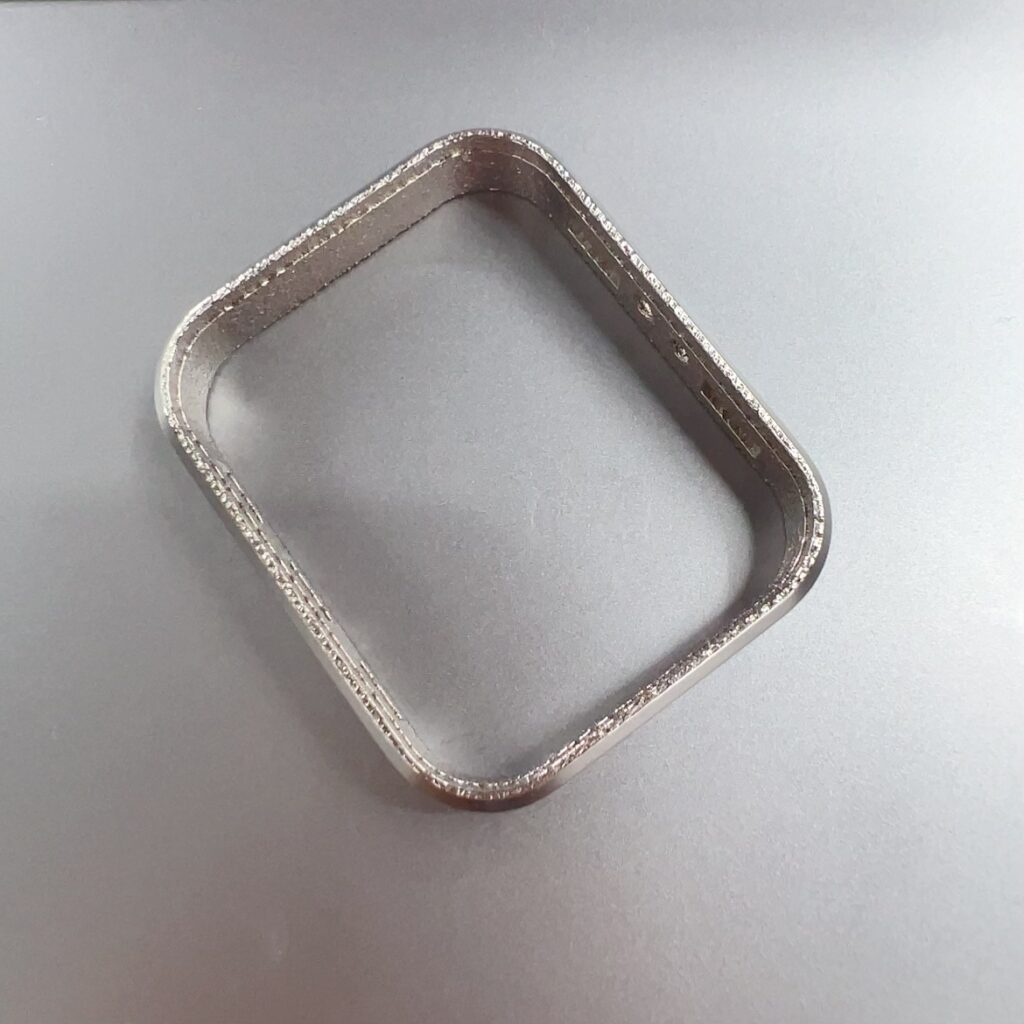
The horological industry is currently experiencing a profound paradigm shift, driven by the maturation of additive manufacturing (AM) technologies. For centuries, watchmaking has relied heavily on subtractive manufacturing processes, where raw metal blocks are carved down to microscopic tolerances. Today, additively manufactured titanium timepieces represent a departure from these traditional constraints, offering unprecedented geometric freedom and material efficiency. By fusing aerospace-grade titanium powder layer by layer, manufacturers can now produce cases that challenge established norms of weight and structural complexity.
Titanium has long been prized in watchmaking for its exceptional strength-to-weight ratio and hypoallergenic properties. While additive manufacturing circumvents many traditional limitations of machining this notoriously difficult metal, it functions as a hybrid complement rather than a total replacement—still requiring final CNC milling for precision mating surfaces. Nonetheless, this hybrid workflow unlocks new possibilities for independent watchmakers and major luxury brands alike. For consumers, this translates to timepieces that offer novel aesthetics and unique serviceability profiles, fundamentally changing how luxury watches are designed, priced, and maintained.
How Additive Manufacturing Changes Watchmaking
Additive manufacturing fundamentally alters watch architecture by allowing engineers to place material only where it serves a structural or aesthetic purpose. Traditional machining struggles with hollow cavities, internal undercuts, and intricate lattice structures, often requiring multiple components to be milled separately and welded or screwed together. In contrast, 3D printing enables the consolidation of multi-part case assemblies into a single, monolithic titanium chassis.
Pioneering examples—such as Panerai’s Lab-ID and Lo Scienziato models utilizing Direct Metal Laser Sintering (DMLS), or Zenith’s experiments with ultra-lightweight titanium components (though specific availability should always be verified against current model lineups)—demonstrate how brands can push structural boundaries. By utilizing internal honeycomb or lattice structures within the watch case walls, engineers can achieve weight reductions that vendors frequently report as ranging between 30% and 45% compared to solid titanium counterparts, without compromising torsional rigidity. Furthermore, the technology allows for the seamless integration of strap lugs and crown guards directly into the continuous flow of the case geometry.
Market Forces Driving Titanium Watch Innovation
The integration of 3D printed titanium into horology is propelled by shifting consumer expectations and broader industrial supply chain trends. Modern watch collectors increasingly demand lightweight, highly durable sports watches that offer distinctive, avant-garde aesthetics. Simultaneously, the global push toward supply chain digitization has made micro-precision AM equipment more accessible, trickling down from the aerospace and medical sectors into luxury consumer goods.
Economically, the technology alters the viability of limited-edition releases. Because additive manufacturing eliminates the need for expensive custom tooling and injection molds, production runs of 50 to 200 units become economically viable. This agility allows independent pioneers—such as Holthinrichs Watches—to iterate designs rapidly and build entire brand identities around 3D printed aesthetics, bypassing the prohibitive tooling expenditures that previously created high barriers to entry. While these small-lot AM cases often command an approximate 15% to 30% retail price premium over standard machined counterparts, buyers are increasingly willing to pay for the unique structural designs and exclusivity.
What Defines a 3D Printed Titanium Watch

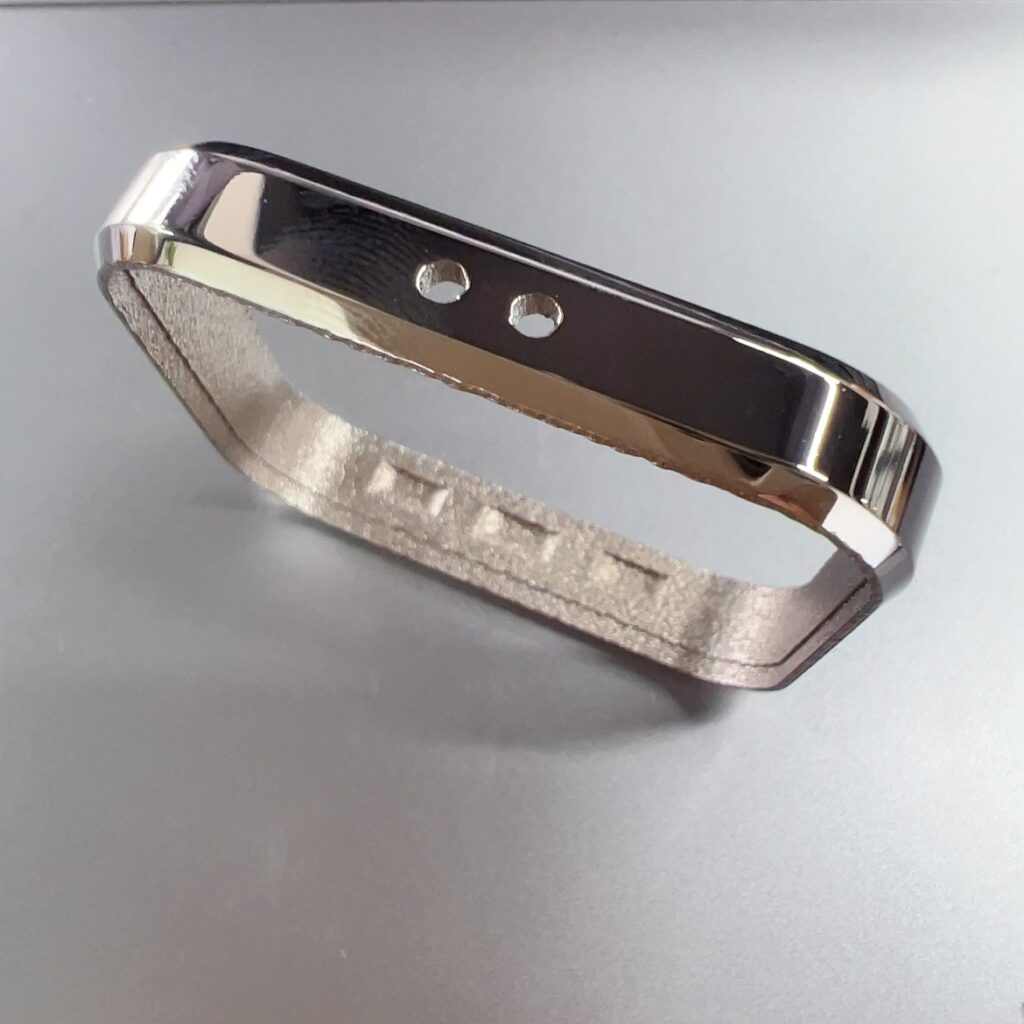
The precise interplay of specialized metal powders, high-energy fusion technologies, and rigorous post-processing techniques defines an additively manufactured titanium watch. Unlike polymer printing, metal additive manufacturing in horology demands an environment controlled at the microscopic level to ensure the resulting case can withstand extreme environmental pressures and daily wear. The defining characteristics of these timepieces are rooted in the specific methods used to fuse the titanium and the exact metallurgical grades selected for the build.
Achieving the microscopic tolerances required for mechanical watchmaking—where case components must mate perfectly with sapphire crystals, gaskets, and movement spacers—demands a careful balance of printing parameters, surface finishes, and material properties.
Key Printing Methods for Titanium Watch Cases
The predominant technologies utilized for printing titanium watch cases are Direct Metal Laser Sintering (DMLS) and Selective Laser Melting (SLM). Both are powder bed fusion processes—often treated as synonymous in the industry, with terminology differing primarily by vendor—wherein a recoater blade spreads a microscopic layer of titanium powder across a build plate, and a high-powered fiber laser selectively melts the powder to form the cross-section of the watch case. The chamber is typically flooded with argon gas to prevent oxidation during the high-temperature fusion process.
For horological applications, the precision of the laser is paramount. Industrial SLM machines used for watchmaking are calibrated to utilize laser spot sizes typically ranging from 20 to 50 microns, with layer thicknesses often set between 10 and 30 microns, depending on the machine manufacturer. This extreme resolution is necessary to resolve fine details such as threading for case backs and precise channels for water-resistant O-rings. While Binder Jetting is emerging as a faster alternative for mass-market metal parts, SLM and DMLS remain the gold standard in luxury watchmaking due to the superior density and mechanical properties they yield.
Titanium Grades, Finishes, and Tolerances
The choice of titanium alloy dictates both the printing parameters and the final performance of the watch. Most 3D printed horological components utilize either Grade 5 (Ti-6Al-4V) for its exceptional yield strength or Grade 23 (Ti-6Al-4V ELI) for its enhanced purity and superior hypoallergenic characteristics. Achieving watchmaking tolerances with these materials requires significant post-processing, as the as-built surface roughness (Ra) typically ranges from 5 to 10 µm, which is too coarse for luxury aesthetics or hermetic sealing.
To reach the exacting standards of the industry, printed cases undergo multi-axis CNC machining strictly on critical mating surfaces, followed by manual or automated polishing, typically targeting an Ra < 0.4 µm. However, achieving luxury-grade high-polish finishes on printed titanium remains a labor-intensive challenge due to the material’s inherent surface characteristics.
| Titanium Grade | Typical Yield Strength (MPa) | Biocompatibility | Common Horological Use |
|---|---|---|---|
| Grade 2 (CP) | ~275 | Excellent | Base cases, high corrosion resistance |
| Grade 5 (Ti-6Al-4V) | ~895 | Good | High-stress components, luxury sports cases |
| Grade 23 (ELI) | ~795 | Superior | Medical-grade, extreme hypoallergenic needs |
3D Printed Titanium vs Traditional Manufacturing
The debate between utilizing additive manufacturing versus traditional subtractive methods like CNC machining is central to modern horological engineering. While CNC machining has been the undisputed standard for producing high-precision watch cases for decades, titanium’s poor thermal conductivity and tendency to work-harden lead to rapid tool wear.
By shifting the primary shaping process to the powder bed, AM fundamentally reshapes the cost structures and design limitations previously accepted by the industry, leveraging the aforementioned hybrid approach to maximize the strengths of both technologies.
Weight, Strength, Cost, and Design Flexibility
In traditional CNC machining, carving a watch case out of a solid billet of titanium is a highly wasteful process. The subtractive method often results in a buy-to-fly ratio cited around 6:1—though this figure is context-dependent based on case complexity—meaning up to 85% of the raw titanium block is turned into scrap swarf. Additive manufacturing, conversely, can utilize up to 95% of the titanium powder, keeping initial waste under 5%. However, this efficiency is nuanced; powder reuse cycles eventually degrade material quality if not strictly monitored, and AM carries its own environmental footprint, including the high energy intensity of argon-chamber printing.
From a cost perspective, the economics shift from tooling-heavy investments to machine-time investments. CNC requires custom jigs, fixtures, and cutting tools for every new case design, whereas 3D printing requires zero physical tooling. Yet, at high production volumes, the per-unit cost of AM titanium is often higher than CNC machining. For consumers, it is also crucial to note a caveat regarding longevity: longitudinal field data on the long-term durability of AM titanium cases is still scarce. Furthermore, printed parts with complex, porous, or lattice structures may be harder or costlier to repair and refinish than solid machined cases.
Where Additive Manufacturing Outperforms CNC Machining
Additive manufacturing categorically outperforms CNC machining when a watch design demands geometric complexity that tools simply cannot reach. Subtractive tools require physical line-of-sight and access angles; if a cutting bit cannot physically reach inside a cavity, that geometry cannot be machined. 3D printing bypasses this entirely, allowing for the creation of internal cooling channels, complex organic curves, and mathematically generated Voronoi structures that are impossible to mill.
For brands looking to push the boundaries of avant-garde design, AM is often the most viable path for the case chassis. As noted, achieving final horological tolerances still requires a hybrid reality: while the main case is printed, components like crowns, bezels, and internal movement fittings are traditionally machined.
| Metric | CNC Machining | Additive Manufacturing (DMLS/SLM) |
|---|---|---|
| Material Waste | High (70% – 85%) | Low (< 5% after recycling) |
| Setup Costs | High (Tooling/Fixturing) | Low (Digital CAD files only) |
| Geometric Freedom | Limited by tool access | Virtually unlimited (Lattices, hollows) |
| Ideal MOQ | 500+ units | 1 to 500 units |
Production, Quality, and Compliance Requirements
Transitioning from a digital CAD file to a physical, luxury-grade titanium watch case requires navigating a labyrinth of stringent production and quality compliance standards. Because the watch must protect delicate mechanical movements from moisture, dust, and shock, the printed titanium cannot harbor hidden micro-cracks or excessive porosity. The manufacturing workflow is therefore governed by strict metallurgical controls, beginning with the raw material and ending with rigorous non-destructive testing.
Watch brands and their manufacturing partners must implement comprehensive compliance frameworks to ensure that every printed batch meets the exact same mechanical and aesthetic specifications as forged or milled counterparts.
Powder Sourcing, Build Orientation, and Post-Processing
The foundation of a flawless 3D printed watch case lies in the quality of the raw titanium powder. Manufacturers must source gas-atomized, highly spherical powder to ensure optimal flowability across the powder bed. For horological applications, a strict Particle Size Distribution (PSD)—the specific range of allowable powder grain sizes—of 15 to 45 µm is typically mandated; particles outside this range can cause uneven melting, leading to voids or surface defects. Handling these volatile powders requires stringent safety protocols, and brands are increasingly seeking certification for recycled powder to improve sustainability. Build orientation is equally critical, as it dictates the need for support structures and influences the thermal stress gradients within the case during printing.
Once printing is complete, the titanium cases must undergo thermal post-processing to relieve residual internal stresses generated by the rapid heating and cooling cycles of the laser. The industry standard is Hot Isostatic Pressing (HIP), a high-pressure heat treatment where the printed cases are subjected to temperatures exceeding 1,000°C and pressures of 100+ MPa in an inert argon atmosphere. This process collapses any internal microscopic voids, effectively consolidating the material to achieve the mechanical properties of wrought titanium.
Quality Controls for Density, Fatigue, and Surface Integrity
To guarantee that a 3D printed titanium watch can survive real-world conditions, stringent quality controls are applied to verify density, fatigue resistance, and surface integrity. Porosity is the primary enemy of water resistance. Manufacturers typically target a vendor-specified relative material density of >99.8% to ensure the case can pass standard horological water resistance tests, which frequently require withstanding pressures of 30 ATM (300 meters) or higher without catastrophic failure or micro-leaks.
Compliance with international standards, such as the ISO/ASTM 52900-series or ASTM F3301/F2924 for titanium AM, is often required for aerospace-grade crossover brands. To verify this without destroying the product, manufacturers utilize industrial micro-CT (Computed Tomography) scanning—essentially 3D X-ray imaging—to inspect the internal volume of the watch cases for hidden defects. Furthermore, surface integrity is validated through strict coordinate measuring machine (CMM) inspections, using precision mechanical probes to ensure that the critical tolerances required for press-fitting sapphire crystals and case-back gaskets are maintained to within typical industry targets of approximately +/- 0.01 mm.
How Brands Should Decide on 3D Printed Titanium Watches
For watch brands and buyers alike, the shift to additive
Key Takeaways
- Use 3D printed titanium when a watch design requires lightweight structures, internal lattices, or complex geometry that conventional machining cannot produce efficiently.
- Expect additive manufacturing to complement rather than replace CNC machining, because mating surfaces and movement interfaces still require precision finishing.
- Consider lattice or honeycomb case structures to reduce watch weight by commonly reported ranges of 30% to 45% compared with solid titanium designs.
- Leverage additive manufacturing for limited editions of roughly 50 to 200 units, where avoiding expensive tooling can make small production runs commercially viable.
- Verify current model specifications and brand claims before purchasing, because availability, material grade, finishing methods, and service policies can vary by watchmaker.
Frequently Asked Questions
Why is titanium used for 3D printed watches?
Titanium offers a high strength-to-weight ratio, corrosion resistance, and hypoallergenic comfort, making it ideal for durable daily-wear and sports watches. In powder form, it can be fused layer by layer to create complex case structures that are difficult to machine traditionally.
Are 3D printed titanium watches fully printed?
Not entirely. Additive manufacturing creates the near-net-shape case or components, but precision areas such as gaskets, casebacks, bezels, and movement interfaces usually require CNC finishing, polishing, or other post-processing.
How much lighter can a 3D-printed titanium watch be?
Brands and suppliers often report weight reductions of about 30% to 45% versus solid titanium designs when internal lattice or honeycomb structures are used, while still maintaining rigidity.
Does 3D printing make titanium watches cheaper?
Not always. It can reduce tooling costs and make small batches more viable, but powder quality, machine time, finishing, inspection, and luxury positioning can keep final prices high.
What design advantages does additive manufacturing offer watchmakers?
It enables hollow cavities, internal lattices, integrated lugs, complex crown guards, and monolithic case structures that would be difficult or inefficient to produce through subtractive machining alone.