


MIM manufacturing offers most important advantages over conventional metalworking, but parts shrink by 15-20% as metal particles fuse together. Common defects like cracking, slumping, warpage, and blisters can compromise the whole batch during sintering. The solution? Catch quality issues in titanium powder before the mim process even begins. Inspecting powder characteristics prevents defects that get pricey, maximizes densification, and will give mim parts that meet mechanical performance standards. This piece walks through inspection parameters, testing methods, and step-by-step protocols that quality control teams need to implement before feedstock preparation.
Understanding Titanium Powder Requirements for MIM Manufacturing
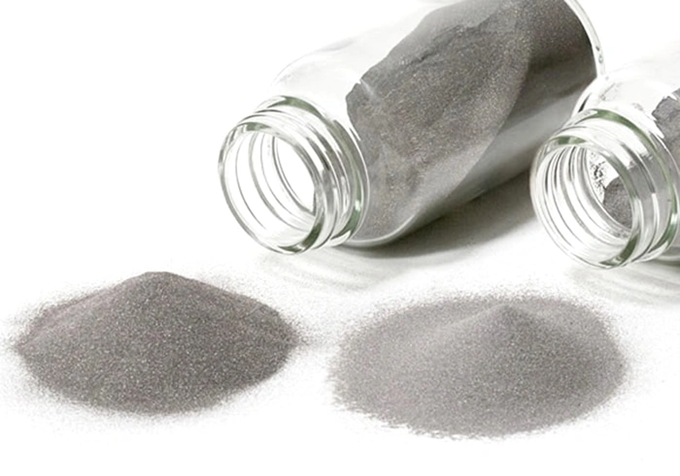
What Makes Quality Titanium Powder
Gas atomization, plasma atomization, or plasma spheroidization produce spherical titanium powder that sets the gold standard for MIM applications. These manufacturing methods create particles with an average size of 30 μm or smaller. This enables uniform shrinkage during sintering and high final density. The spherical geometry allows superior mold filling compared to irregular particles, which can cause imbalanced powder loading and uneven shrinkage.
Chemical composition determines the mechanical, thermal, and corrosion resistance properties of sintered parts. Ti-6Al-4V (Ti64) is the most common alloy choice in the MIM process. This alloy delivers tensile strength between 710 and 850 MPa with 12% elongation when processed to full density with oxygen levels below 2000 ppm. Commercially pure titanium grades offer another option. Grade-1 requires oxygen content below 1800 ppm to achieve 240 MPa tensile strength and 24% fracture elongation.
Starting powder purity plays a decisive role in final part quality. Dense discrete particles without entrapped gas pockets prevent large pore formation during sintering, where gas-generated pores can reach up to 80 µm in size. The typical grades used in injection molding maintain spherical morphology below 45 µm with starting oxygen levels below 0.20 wt% and carbon levels below 0.05 wt%.
Key Powder Characteristics That Affect MIM Parts
Particle size distribution directly affects flowability, mold filling capability, and sintering behavior during the MIM manufacturing process. Fine powders enable better mold filling, while the particle size distribution determines the final density, mechanical properties, and dimensional accuracy of sintered components. Most studies employ particles less than 22 µm in size to improve densification, which affects mechanical and corrosion properties.
Surface area and morphology influence how powder interacts with binder materials. Powders with optimized surface characteristics improve bonding between particles and the binder. This improves strength and dimensional stability. But as particle size decreases, impurity content tends to increase. Fine powder particles also present challenges. These include difficulty increasing feedstock viscosity and lower packing densities due to agglomeration. They also require extended time to produce homogeneous feedstock.
Non-agglomerated particles produce defect-free sintered components, while void-free particles ensure excellent density in final parts. The powder must not react with the multicomponent binder system throughout debinding stages. Adequate interparticle friction retains shape during debinding. Larger particles increase distortion risk as intraparticle contact per unit volume decreases.
How Powder Quality Impacts the Sintering Process
Four parameters dominate the mechanical properties of sintered titanium: density, interstitial content, alloying, and microstructure. Residual pores degrade mechanical properties. Fracture toughness and fatigue strength show the highest sensitivity to residual porosity. Fatigue strength jumps 18% with elimination of the last 2% porosity.
Interstitial oxygen, carbon, nitrogen, or hydrogen increase yield strength, tensile strength, and hardness but decrease ductility. At higher oxygen levels such as grade-4 titanium, oxygen ranges to 4000 ppm with tensile strength exceeding 550 MPa, but ductility declines to 15% elongation. Contamination arriving with the powder increases during sintering from furnace and substrate sources, since impurities remain soluble at sintering temperature without effective reducing agents.
Commercially pure Ti demonstrates more tolerance to oxygen, which may reach 0.4% in grade 4, compared to Ti-6Al-4V which can only tolerate 0.2% oxygen. So controlling interstitials represents the biggest problem with sintered titanium. The decision to employ larger particle sizes serves as a strategy to reduce surface area for oxygen contamination.
Essential Powder Quality Parameters to Inspect
Titanium powder inspection requires precise measurement of five critical parameters that determine MIM part quality and sintering success.
Particle Size Distribution Analysis
Laser diffraction particle size analyzers measure PSD with superior accuracy compared to traditional mechanical sieving methods. Sieve analysis faces a practical lower limit of 20 μm mesh size, well above the average particle size required for MIM applications. Dynamic image analysis provides circular equivalent diameter measurements among other distribution width data and detects oversized or undersized particles down to 0.002% of the total sample.
Titanium powder for the mim process exhibits distributions where particles fall between 15-45 μm. Unprocessed Armstrong Process titanium shows over 63% concentration of particles larger than 250 μm. Milling achieves suitable size ranges. The milling process reduces larger particles but generates high concentrations of fines below 45 μm from asperities that break off particles’ edges. Narrower distributions support consistent flowability and stable layer thickness. They also ensure predictable laser interaction during processing.
Powder Morphology and Shape Assessment
Shape assessment relies on multiple descriptors since single parameters provide inadequate representation of particle complexity. Aspect ratio (width-to-length) separates elongated particles from spherical ones. Values closer to 1 show regular symmetry. Circularity measures roundness, while convexity compares the convex hull perimeter to actual perimeter and identifies satellites and surface irregularities.
ASTM F3571 recommends pairing aspect ratio or ellipse ratio with solidity to distinguish spherical from non-spherical particles. Sequential classification applies convexity index thresholds of 0.95 to highlight particles with satellites. Extent ratios below 0.95 show single satellites, and ellipse ratios under 0.90 show elongated particles. Spherical particles promote consistent flow and predictable packing, while irregularly shaped particles interlock and resist movement.
Tap Density Measurement
Tap density reflects maximum powder packing under mechanical vibration, 20-50% higher than apparent density. Modern analyzers like GeoPyc apply consistent transverse axial pressure while rotating chambers. This produces quieter operation and higher repeatability than conventional graduated cylinder methods. Analysis requires three to four minutes with proper consolidation force calibration.
The Hausner ratio, calculated as tapped density divided by apparent density, shows flowability. Ratios closer to 1 represent free-flowing powders with minimal cohesion. Higher ratios signal compressible powders with broader PSD or irregular shapes. Powders containing uniformly shaped particles show smaller differences between apparent and tap density.
Oxygen and Carbon Content Levels
Oxygen variation concentrates during sintering stages and increases with sintering temperature. Gas-atomized Ti-6Al-4V powder maintains starting oxygen below 0.12 wt% and carbon below 0.010 wt%. HDH titanium powder exhibits higher baseline oxygen at 0.15 wt%. Elevated oxygen content causes impact resistance and fatigue strength deterioration. Excess carbon reduces sintering densification rates
Moisture and Contamination Detection
Metal powders absorb moisture and oxygen during handling, storage, and transportation. Contamination sources include airborne particles, processing residues, and oil that affect flow and melting behavior. Cross-contamination between alloys occurs through shared equipment. Moisture content analysis employs oven desorption followed by Karl Fischer titration for accurate quantification
Inspection Methods and Testing Equipment
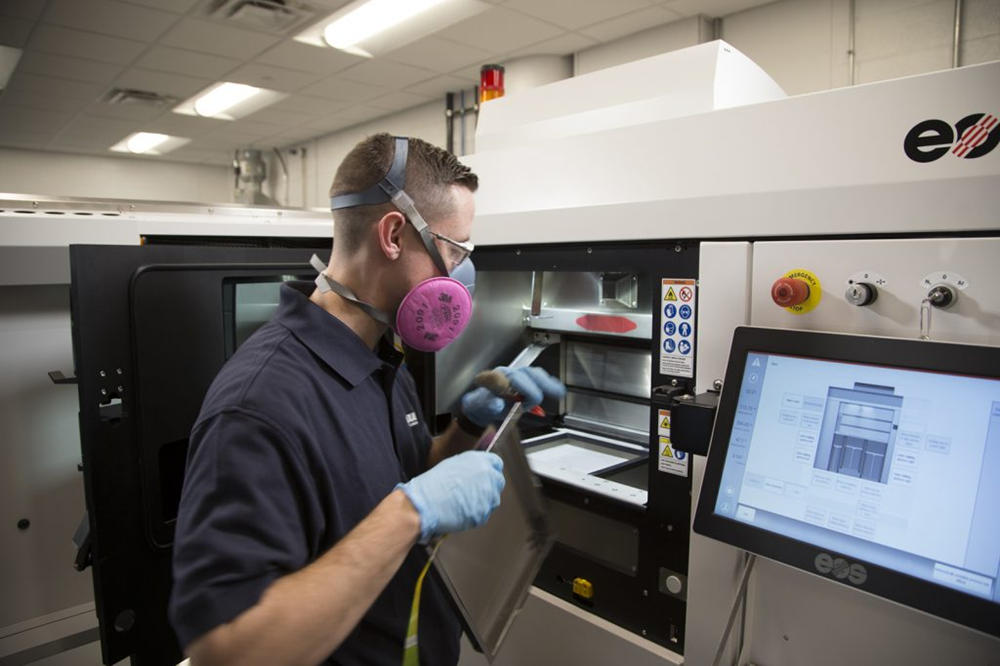
Equipment selection determines inspection accuracy and throughput across titanium powder quality control operations.
Visual and Microscopic Examination Techniques
Optical microscopy provides original screening for gross contamination, color variation and particle agglomeration at magnifications between 40x and 500x. Surface distortion analysis under 500+ lumen illumination at 15-30° angles reveals texture changes and dimensional irregularities. Metallographic preparation requires sectioning and mounting in conductive resin. Grinding through progressive SiC paper grades (320 to 1200 grit) follows, and polishing with diamond suspension down to 1μm completes the process.
Laser Diffraction Particle Size Analyzers
Laser diffraction operates on the principle that particles scatter light at angles inversely proportional to their size. Modern analyzers cover measurement ranges from 10 nm to 4 mm. Practical applications span 30 nm to 1,000 μm. The technique delivers complete analysis in 1-2 minutes for wet dispersion methods and 10-40 seconds for dry measurements. Instruments like the Cilas 1190 employ 830 nm wavelength coherent light with results interpreted through Fraunhofer theory. ISO 13320 governs laser diffraction methodology.
SEM Imaging for Surface Quality
Scanning electron microscopy achieves resolution below 1 nm in high-end systems. Typical operational resolution ranges between 1-20 nm. High-resolution SEM images provide detailed morphology exploration of powder particles. SEM equipped with Energy Dispersive X-ray Spectroscopy detectors delivers chemical composition data along with surface structure analysis. AFM integration makes 3D surface roughness characterization with sub-nanometer height sensitivity possible.
JHMIM Titanium is the only manufacturer in China offering MIM, SLM 3D Printing and CNC Machining under one roof. This makes transitions from prototyping to mass production smooth.
Chemical Analysis Tools
Glow Discharge Mass Spectrometry provides trace and ultra-trace level impurity determination with industry-leading detection limits. Laser Ablation Laser Ionization Time of Flight Mass Spectrometry quantifies metallic and trace constituents in single analytical sessions with minimal sample preparation. The technology demonstrates 6% relative standard deviation for internal precision, with elemental quantification within 8% of certified values. Oxygen concentration analysis underscores material purity helped by advanced atomization methods.
Flowability Testing Devices
Hall and Carney flowmeters measure gravitational flow time for fixed powder masses through standardized orifices per ASTM B213-17 and B964-16. Fixed funnel angle of repose meters employ 60° cone angles with 5 mm orifices positioned 80 mm above collection trays. Powder rheometers employ shear cells following ASTM D7891-15 with pre-compaction stresses at 3 kPa and 9 kPa. Rotating drum rheometers assess dynamic flow through avalanche angle measurements under variable rotation speeds.
Step-by-Step Powder Inspection Process Before Feedstock Preparation
Establishing a systematic inspection workflow protects mim manufacturing operations from defective powder batches entering production streams.
Receiving Inspection Protocol
Control checks begin at the time powder containers arrive at the facility. Inspection personnel verify purchase specifications, material designation, certificate identity, lot number, packaging condition, quantity and storage or expiry limits. A damaged container or ambiguous certificate creates a traceability break until proper disposition occurs. Personnel compare particle distribution data and chemical composition against supplier Material Safety Data Sheets. They use particle distribution analyzers or SEM-EDX systems.
Supplier qualification precedes material acceptance. Receiving sites must establish acceptable evidence standards before powder enters production[4]. Industrial MIM processes and production sites follow ISO/ASTM 52920 quality-assurance requirements in manufacturing activities of all types.
Sampling Methods for Accurate Testing
Representative sampling techniques prevent misleading quality assessments and production cost increases from reworks. They also prevent regulatory compliance issues. Random sampling extracts material at random points within batches to avoid bias. Systematic sampling collects at regular intervals for uniform representation. Stratified sampling divides batches into homogeneous subgroups and draws samples from each section.
Thief probe sampling devices can introduce large composition errors during sample collection[9]. Material-compatible containers prevent chemical reactions that compromise sample integrity[10]. Humidity and temperature affect powder properties. Controlled environmental conditions are required during sampling operations[10].
Documentation and Traceability Requirements
Supplier certificates and data are the foundations of the first traceability layer. This includes certificates of conformance or analysis, supplier declarations, material specifications and lot or heat identity. The site receives material and then internal labeling, quarantine procedures, acceptance decisions and splitting, opening, drying or sieving operations constitute the second documentation layer. The third layer links to inspection results, deviations, concessions and final release decisions.
When to Reject or Accept Powder Batches
Acceptance sampling provides budget-friendly lot evaluation without 100% inspection. Acceptable Quality Level defines the highest proportion of defectives the batch can have. Acceptance number establishes the maximum defects allowed in acceptable lots. Attribute sampling plans determine sample size and acceptance numbers based on discrete defect counts. Variable sampling plans establish acceptance criteria. They use continuous data measurements such as particle diameter or oxygen content.
Common Defects in Titanium Powder and Prevention Strategies
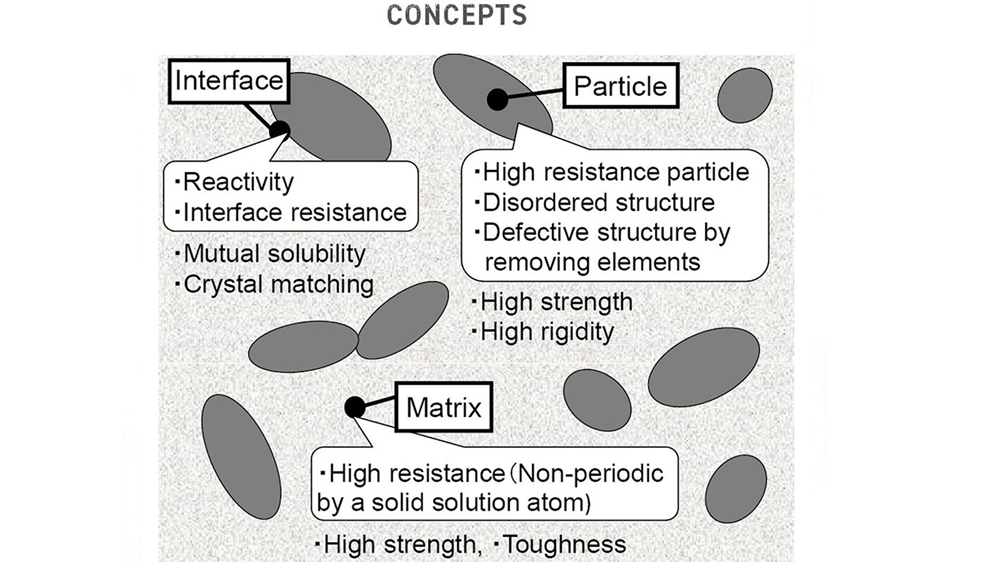
Defect recognition requires understanding contamination pathways, morphological irregularities, and interstitial accumulation patterns that compromise sintered part integrity.
Identifying Contamination Sources
Contamination enters through binder ingredients, thermal cycles, and atmospheres. Titania used to catalyze polymerization in backbone polymers introduces oxygen impurities. Cross-contamination occurs during powder production, handling, and recycling at manufacturing facilities. X-ray fluorescence identifies contaminants down to 100 ppm levels and detects elements like iron, chromium, nickel, and molybdenum from stainless steel cross-contamination.
Detecting Irregular Particle Shapes
Dynamic image analysis detects small amounts of irregular particles within predominantly spherical powder batches. Oversized or highly irregular particles require detection with precision since these cause defects in finished workpieces.
Recognizing High Oxygen Content Issues
Ti-MIM processing adds 0.02% to 0.1% interstitials. Some studies show increases exceeding 0.15 wt% oxygen. Sintered compacts from powders with mean particle size below 50 μm exhibit oxygen increases of 0.1 wt% or more. Larger particles show maximum increases of only 0.07 wt%. Finer 0-20 μm powder contains higher oxygen than 0-40 μm material due to increased surface area.
Preventing Moisture Absorption During Storage
Storage under high-purity argon maintains oxygen stability over extended periods. Desiccant materials absorb moisture and prevent corrosion and mold growth during storage.
Quality Control Best Practices
Larger particle sizes reduce surface area exposure for oxygen contamination. Controlled environments during handling minimize atmospheric exposure and moisture pickup.
Conclusion
Titanium powder inspection represents the most affordable quality control checkpoint in MIM manufacturing. It catches defects before sintering transforms them into irreversible failures. Quality control teams that implement systematic protocols for particle size distribution, morphology assessment and interstitial content analysis prevent cracking, warpage and porosity in finished components. JHMIM Titanium is the only manufacturer in China offering MIM, SLM 3D Printing and CNC Machining under one roof. This enables uninterrupted transitions from prototyping to mass production. The inspection framework outlined here provides the foundations of consistent part quality and optimized sintering outcomes. Prevention always costs less than correction. Implement these testing protocols with rigor and document every acceptance decision in detail.
FAQs
Q1. What are the key properties of titanium powder used in MIM manufacturing? Titanium powder maintains the metal’s characteristic high strength-to-weight ratio, excellent corrosion resistance, and biocompatibility. For MIM applications, spherical particles averaging 30 μm or smaller are preferred, as they enable uniform shrinkage during sintering and achieve high final density in finished components.
Q2. How can you identify contamination in titanium powder before processing? Contamination detection involves multiple methods including X-ray fluorescence analysis to identify metallic impurities down to 100 ppm levels, visual and microscopic examination for color variations and foreign particles, and chemical analysis tools to measure oxygen and carbon content levels. Cross-contamination from equipment or handling can introduce elements like iron, chromium, or nickel.
Q3. What particle size distribution is optimal for titanium powder in MIM? Most MIM applications utilize titanium powder with particles between 15-45 μm, with many studies favoring particles less than 22 μm to improve densification. Narrower particle size distributions support consistent flowability, stable processing, and predictable sintering behavior, ultimately affecting the mechanical properties and dimensional accuracy of final parts.
Q4. Why does oxygen content matter in titanium powder quality control? Oxygen content directly impacts the mechanical properties of sintered titanium parts. While oxygen increases yield strength and hardness, it decreases ductility. Ti-6Al-4V alloy can tolerate up to 0.2% oxygen, while commercially pure titanium grades may accept up to 0.4%. Controlling oxygen levels below specified limits prevents degradation of impact resistance and fatigue strength.
Q5. How should titanium powder be stored to prevent quality degradation? Titanium powder should be stored under high-purity argon atmosphere to maintain oxygen stability and prevent moisture absorption. Using desiccant materials in storage containers helps absorb any residual moisture, preventing corrosion and maintaining powder flowability. Controlled environmental conditions during handling minimize atmospheric exposure that could increase interstitial contamination.