


Titanium robotics applications have achieved breakthrough performance metrics, as showed in Tesla’s Optimus Gen3, where Ti-6Al-4V alloy gear sets reduce joint weight by 40% and deliver fatigue life three times that of traditional stainless steel. Engineers face a decision between standard Ti-6Al-4V (Grade 5) and Ti-6Al-4V ELI (Grade 23) for humanoid joint gears. Grade 23 maintains the strength of Grade 5 while offering better fracture toughness through reduced interstitial content. It lowers oxygen levels to 0.13%. In this piece we get into why Grade 23 outperforms standard titanium 6al-4v for dynamic joint applications. We cover composition differences and mechanical advantages, along with manufacturing approaches including MIM and SLM, and real-life implementations in humanoid robotics systems.
Understanding Ti-6Al-4V ELI (Grade 23) Composition and Properties
What Makes Grade 23 Different from Standard Ti-6Al-4V
Grade 23 shares the base composition of 6% aluminum and 4% vanadinum with standard Ti-6Al-4V. It achieves distinct mechanical behavior through controlled interstitial reduction. The alloy contains titanium balance with aluminum ranging from 5.5-6.5% and vanadium at 3.5-4.5%. Manufacturers produce this titanium grade through vacuum arc primary melting followed by a second vacuum arc remelting operation. This reduces impurity levels beyond standard processing. The double-melt process distinguishes it from Grade 5 production methods and creates a refined microstructure that boosts damage tolerance properties.
Extra Low Interstitial Elements: Oxygen, Nitrogen, and Carbon Limits
The ELI designation refers to oxygen, nitrogen, carbon, and hydrogen control within the titanium crystal lattice. ASTM B348 and ASTM F136 standards set Grade 23 limits: oxygen content at 0.13% maximum, nitrogen at 0.03%, carbon at 0.08%, and hydrogen at 0.012%. These interstitial atoms occupy gaps in the crystal structure and affect mechanical behavior greatly. Oxygen and nitrogen act as alpha-phase stabilizers. They raise the alpha-to-beta transition temperature and produce hardening effects. Grade 5 permits oxygen up to 0.20%. The tighter oxygen control in Grade 23 boosts ductility without sacrificing strength characteristics. Iron content remains capped at 0.25% maximum, with total other elements limited to 0.40%.
Mechanical Properties: 860 MPa Tensile Strength and 15% Elongation
Grade 23 delivers minimum tensile strength of 860 MPa. Typical values range 860-930 MPa in the annealed condition. Yield strength reaches 795 MPa minimum, with elongation at break measuring 15%. The material exhibits fracture toughness between 75-90 MPa√m. This represents approximately 30% higher impact resistance than standard Ti-6Al-4V’s 55-75 MPa√m range. Reduction in area exceeds 25%, with typical values reaching 30-40%. Hardness in the annealed state measures Rockwell C 30-35, slightly lower than Grade 5’s 34-36 HRC due to reduced interstitial hardening. The elastic modulus remains similar at 113-114 GPa and maintains stiffness characteristics critical to gear applications.
Thermal and Physical Characteristics for Joint Applications
The alloy maintains density of 4.43 g/cm³ with a melting range between 1604-1660°C. Thermal conductivity measures 7.1 W/m·K and enables effective heat dissipation during high-frequency joint movements. The coefficient of thermal expansion registers at 8.6 µm/m°C in the 20-100°C range. Maximum service temperature reaches 350°C before strength degradation occurs. These thermal properties support cryogenic applications down to -253°C while maintaining mechanical integrity.
Why Grade 23 Outperforms Standard Ti-6Al-4V for Humanoid Joint Gears
30% Higher Impact Toughness in Dynamic Joint Loading
Reduced oxygen content boosts fracture toughness. Grade 23 achieves K_IC values of 75-90 MPa√m compared to 55-70 MPa√m for standard Ti-6Al-4V. This represents a 30% improvement in fracture resistance, critical for humanoid joints experiencing sudden impact loads during walking, running, or collision events. The boosted crack growth resistance prevents catastrophic failure in gear teeth subjected to shock loading conditions common in bipedal locomotion.
Superior Fatigue Life: 100,000+ Cycle Performance in Hip and Knee Joints
Grade 23 demonstrates fatigue strength of 589 MPa at 1 x 10^7 cycles in heat-treated condition and outperforms standard titanium grades in high-cycle applications. Testing on EBM-fabricated Ti-6Al-4V ELI specimens revealed superior fatigue resistance at 2 million cycles, applicable to humanoid hip and knee joints that undergo repetitive loading. The reduced interstitial content improves fatigue crack propagation resistance under notched conditions, essential for gear tooth roots where stress concentrations occur. Standard Ti-6Al-4V exhibits 75% lower fatigue strength in as-built additive manufacturing states.
40% Weight Reduction Compared to Stainless Steel Gear Sets
Density measurements show titanium alloys at 4.5 g/cm³ versus stainless steel’s 7.8 g/cm³, delivering 40% weight reduction in equivalent gear geometries. This mass savings reduces joint inertia and enables faster acceleration and deceleration cycles while decreasing energy consumption per movement cycle. The strength-to-weight ratio proves twice that of common stainless steels, maintaining load capacity without weight penalties.
Boosted Ductility for High-Frequency Movement Applications
Grade 23 provides 10-15% higher ductility compared to standard Grade 5, with elongation values reaching 15%. This ductility boost allows slight deformation under peak stresses rather than brittle fracture and absorbs energy during high-frequency joint articulation. The material demonstrates superior damage tolerance in cyclic environments, preventing crack initiation at gear contact surfaces during millions of load reversals inherent in humanoid walking gaits.
Manufacturing Grade 23 Joint Gears: MIM, SLM, and CNC Approaches
Selective Laser Melting (SLM) for Complex Hollow Gear Geometries
SLM processes Ti-6Al-4V ELI powder with particle diameters between 10-40 µm. Laser beams melt material layer by layer. Optimal parameters for titanium robotics applications include 75W laser power, 600 mm/s scanning speed, and 0.077 mm hatch spacing at 52 µm layer thickness. These settings achieve 99.45% relative density with nearly spherical pores below 20 µm. Lattice-structured gear designs reduce final volume by about one-third compared to solid geometries, especially beneficial for humanoid joint assemblies that require weight minimization. Argon atmosphere control must keep oxygen content below 0.4% by volume during processing.
Metal Injection Molding (MIM) for Cost-Effective Mass Production
MIM uses titanium 6al-4v powder under 45 µm and enables net-shape production of components weighing less than 100 grams. The process minimizes material waste compared to subtractive machining while supporting wall thickness variations up to 3 mm. JHMIM Titanium is the only manufacturer in China offering MIM, SLM 3D Printing, and CNC Machining under one roof. This allows smooth transitions from prototyping to mass production.
CNC Machining Considerations: Tool Selection and Cutting Parameters
Grade 23’s improved ductility makes it more forgiving during machining operations compared to standard titanium grades. Effective cutting speeds, appropriate cooling systems, and proper tool material selection prevent excessive tool wear and thermal buildup.
Post-Processing Requirements: Heat Treatment at 732°C for Optimal Properties
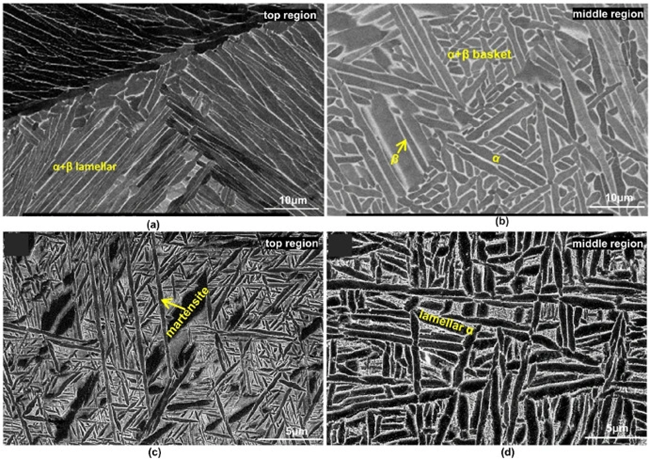
Heat treatment at 800°C for 120 minutes in vacuum atmosphere (1.3 x 10⁻³ to 1.3 x 10⁻⁵ mbar) transforms martensitic α’ microstructure to lamellar α+β phases. This thermal cycle increases ductility from 7.36% to 12.84% and reduces residual stresses inherent in additive manufacturing.
Real-World Applications in Humanoid Robotics
Tesla Optimus Gen3: Ti-6Al-4V Hip and Knee Joint Gear Sets
Tesla’s Optimus Gen3 hip and knee joints incorporate Ti-6Al-4V alloy gear sets combined with 3D-printed hollow structures. The fatigue resistance reaches three times that of traditional stainless steel. This reduces damage during prolonged, high-frequency movement and lowers maintenance costs. The implementation confirms Grade 23’s capability to withstand repetitive loading cycles inherent in bipedal locomotion.
Harmonic Reducer Flexible Wheels in High-Precision Joints
Harmonic drives suit tasks that need high precision and low backlash. These include robotic surgery and advanced manufacturing processes. Ti-6Al-4V ELI applications extend to harmonic flexible wheels and output flanges in medical robot fingers, where zero-backlash transmission proves critical for sub-millimeter positioning accuracy.
Deep-Sea and Cryogenic Applications: -253°C Performance Retention
Ti-6Al-4V maintains structural integrity at cryogenic temperatures down to -253°C. The ELI variant shows 30% impact toughness increase at -40°C. This makes it suitable for deep-sea low-temperature environments where conventional alloys experience brittle fracture.
Medical-Grade Humanoid Robots: UBTECH Walker X 2 Million Cycle Testing
Medical-grade titanium alloy passed 2 million cycle tests by UBTECH’s Walker X and showed reliability in bionic joints. Mass production commenced in Q2 2025, providing high-quality joint materials for humanoid platforms that require medical-grade certification.
Conclusion
Grade 23 Ti-6Al-4V ELI has proven to be the best material choice for humanoid joint gears. It offers superior fracture toughness and extended fatigue life over 100,000 cycles while reducing weight considerably. Robotics platforms like Tesla’s Optimus Gen3 achieve three times the durability of traditional steel implementations as a result. JHMIM Titanium is the only manufacturer in China offering MIM and SLM 3D Printing under one roof with CNC Machining capabilities. This enables continuous transitions from prototyping to mass production for titanium robotics applications.
FAQs
Q1. What distinguishes Grade 23 Ti-6Al-4V ELI from standard Ti-6Al-4V alloy? Grade 23 features reduced interstitial elements, specifically limiting oxygen to 0.13% maximum compared to 0.20% in standard Grade 5. This results in approximately 30% higher fracture toughness (75-90 MPa√m versus 55-70 MPa√m) and 10-15% greater ductility while maintaining comparable tensile strength of 860 MPa. The “ELI” designation refers to Extra Low Interstitial content of oxygen, nitrogen, carbon, and hydrogen.
Q2. Why does Grade 23 perform better in humanoid robot joints than stainless steel? Grade 23 delivers 40% weight reduction compared to stainless steel due to its density of 4.43 g/cm³ versus steel’s 7.8 g/cm³. It provides superior fatigue life of 589 MPa at 10 million cycles and demonstrates three times the durability of traditional stainless steel in high-frequency joint applications. The reduced mass decreases joint inertia, enabling faster movements while consuming less energy.
Q3. What manufacturing methods are used to produce Grade 23 titanium joint gears? Three primary methods are employed: Selective Laser Melting (SLM) for complex hollow geometries achieving 99.45% density, Metal Injection Molding (MIM) for cost-effective mass production of components under 100 grams, and CNC machining for precision finishing. Post-processing heat treatment at 732-800°C optimizes the microstructure, increasing ductility from 7.36% to 12.84%.
Q4. How many cycles can Grade 23 titanium gears withstand in humanoid applications? Grade 23 demonstrates superior fatigue performance exceeding 100,000 cycles in hip and knee joints, with testing on platforms like UBTECH’s Walker X validating 2 million cycle reliability. The material’s fatigue strength reaches 589 MPa at 10 million cycles in heat-treated condition, making it suitable for the repetitive loading inherent in bipedal locomotion.
Q5. Can Grade 23 titanium function in extreme temperature environments? Yes, Grade 23 maintains structural integrity across extreme temperature ranges from cryogenic conditions at -253°C to elevated temperatures up to 350°C. It shows 30% increased impact toughness at -40°C compared to standard grades, making it suitable for deep-sea applications and environments where conventional alloys would experience brittle fracture.