

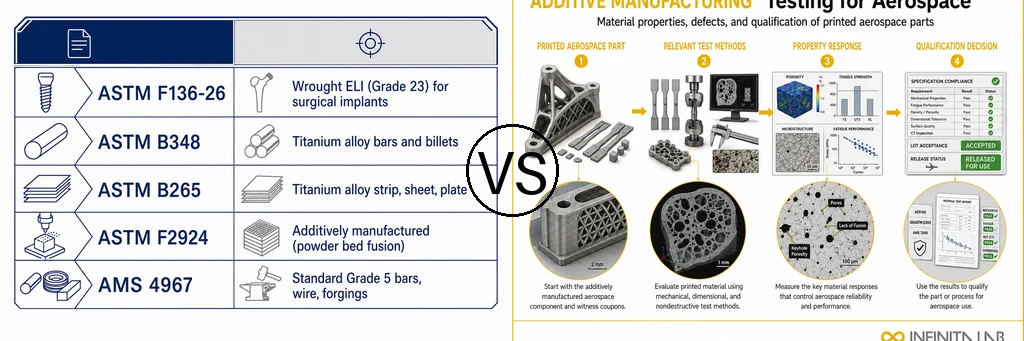
ASTM F2924 vs. ASTM F3001: Scope and Alloy Grades
Both ASTM F2924 and ASTM F3001 set manufacturing requirements for 3D-printed Ti-6Al-4V components made through powder bed fusion. Each standard applies to a different titanium alloy grade, with its own chemical limits and application needs. The applicable standard depends on the interstitial content requirements and the finished part’s intended use.
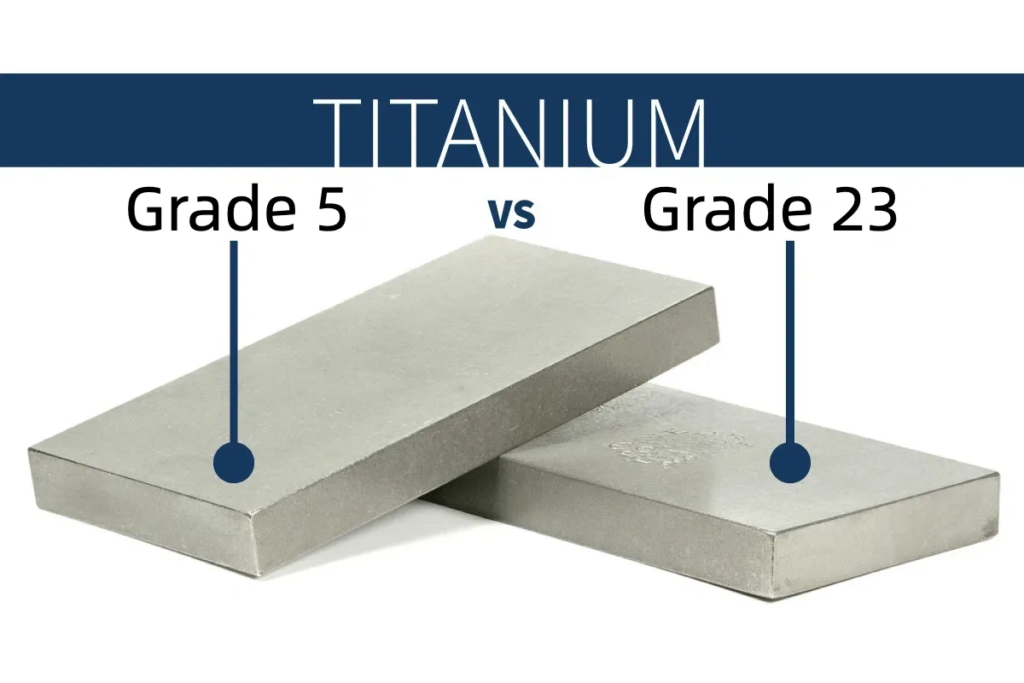
F2924: Ti-6Al-4V Grade 5 vs. F3001: Ti-6Al-4V ELI Grade 23
ASTM F2924 covers additively manufactured titanium-6 aluminum-4 vanadium that meets Grade 5 composition limits. Grade 5 is the workhorse alloy used in conventional wrought and forged titanium products. The 2014 editions cited in published research allow aluminum between 5.5 and 6.75 weight percent, iron up to 0.30 weight percent, and oxygen up to 0.20 weight percent. Structural applications benefit from this composition’s high strength where moderate ductility meets design requirements.
ASTM F3001 specifies Ti-6Al-4V ELI, or Extra Low Interstitial, with Grade 23 chemistry. The ELI designation reflects tighter limits on elements that occupy interstitial positions within the titanium crystal lattice. Aluminum ranges from 5.5 to 6.50 weight percent, which is slightly narrower than Grade 5. The referenced 2014 standard versions limit iron to 0.25 weight percent, oxygen to 0.13 weight percent, and hydrogen to 0.012 weight percent. These lower interstitial limits reduce strength somewhat but improve fracture toughness and elongation. Those properties matter for biomedical implants and fatigue-critical aerospace hardware.
Grade 5 and Grade 23 chemistry directly affects mechanical behavior. Oxygen acts as an alpha phase stabilizer in titanium alloys, strengthening the material while reducing ductility. Grade 5’s higher oxygen limit of 0.20 weight percent produces ultimate tensile and yield strength values about 50 to 100 MPa higher than Grade 23 when both undergo identical processing. Grade 23 gives up some strength for greater elongation, often exceeding Grade 5 by two to four percentage points depending on heat treatment.
Both specifications cover components made through full-melt powder bed fusion processes, including electron beam melting and laser melting. Parts made with these methods typically need mechanical properties similar to machined forgings and wrought products. The standards set acceptance criteria that reflect traditional titanium mill product specifications. Manufacturers often post-process components made to either standard through machining, grinding, electrical discharge machining, or polishing to achieve the required surface finish and critical dimensions.
ASTM F2924 and F3001 help purchasers and producers define minimum acceptance requirements through ASTM Committee F42 on Additive Manufacturing Technologies. Users can add stricter requirements through supplementary clauses in purchase orders, including clauses listed in the main standard text. The specifications support regulatory and industry requirements without prescribing every processing detail, so manufacturers retain flexibility in machine selection and parameter optimization.
Laser and Electron Beam Powder Bed Fusion: Processes Covered by Both Standards
Both ASTM F2924 and F3001 apply to full-melt powder bed fusion technologies, including electron beam melting and laser melting systems. These processes build parts layer by layer from metal powder. They use either a focused electron beam in a vacuum or a laser beam under inert gas to selectively melt powder based on a digital part file. The term “full-melt” separates these processes from partial sintering or binder jetting and ensures that powder particles fully fuse into dense metal.
Electron beam powder bed fusion operates in a vacuum, typically between 10^-3 and 10^-5 mbar. The process heats powder beds to elevated temperatures that often exceed 650°C during preheating. This high background temperature sinters unmelted powder and reduces thermal gradients. It can also increase oxygen pickup from residual moisture in the powder. Laser powder bed fusion uses an inert shielding gas, usually argon, with purity requirements that vary by manufacturer. Powder bed temperatures remain lower except near the melt pool.
Neither standard requires one process instead of the other. Both set performance-based requirements that parts from either process must meet. Machine qualification, powder specifications, build documentation, and final part testing apply whether the system uses an electron beam or laser. This process-neutral approach allows both technologies to serve markets that require ASTM-compliant Ti-6Al-4V components.
Chemical Limits: Grade 5 vs. Grade 23 ELI
The chemical composition limits that separate Grade 5 from Grade 23 ELI focus on interstitial elements. These small atoms occupy gaps in the titanium crystal structure and have a disproportionate effect on mechanical properties. Both grades use the same Ti-6Al-4V base chemistry, but ASTM F3001’s tighter interstitial controls produce measurable differences in strength and ductility, along with fracture toughness, compared with ASTM F2924.
Oxygen: 0.20 wt.% vs. 0.13 wt.% Maximum in the Cited 2014 Editions
Oxygen is the main compositional difference between ASTM F2924 and F3001. Grade 5 allows up to 0.20 weight percent oxygen, while Grade 23 ELI limits oxygen to 0.13 weight percent in the cited 2014 standard editions used in additive manufacturing research. This 0.07 percentage-point difference accounts for most mechanical-property variation between the grades.
Oxygen is a strong alpha-phase stabilizer in titanium alloys. It raises the alpha-to-beta transition temperature and hardens the titanium lattice. Each 0.01 weight percent increase in oxygen raises tensile strength by about 10 to 15 MPa and reduces fracture toughness by several MPa√m. Grade 5’s higher oxygen limit raises ultimate tensile strength by roughly 30 to 65 MPa above Grade 23 when both alloys receive the same thermal processing.
Oxygen pickup during powder bed fusion remains a challenge. Titanium’s high reactivity at elevated processing temperatures requires costly controls. Unmelted powder that is exposed to high temperatures can absorb oxygen from residual moisture or atmospheric contamination between builds. Manufacturers must monitor powder oxygen throughout reuse cycles. Neither ASTM F2924 nor F3001 sets universal powder-reuse limits. Instead, both standards define final-part chemistry requirements that manufacturers must meet whatever powder-handling methods they use.
Iron: 0.30 wt.% vs. 0.25 wt.% Maximum in the Cited 2014 Editions
Iron limits also differ between the standards. ASTM F2924 allows up to 0.30 weight percent iron in Grade 5, while ASTM F3001 limits Grade 23 ELI to 0.25 weight percent. Iron acts as a beta stabilizer in titanium alloys and affects microstructural homogeneity and phase distribution. Grade 23’s lower iron limit helps improve fracture toughness and damage tolerance, which are valued in biomedical and cryogenic applications.
Hydrogen: 0.015 wt.% vs. 0.012 wt.% Maximum in the Cited 2014 Editions
Hydrogen limits further distinguish the two standards. ASTM F2924 allows up to 0.015 weight percent hydrogen in Grade 5, while ASTM F3001 restricts Grade 23 ELI to 0.012 weight percent. Titanium alloys are susceptible to hydrogen embrittlement, so hydrogen control is critical during processing, including heat treatment and acid pickling. Mill-product specifications for Ti-6Al-4V ELI typically set the maximum hydrogen limit at 120 ppm, or 0.012 weight percent, to maintain ductility.
Aluminum, Vanadium, Carbon, and Nitrogen: Remaining Composition Checks
Aluminum ranges from 5.5 to 6.75 weight percent in ASTM F2924 and from 5.5 to 6.50 weight percent in ASTM F3001. Vanadium has the same limits in both standards at 3.5 to 4.5 weight percent. Carbon remains at 0.08 weight percent maximum for both grades, while nitrogen decreases from 0.05 weight percent maximum in Grade 5 to a tighter limit in some Grade 23 variants. These elements and the interstitial limits define the full alloy composition. Laboratories perform chemical analysis with inert gas fusion methods under ASTM E1409 for oxygen and nitrogen, ASTM E1447 for hydrogen, ASTM E1941 for carbon, and ASTM E2371 for metallic elements.
Powder Quality and Reuse for Both Titanium Grades
Metal powder feedstock that conforms to ASTM F2924 or ASTM F3001 must meet particle-size, morphology, and flow specifications to support consistent layer deposition and recoating during the build process. Both standards require powder free of detrimental inclusions and impurities. Its chemical composition must also support final material that meets the applicable Grade 5 or Grade 23 limits after processing.
Particle Size, Shape, and Flow: Matching Feedstock to the PBF Process
Titanium powder for additive manufacturing typically has a particle size distribution of 45 to 106 micrometers in electron beam systems. Each manufacturer sets acceptable limits for size, shape, tap density, and flow rate based on its equipment. Research on Grade 5 and Grade 23 powders reports D10, D50, and D90 values of about 51, 70, and 98 micrometers for typical PBF-EB feedstock. Plasma atomization produces highly spherical particles, which support good flowability and even recoating.
Standards require certificates of conformance for powder sieves used to manufacture Class A, B, C, D, and F components. The certificates must show that the sieves were manufactured to ISO 9044, or that sieving meets ASTM E11 specifications. Sieve analysis for used powder and incoming lots follows ASTM B214 or procedures agreed on by the supplier and purchaser. Particle morphology, flow behavior, and apparent density affect layer uniformity. Atomization methods, handling exposure, and thermal history can affect these properties.
Sieving and Virgin Powder Blends: Tracking Each Batch’s Reuse History
ASTM F2924 and F3001 permit the use of recycled powder, and manufacturers must record the virgin-to-used powder ratio for each production run. Neither standard sets a maximum number of reuse cycles for Class A, B, C, D, and F components. Component suppliers and purchasers must agree on the number of times powder may be reused and the number of times a portion of a lot may enter the build chamber. Manufacturers may blend powder left after each build cycle with virgin powder to provide enough material for later builds.
Manufacturers must sieve all used powder through a mesh that removes agglomerates or contaminants from the build cycle. Parties must agree on regular chemical analysis of used powder. Powder that fails composition limits cannot be used to manufacture further Class A through F components. Research that tracked Grade 23 powder through nine recycling iterations with a top-up strategy found that oxygen content exceeded the 0.13 weight percent limit after eight cycles.
Oxygen Pickup: Why Neither Standard Sets a Universal Reuse Count
Titanium powder oxidizes at elevated temperatures during powder bed fusion, and oxygen pickup rates vary substantially with process conditions and handling methods. Studies of Grade 5 powder reused through mixing found an oxygen increase of 0.003 weight percent per build. Sintered powder alone gained 0.03 weight percent per build after exposure to preheating stages. Grade 23 powder in the same study increased by 0.004 weight percent per build when mixed.
Oxygen sources vary by process. Electron beam systems operate at background temperatures of 650 to 800 degrees Celsius under partial vacuum. Residual moisture in the powder is the main oxygen source. Laser systems maintain lower powder-bed temperatures except near melt pools and draw oxygen from shielding-gas impurities or atmospheric exposure between builds. Smaller powder fractions oxidize faster because of their greater surface area. Powder measuring 45 to 75 micrometers accumulates more oxygen than larger particles during thermogravimetric testing.
Powder size, thermal exposure, atmosphere purity, and handling between builds all affect oxygen pickup. Neither ASTM F2924 nor F3001 therefore sets a universal reuse count. The standards require powder chemistry verification and disposition rules when results fall outside the specified limits.
Build Controls for 3D Printed Ti-6Al-4V
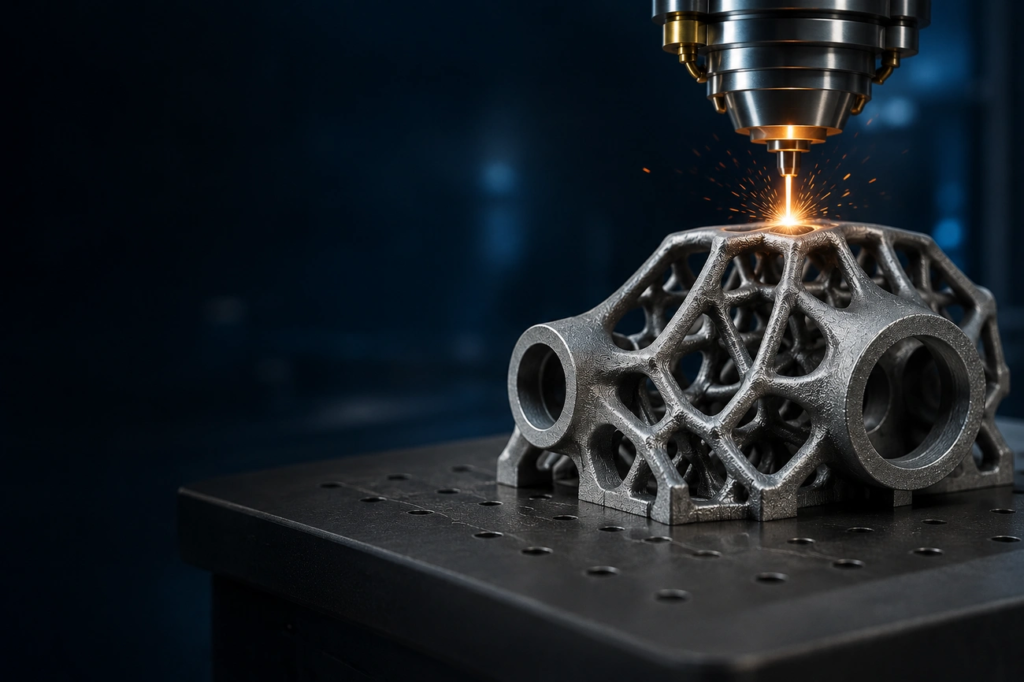
Process control documentation requirements under ASTM F2924 and ASTM F3001 extend beyond powder specifications to cover the thermal environment, atmosphere management, and build execution records that manufacturers must keep for every production run. These controls support repeatability and traceability while accounting for the different operating conditions of laser and electron beam systems.
Laser vs. Electron Beam PBF: Shielding Gas, Vacuum, and Heat Exposure
Electron beam powder bed fusion operates under vacuum conditions that range from 2 × 10^-3 mbar during processing to lower pressures during chamber preparation. The partial-vacuum environment prevents atmospheric contamination, but helium must be introduced throughout the build to maintain stable vacuum levels and improve beam quality. Powder beds reach preheat temperatures of 520°C in some systems, while background temperatures reach 650 to 800°C during layer preheating. These temperatures sinter unmelted powder throughout the build area and create a thermally stable environment. This approach reduces residual stress but increases oxygen exposure from powder moisture.
Laser powder bed fusion uses different thermal conditions. Shielding gas, usually argon with varying purity requirements, flows through the build chamber to prevent oxidation and remove metal vapor from the beam path. High temperatures occur only near the melt pool instead of throughout the powder bed. Unmelted powder stays at lower temperatures and may not sinter. This localized heating creates higher thermal gradients and residual stresses than electron beam systems, but it limits oxygen exposure time for powder outside the melt zone.
The choice between a vacuum and an inert-gas atmosphere determines the oxygen source mechanisms. Titanium powder absorbs moisture during atmospheric exposure between builds, and this moisture provides the main oxygen source in electron beam systems. Shielding-gas impurities can introduce oxygen in laser systems. Lower powder bed temperatures reduce overall oxidation rates compared with the sustained high-temperature exposure in electron beam processing.
Build Plans: Recording Machine Settings, Part Orientation, and Lot Identity
Both standards require manufacturers to document machine settings, part orientation in the build volume, and powder lot identity for each production run. Build plans must record beam power, scan speed, layer thickness, scan strategy, and thermal profiles that determine the final microstructure and mechanical properties. Research compared laser parameters of 360 W at 1200 mm/s with 75 W at 250 mm/s and showed that cooling rates near the beta transus temperature control phase development from alpha-prime to alpha-plus-beta structures. These records support lot traceability when parts need investigation or process adjustments are needed after inspection results.
Heat Treatment and HIP Under F2924 and F3001
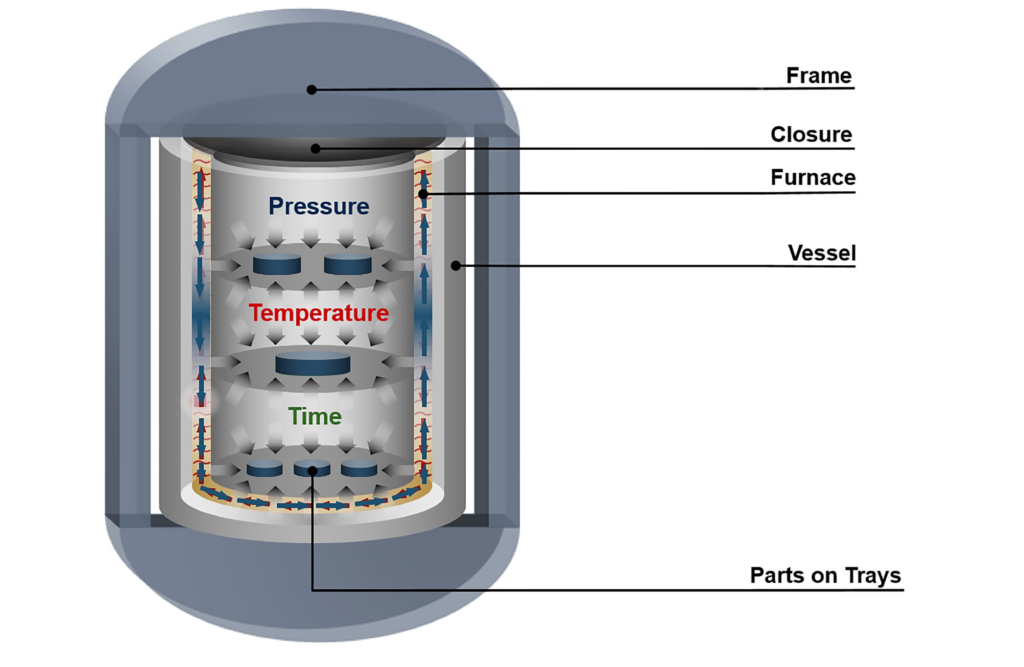
Thermal post-processing determines whether additively manufactured titanium parts meet ASTM F2924 or ASTM F3001 mechanical-property requirements. Class designations in each standard define heat-treatment paths, from stress relief through hot isostatic pressing, and furnace atmosphere selection prevents surface contamination that conventional descaling cannot remove from complex geometries.
Stress Relief: Limiting Distortion Before Baseplate Removal
Residual stresses in laser powder bed fusion Ti-6Al-4V reach 200 to 800 MPa near the top surface of as-built samples that remain attached to the substrate. Parts removed from baseplates before stress relief may distort or develop cracks if stress levels approach the 825 MPa yield strength typical of annealed Grade 23 material. Stress relief above 560°C removes 90 percent of residual stress, and 650°C provides optimal ductility for later operations.
Cooling uniformity is more important than the peak stress-relief temperature. Uniform cooling from 480°C to 351°C prevents thermal gradients from returning. Electron beam systems reduce the need for stress relief because chamber temperatures of 650 to 800°C during building provide in-process annealing. High-temperature annealing can eliminate separate stress relief, but annealing temperatures must exceed stress-relief ranges to decompose martensite.
Annealing Below vs. Above the Beta Transus: Changes in Grain Structure
The beta transus temperature, approximately 995 to 1000°C, separates two annealing regimes. Sub-beta annealing between 800 and 950°C decomposes acicular alpha-prime martensite into fine lamellar alpha-plus-beta structures but retains the columnar prior-beta grain morphology. Alpha lath width increases from sub-micron dimensions in as-built material to 2 to 2.5 micrometers after furnace cooling from 850°C.
Super-beta-transus annealing at 1050°C for one hour recrystallizes columnar grains into an equiaxed morphology and eliminates the mechanical anisotropy inherent in powder bed fusion. Furnace cooling from above the beta transus produces lamellar alpha colonies with laths 2.86 to 4.72 micrometers wide. Water quenching produces martensitic microstructures with ultimate tensile strength reaching 1079 MPa, but elongation falls to 4.5 percent. Subsequent aging at 540°C for four hours decomposes enough martensite to restore ductility to 8 percent while maintaining strength above 950 MPa.
HIP vs. Annealing Alone: Pore Closure and the Limits of Oxygen Control
Hot isostatic pressing closes internal porosity that annealing does not deal very well with. HIP exposes parts to elevated temperature and isostatic gas pressure at the same time, which collapses voids and improves fatigue resistance. Neither HIP nor annealing reverses excessive oxygen absorbed during powder reuse.
Vacuum and Inert Gas: Reducing Surface Oxidation and Alpha Case
AMS 2801 states that titanium parts must not be exposed to air above 204°C and requires descaling for parts heated above 538°C in non-inert atmospheres. Vacuum heat treatment below 0.1 micrometer mercury pressure prevents surface oxide formation and dissociates existing oxides. Net-shape additive parts cannot undergo conventional descaling, so vacuum or high-purity inert atmospheres are mandatory for all thermal processing under ASTM F2924 and ASTM F3001.
Chemical and Mechanical Testing: F2924 vs. F3001
Verification testing under ASTM F2924 and ASTM F3001 combines wet chemistry analysis that confirms alloy composition with mechanical testing that verifies strength, ductility, and consistency throughout the build volume. Both standards reference test methods that measure interstitial elements that can migrate during powder reuse and metallic constituents that control phase balance.
ASTM E1409: Oxygen and Nitrogen Measurement by Inert Gas Fusion
ASTM E1409 covers oxygen determination at mass fractions from 0.01 to 0.5 percent and nitrogen from 0.003 to 0.11 percent in titanium and titanium alloys. The method uses inert gas fusion. Samples melt in a graphite crucible under inert carrier gas flow at controlled furnace power. Oxygen reacts with graphite and releases as carbon monoxide, while nitrogen evolves as molecular nitrogen. Infrared detection measures the carbon monoxide concentration, and thermal conductivity cells measure nitrogen.
Sample preparation requires chemical etching or abrasion to remove surface contamination before analysis. Technicians place test specimens weighing 0.10 to 0.15 grams in nickel baskets and melt them at furnace power settings between 4750 and 5500 watts, depending on the equipment. Chemical analysis laboratories perform these measurements under ISO 17025 quality standards. Virgin Grade 5 powder typically contains 0.18 weight percent oxygen, while Grade 23 powder contains about 0.09 weight percent before processing.
ASTM E1447, E1941, and E2371: Hydrogen, Carbon, and Alloy Element Analysis
ASTM E1447 specifies hydrogen determination through inert gas fusion with thermal conductivity or infrared detection. ASTM E1941 uses combustion methods to analyze carbon in reactive metals, including titanium. ASTM E2371 specifies aluminum, vanadium, iron, and other metallic element analysis through atomic emission spectrometry with direct-current plasma or inductively coupled plasma configurations.
ASTM E8/E8M: Yield Strength, Tensile Strength, and Elongation
Tensile testing under ASTM E8/E8M provides yield strength, ultimate tensile strength, and elongation data that support material acceptance. Laboratories machine test specimens from bulk deposits or near-net-shape bars built in the X, Y, or Z directions under ASTM F2921 coordinate system definitions.
Test Direction and Heat-Treated Condition: Correct Acceptance Limits
Mechanical properties vary by build direction and thermal processing class. Each ASTM F2924 and F3001 class designation has specific acceptance limits that match the applied stress-relief, annealing, or HIP treatment.
Bulk Chemistry vs. Local Variation: Sampling Limits Throughout the Build
Inert gas fusion measurements average oxygen content across the full sample mass, which can conceal particle-to-particle variation or build-height gradients that research has documented in electron beam systems.
Part Inspection and Certification for Both Standards
Final acceptance of additively manufactured titanium components requires documented evidence that the microstructure, dimensions, mechanical properties, and chemistry meet purchase order requirements. ASTM F2924 and ASTM F3001 define inspection protocols and certification records that link test results to specific production lots and provide traceability from powder receipt through final shipment.
Microstructure, Dimensions, and Surface Condition: Final Part Checks
Both standards require microstructural examination to confirm grain morphology, phase distribution, and the absence of unacceptable defects, such as alpha case. Alpha case is an oxygen-enriched surface layer that forms during exposure to high temperatures. It must be removed or confirmed absent because it reduces fatigue life and fracture toughness. ASTM E407 provides metallographic etching procedures for titanium alloys that reveal alpha-beta phase boundaries under optical microscopy.
Dimensional inspection confirms that machined or as-built features meet specified tolerances. Post-processing methods such as machining, grinding, electrical discharge machining, and polishing produce the required surface finish and critical dimensions. Surface condition assessments identify surface-breaking porosity, incomplete fusion, and other processing anomalies that could compromise structural integrity.
Retests and Rejection: Handling Results Outside the Specified Limits
Both standards permit retesting under defined conditions if original test results fall outside acceptance limits. Retest protocols define whether duplicate samples from the same lot may undergo testing or whether personnel must prepare new specimens. Rejection criteria apply if retests do not meet minimum specification values. Disposition decisions may require rework, downgrading to less critical applications, or scrapping.
Certificates and Traceability: Linking Test Results to the Delivered Lot
Material certificates document the full processing history from ingot through the final product. They include relevant mechanical and chemical test results, inspection outcomes, and heat treatment certifications. Shipped parts must include linked identifiers for the supplier lot reference, internal material ID, storage container ID, machine ID, build ID, part or serial ID, post-process traveler ID, inspection report ID, and disposition or release record ID. This documentation supports nonconformance investigations and containment decisions if field problems arise.
Choosing F2924 or F3001 for Your Application
Specification selection between ASTM F2924 and ASTM F3001 for additive manufacturing Ti-6Al-4V depends on mechanical property requirements, application-specific regulations, and commercial factors.
Grade 5 vs. ELI: Weighing Strength, Ductility, and Toughness Needs
Grade 5 allows up to 0.20 weight percent oxygen and provides ultimate tensile strength roughly 50 to 100 MPa higher than Grade 23 ELI under similar processing conditions. This makes ASTM F2924 suitable for structural applications that prioritize strength over fracture toughness. Grade 23 ELI under ASTM F3001 gives up some strength but provides two to four percentage points more elongation and better fracture toughness. These properties matter where damage tolerance and fatigue resistance shape design decisions.
Medical and Aerospace Parts: Checking Application Rules Beyond Either Standard
Components made to ASTM F3001 typically support applications that require mechanical properties matching machined forgings and wrought products. Medical device manufacturers must maintain ISO 13485-compliant quality management systems, whatever titanium specification governs the material properties. Surgical implants made from wrought Ti-6Al-4V ELI follow ASTM F136, while ISO 5832-3 provides an international equivalent. Aerospace applications may require AS9100 quality systems and SAE standards, including AMS 2801, which governs heat treatment. Neither ASTM F2924 nor ASTM F3001 replaces application-specific requirements. Both function as material specifications within broader regulatory frameworks.
Cost and Supply: Comparing Qualified Powder, Testing, and Post-Processing Quotes
Grade 23’s tighter interstitial limits raise powder qualification costs and reduce supplier options compared with Grade 5 feedstock. Chemical analysis under ASTM E1409, E1447, E1941, and E2371 also adds testing costs for each lot.
Purchase Orders: Naming the Standard Edition, Part Condition, and Added Tests
Orders must state the standard designation, classification from Class A through F, quantity, and dimensions with tolerances. They must also define mechanical property requirements, chemical analysis methods, thermal processing, and any supplementary requirements from S1-S4 and S1-S16 listed in ASTM F2924. Purchase orders should name the applicable standard edition year because compositional limits and testing protocols change with revisions.
Comparison Table
Comparison Table: ASTM F2924 vs. ASTM F3001
| Attribute | ASTM F2924 | ASTM F3001 |
|---|---|---|
| Titanium Grade | Grade 5 (Ti-6Al-4V) | Grade 23 (Ti-6Al-4V ELI – Extra Low Interstitial) |
| Oxygen Content (max) | 0.20 wt.% | 0.13 wt.% |
| Iron Content (max) | 0.30 wt.% | 0.25 wt.% |
| Hydrogen Content (max) | 0.015 wt.% | 0.012 wt.% |
| Aluminum Content | 5.5 – 6.75 wt.% | 5.5 – 6.50 wt.% |
| Vanadium Content | 3.5 – 4.5 wt.% | 3.5 – 4.5 wt.% |
| Carbon Content (max) | 0.08 wt.% | 0.08 wt.% |
| Manufacturing Processes | Full-melt powder bed fusion (electron beam melting and laser melting) | Full-melt powder bed fusion (electron beam melting and laser melting) |
| Typical Ultimate Tensile Strength | 50-100 MPa higher than Grade 23 when processed under similar conditions | 50-100 MPa lower than Grade 5 when processed under similar conditions |
| Elongation | 2-4 percentage points lower than Grade 23 | 2-4 percentage points higher than Grade 5 |
| Fracture Toughness | Lower than Grade 23 | Higher than Grade 5 |
| Primary Application Focus | Structural applications that prioritize high strength and moderate ductility | Biomedical implants and fatigue-critical aerospace hardware that require damage tolerance |
| Key Advantage | Higher strength for structural applications | Better fracture toughness, elongation, and damage tolerance |
| Powder Particle Size (typical) | 45-106 micrometers | 45-106 micrometers |
| Powder Reuse Limits | No universal limit; requires supplier and purchaser agreement | No universal limit; requires supplier and purchaser agreement |
| Heat Treatment Options | Stress relief, sub-beta annealing, super-beta annealing, HIP | Stress relief, sub-beta annealing, super-beta annealing, HIP |
| Chemical Testing Standards | ASTM E1409 (O, N), E1447 (H), E1941 (C), E2371 (metallic elements) | ASTM E1409 (O, N), E1447 (H), E1941 (C), E2371 (metallic elements) |
| Mechanical Testing Standard | ASTM E8/E8M (tensile testing) | ASTM E8/E8M (tensile testing) |
| Atmosphere Requirements | Vacuum or high-purity inert gas for thermal processing | Vacuum or high-purity inert gas for thermal processing |
| Relative Cost | Lower powder qualification costs and more supplier options | Higher powder qualification costs and fewer supplier options due to tighter interstitial limits |
Conclusion
The choice between ASTM F2924 and F3001 depends on application priorities. Grade 5 provides higher strength at a lower cost. It suits structural components when ultimate tensile strength guides design decisions. Grade 23 ELI sacrifices some strength for greater fracture toughness and elongation. These properties are essential to biomedical implants and fatigue-critical aerospace hardware.
Both standards use similar manufacturing processes, testing protocols, and powder-handling requirements. A 0.07 percentage-point difference in oxygen content creates the mechanical distinction between them. Buyers should list the standard’s edition year on purchase orders and confirm that powder suppliers can meet the tighter interstitial limits consistently when selecting Grade 23.