

Titanium heat treatment machinability is governed by the alloy’s alpha/beta phase morphology, hardness, and internal residual stress. Mill-annealed Ti-6Al-4V (30–34 HRC) offers predictable chip shearing at cutting speeds of 40–60 m/min. Solution Treated and Aged (STA) material reaches 39–44 HRC, increasing cutting forces by up to 40% and reducing tool life by 20%–40%, requiring reduced cutting speeds (20–35 m/min) and high-pressure coolant (70–100 bar).
Key Metallurgical & Machining Takeaways:
- Stress Relief (480°C–595°C): Relieves residual stresses from forging, additive manufacturing, or rough milling without altering core mechanical strength or hardness (~30–34 HRC). Essential before thin-wall finishing.
- Annealing (700°C–785°C): Coarsens the alpha phase, maximizing ductility and fracture toughness. Provides the best baseline condition for heavy bulk metal removal.
- STA Hardening (900°C+ Quench & 480°C–595°C Age): Precipitates fine secondary alpha particles, driving tensile strength above 1,100 MPa and hardness to 39–44 HRC. Accelerates tool notch wear and edge chipping.
- Alpha Case Removal: Oxygen absorption above 425°C creates a brittle “alpha case” surface layer. Engineering specs mandate 0.000 inches alpha case on finished parts, requiring 0.5–1.0 mm machining stock allowance after non-vacuum heat treatment.
- Optimal DFM Route: Rough machine in annealed state → Solution Treat & Age (STA) → Final precision finish machining to remove distortion and alpha case.
How Heat Treatment Affects Titanium Machinability
Titanium alloys are inherently difficult to machine due to their extremely low thermal conductivity—approximately 6.7 W/m·K for Ti-6Al-4V—and high chemical reactivity with cutting tool materials at elevated temperatures. Heat treatment serves as the primary metallurgical lever to modify the alloy’s microstructure, directly shifting its mechanical strength, hardness, and cutting dynamics.
By applying targeted thermal cycles, manufacturers alter the alpha-to-beta phase ratio and grain morphology. Understanding how these structural shifts alter metal removal behavior is critical for optimizing tool life, managing machine tool spindle load, and holding tight geometric tolerances.
Effects on Tool Life, Cutting Speeds, and Cycle Time
Thermal processing dictates hardness and ductility. In the standard mill-annealed condition, Ti-6Al-4V hardness typically measures between 30 and 34 HRC. In this state, cutting tools encounter predictable chip shearing, allowing baseline material removal rates (MRR).
Conversely, parts subjected to Solution Treatment and Aging (STA) reach hardness levels of 39 to 44 HRC. Machining titanium in this hardened condition increases specific cutting forces by up to 40%. The result is accelerated tool notch wear, rapid flank wear, and premature cutting edge chipping. Machinists must reduce cutting speeds from 40–60 m/min (annealed) down to 20–35 m/min (STA), increasing overall cycle times.
Relevant Alloys, Product Forms, and Additive Manufacturing
The machinability impact of heat treatment varies by alloy family:
- Alpha-Beta Alloys (Ti-6Al-4V, Ti-6Al-2Sn-4Zr-6Mo): Dominate aerospace frames and medical implants. Highly responsive to annealing and STA, shifting from ductile baseline states to high-strength hardened conditions.
- Beta Alloys (Ti-10V-2Fe-3Al, Ti-15V-3Cr-3Sn-3Al): Used in heavy structural forgings like landing gear. Achieve extreme strength levels via STA, presenting severe machining resistance in the aged condition.
- Additive Manufacturing (LPBF/EBM Builds): As-printed 3D titanium parts exhibit intense internal thermal residual stresses and non-equilibrium microstructures. Immediate post-build stress relief or hot isostatic pressing (HIP) is mandatory prior to machining support structures or mating interfaces.
Key Titanium Heat-Treatment Methods
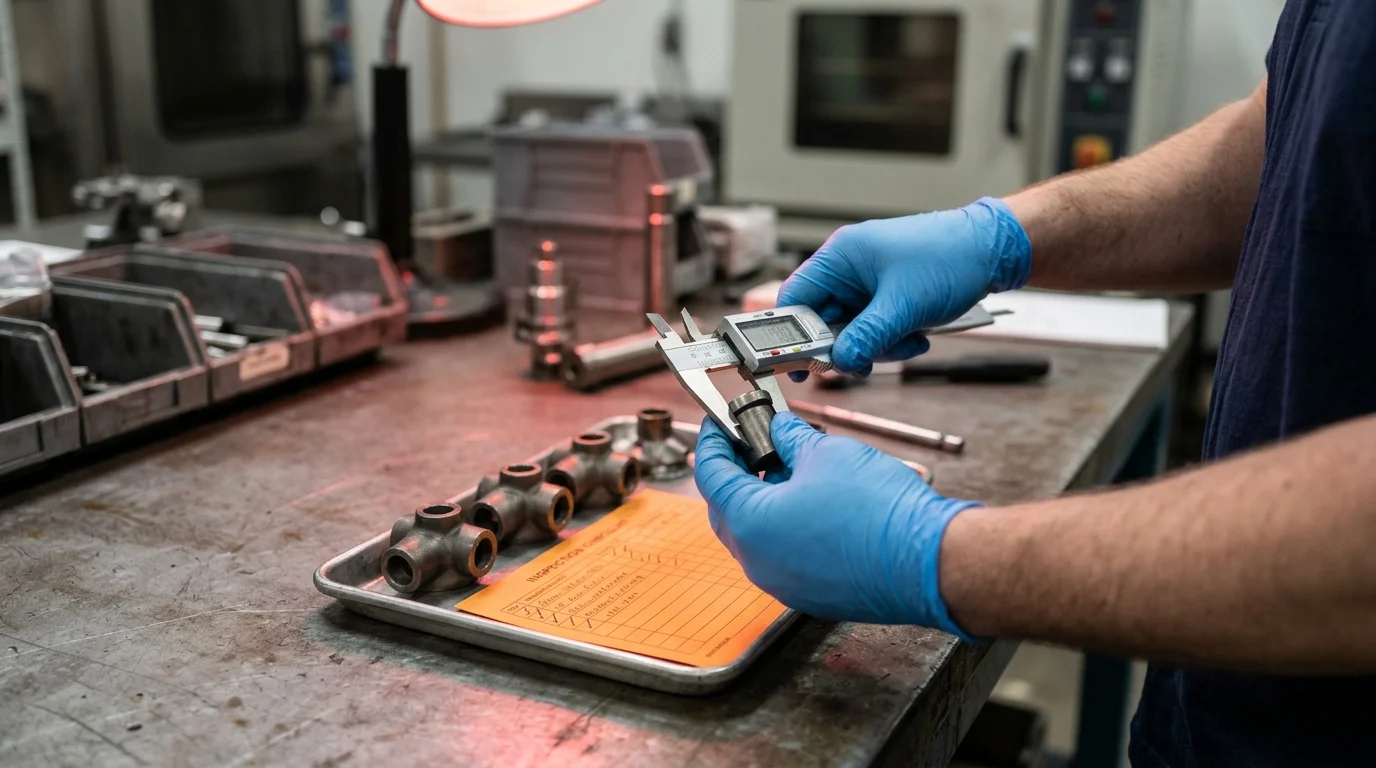
Controlling titanium’s mechanical response requires precise time-temperature execution across three primary thermal processes. Each route targets specific engineering goals, from stress stabilization to maximum tensile performance.
1. Stress Relief and Residual Stress Control
Stress relieving is conducted at sub-transus temperatures, typically between 480°C and 595°C, with soak times ranging from 1 to 4 hours depending on maximum section thickness. This process relaxes internal tension induced by heavy forging, cold forming, or aggressive rough milling without significantly altering the primary alpha-beta microstructure or lowering yield strength.
By neutralizing internal stress gradients, stress relieving prevents part springing and warping during subsequent thin-wall or tight-tolerance finish machining passes.
2. Annealing and Microstructure Refinement
Mill annealing involves heating titanium to higher temperature regimes—typically 700°C to 785°C for Ti-6Al-4V—followed by controlled air or furnace cooling. This cycle coarsens the alpha phase and relieves stress. While annealing slightly lowers yield strength compared to STA, it significantly maximizes ductility and fracture toughness.
From a CNC machining standpoint, an annealed structure provides the most forgiving chip shearing mechanism, reducing tool shock and maximizing insert tool life during high-volume bulk milling.
3. Solution Treatment and Aging (STA) for Peak Strength
STA pushes alpha-beta and beta alloys to their maximum mechanical limits. The two-step process involves:
- Solution Treatment: Heating high into the alpha-beta field (900°C to 955°C) followed by rapid water quenching (transfer time <10 seconds) to trap a supersaturated metastable beta phase.
- Aging: Re-heating the quenched material to 480°C–595°C for 4 to 8 hours. This precipitates fine secondary alpha particles within the beta grains, driving tensile strength above 1,100 MPa.
While STA fulfills critical load-bearing aerospace requirements, the dense, hardened matrix severely taxes cutting tools and requires rigid, vibration-free machine setups.
Comparing Stress Relief, Annealing, and STA
| Thermal Process | Temperature Range (°C) | Microstructural Shift | Typical Hardness (HRC) | Machinability & Tool Life Impact |
|---|---|---|---|---|
| Stress Relief | 480°C – 595°C | Minimal; relaxes lattice strain | 30 – 34 HRC | Improves dimensional stability; zero tool life penalty. |
| Annealing | 700°C – 785°C | Coarsens alpha phase; increases ductility | 30 – 32 HRC | Optimal for bulk material removal and long insert life. |
| STA Hardening | 900°C+ Quench & Age | Fine secondary alpha precipitation | 39 – 44 HRC | Increases cutting forces by 40%; reduces tool life by 20%–40%. |
Trade-Offs in Cutting Force, Overhang, and Tooling Budget
Machining STA titanium demands heavy-duty machine setups. Higher hardness increases heat generation at the tool-chip interface. Operators must utilize shorter tool overhangs, larger core-diameter end mills, and reduced radial depth of cut ($a_e$) to prevent chatter and tool deflection.
Conversely, while annealed titanium is softer and easier to shear, its high ductility can induce Built-Up Edge (BUE) on carbide inserts if coolant pressure is insufficient. Stress relieving strikes a balance for finished components, locking in geometric dimensions without hardening the material.
Process Controls and Quality Verification
Executing heat treatment on titanium requires tight environmental controls. Titanium’s high chemical reactivity at elevated temperatures means furnace deviations can destroy expensive components via contamination or grain growth.
Furnace Uniformity (AMS 2750) and Quench Speed
Aerospace specifications like AMS 2750 require Class 2 pyrometry furnaces (±6°C uniformity) for titanium solution treatment. Maintaining tight temperature control prevents localized overheating past the beta-transus temperature (~995°C for Ti-6Al-4V), which would cause irreversible grain coarsening.
During the STA solution quench, the load transfer time from furnace to water tank must occur in under 10 seconds. Delayed quenching allows premature alpha phase precipitation, ruining the subsequent aging response.
Alpha Case Formation and Machining Allowances
Above 425°C, titanium rapidly absorbs oxygen from ambient furnace air, forming a hard, brittle surface layer known as alpha case. Because alpha case creates surface micro-cracks under fatigue loading, engineering drawings universally mandate 0.000 inches alpha case on final components.
To comply, manufacturers must either heat treat in high-vacuum furnaces ($10^{-4}\text{ Torr}$) or leave a uniform machining allowance of 0.5 to 1.0 mm per side to physically cut away the contaminated alpha case during post-heat treatment finishing passes.
Machining Parameters and High-Pressure Coolant (70–100 bar)
Machining parameters must align with the material’s thermal state:
- Annealed Ti-6Al-4V: Cutting speed $V_c = 40–60\text{ m/min}$, feed per tooth $f_z = 0.08–0.15\text{ mm/tooth}$.
- STA Ti-6Al-4V: Cutting speed $V_c = 20–35\text{ m/min}$, feed per tooth $f_z = 0.05–0.10\text{ mm/tooth}$.
- Coolant Strategy: High-pressure coolant delivered at 70 to 100 bar (1,000–1,500 psi) directed precisely at the cutting zone is mandatory. High pressure penetrates the steam barrier, flushes tough chips, and suppresses thermal cracking on carbide inserts.
Choosing the Right Manufacturing Route (DFM Guidelines)
| Production Stage | Recommended State | Primary Rationale | Tolerance Control Focus |
|---|---|---|---|
| Bulk Heavy Roughing | Mill Annealed | Maximizes MRR, minimizes tool wear | Low (Rough envelope) |
| Intermediate Semi-Finishing | Stress Relieved | Prevents springing/warping before hardening | Moderate |
| Final Precision Finishing | STA (if required) | Achieves final part strength and drawing specs | High (Tight geometric tolerances) |
💡 Sourcing Pre-Heat Treated Titanium Bars or Need Machining DFM Support?
We supply fully certified Ti-6Al-4V (Grade 5 / Grade 23 ELI) bars, forgings, and custom pre-machined blanks in Mill-Annealed, Stress-Relieved, or STA conditions with complete EN 10204 3.1 MTRs and AMS 2750 heat treat records.
Our engineering team assists with CAD DFM reviews, alpha case machining allowances, and tooling parameter selection for aerospace and medical components.Request a Custom Material Quote & DFM Review
Key Takeaways
- Use stress relief at 480°C to 595°C for 1 to 4 hours to eliminate residual stress before machining thin-wall or tight-tolerance titanium parts.
- Expect Ti-6Al-4V in mill-annealed condition (30–34 HRC) to cut more predictably than STA material (39–44 HRC).
- Plan lower cutting speeds (20–35 m/min) and conservative feeds for STA titanium because hardened material reduces tool life by 20% to 40%.
- Ensure complete removal of the oxygen-rich alpha case layer by adding 0.5–1.0 mm machining stock allowance after non-vacuum thermal processing.
- Apply high-pressure coolant (70 to 100 bar) directly at the tool tip to break tough chips and extend insert wear life.
Frequently Asked Questions
Why does heat treatment change titanium machinability?
Heat treatment alters the ratio and morphology of alpha and beta phases, hardness, and residual stress levels. These microstructural shifts change shear resistance, cutting forces, tool wear rates, and chip formation behavior during machining.
Is stress relieving titanium the same as annealing?
No. Stress relief is a lower-temperature cycle (480°C to 595°C) designed to relax internal lattice strain with minimal microstructural or strength changes. Annealing uses higher temperatures (700°C to 785°C) to coarsen the alpha phase and maximize ductility for bulk machining.
When should titanium be stress relieved before CNC machining?
Stress relief is recommended after heavy forging, 3D printing (LPBF/EBM), severe forming, or aggressive rough milling. Relieving stress prior to finish passes prevents part springing and warping when clamping is released.
How does STA affect tool life in Ti-6Al-4V machining?
STA raises hardness to 39–44 HRC and tensile strength above 1,100 MPa. This increases specific cutting forces by up to 40%, generating extreme heat that reduces tool insert life by 20% to 40% compared to annealed stock.
What coolant pressure is recommended for machining heat-treated titanium?
High-pressure coolant delivered at 70 to 100 bar (1,000–1,500 psi) is recommended. High pressure penetrates the thermal vapor barrier at the tool tip, flushes continuous chips, and suppresses thermal shock cracking on carbide tools.