

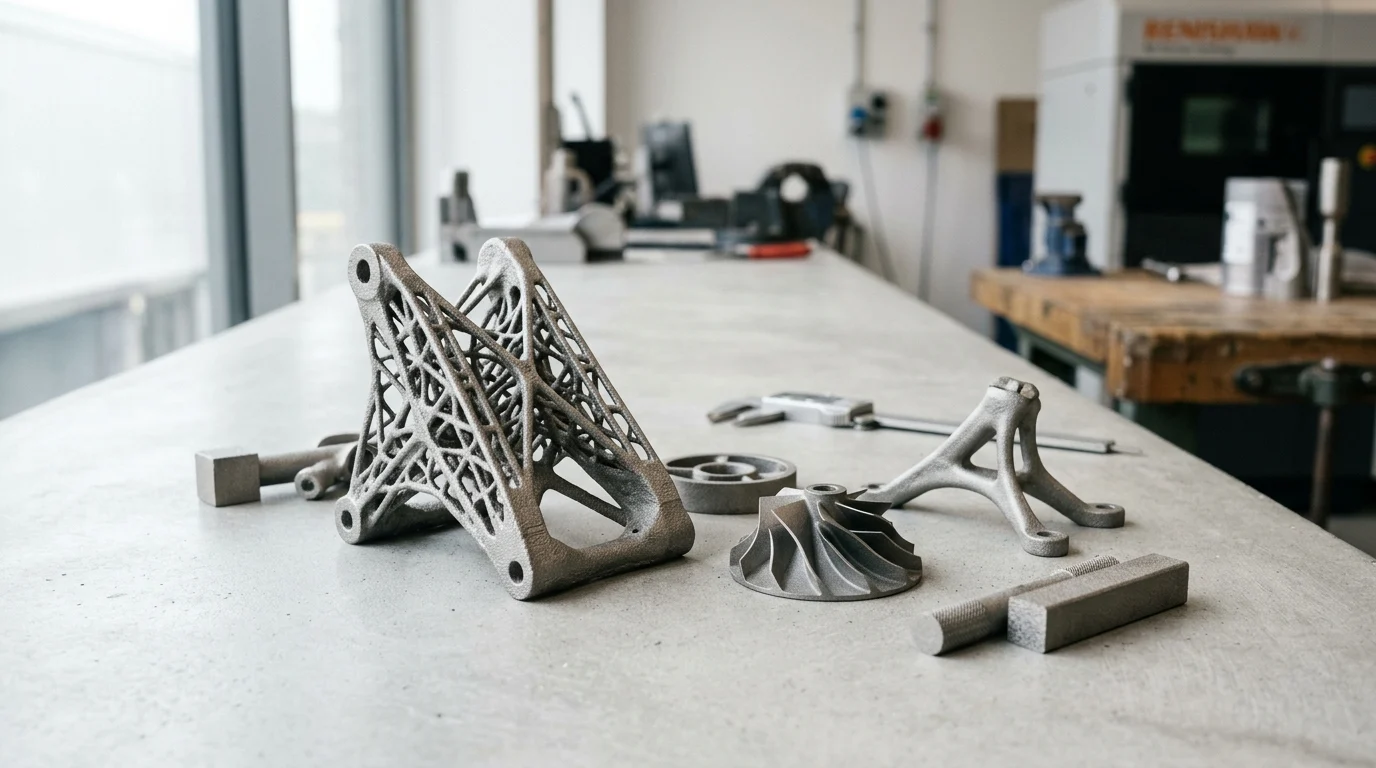
Titanium has long been valued for its rare combination of low density, high strength, corrosion resistance, and biocompatibility—but it is also expensive and difficult to machine. Additive manufacturing changes that equation by building parts layer by layer in controlled inert or vacuum environments, reducing waste while enabling geometries that conventional machining cannot achieve. For aerospace brackets, medical implants, motorsport components, and advanced industrial hardware, printed titanium can deliver major weight savings and design freedom. This article explains why titanium works in 3D printing, which alloys are most practical, what performance benefits engineers can expect, and what limitations must be managed through material selection, process control, and post-processing.
Can Titanium Alloy Be 3D Printed
Titanium alloys are not only capable of being 3D printed, but they are also among the most highly demanded materials in the additive manufacturing (AM) industry. This technology offers solutions to manufacturing bottlenecks that have historically plagued traditional titanium production, making it a transformative approach for high-performance engineering sectors.
Why titanium is suitable for additive manufacturing
Titanium possesses a high melting point of approximately 1,668°C and exhibits extreme reactivity with oxygen, nitrogen, and carbon at elevated temperatures. In traditional subtractive manufacturing, these characteristics result in rapid tool wear, poor thermal conductivity during machining, and significant material waste. Additive manufacturing circumvents these issues by processing the material in strictly controlled, inert gas environments (typically argon, as nitrogen is generally avoided due to the risk of nitride formation and embrittlement) or deep vacuums. This specialized environment prevents oxidation and contamination while high-energy thermal sources melt and fuse the alloy layer by layer.
Key benefits for engineering applications
The primary advantage of 3D printing titanium lies in maximizing its inherently high strength-to-weight ratio. With a density of roughly 4.43 g/cm³—substantially lighter than steel but offering comparable yield strength—titanium is the ultimate material for structural lightweighting. Additive manufacturing allows engineers to utilize topology optimization and complex lattice structures, which can often reduce component weight by up to 50% without compromising structural integrity. Furthermore, 3D printing enables the consolidation of multi-part assemblies into single, monolithic components featuring internal conformal cooling channels that are completely impossible to machine conventionally. However, engineers must account for the fact that printed titanium can exhibit microstructural anisotropy, meaning its as-built fatigue performance may differ from wrought or forged equivalents until it undergoes appropriate thermal post-processing.
Which Titanium Alloys Can Be 3D Printed
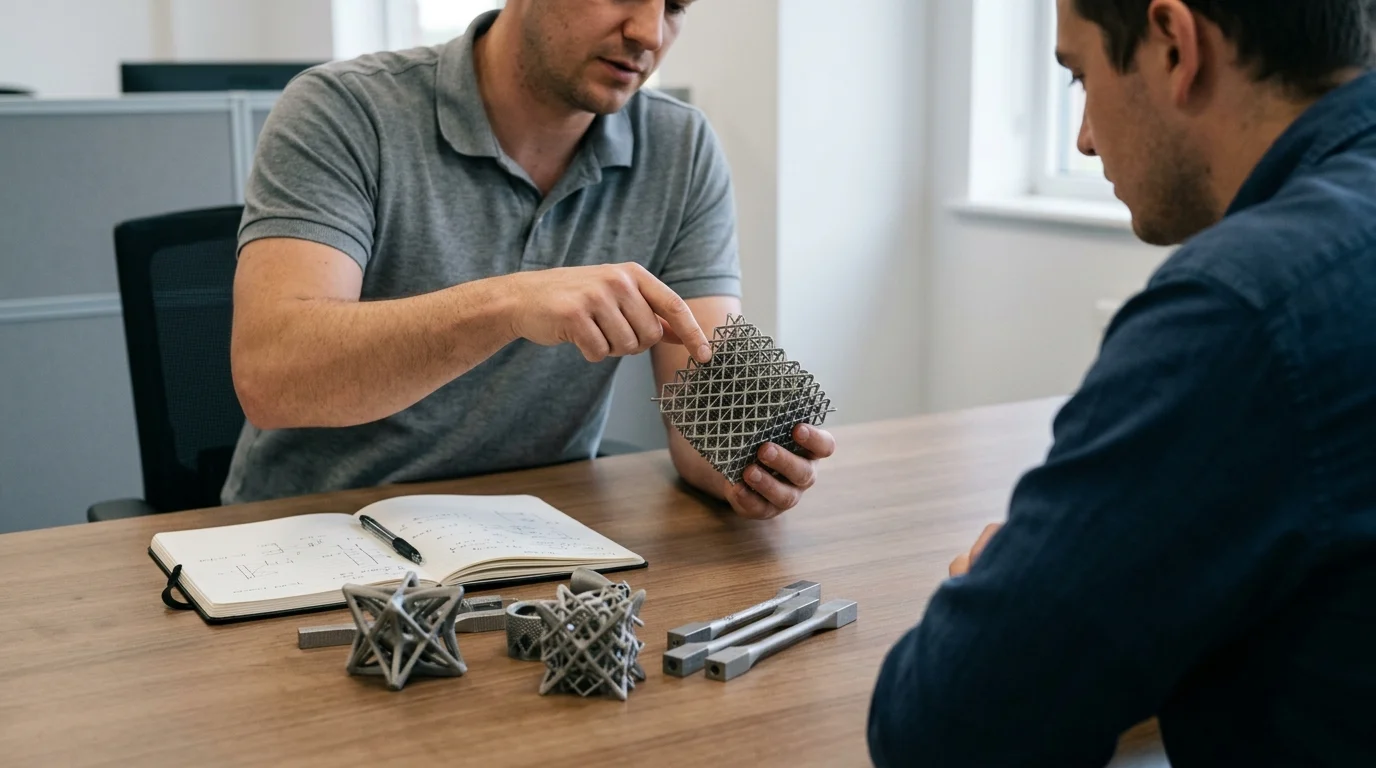
While numerous titanium grades exist in the metallurgical landscape, the additive manufacturing industry focuses on a select few that offer the best balance of weldability, mechanical performance, and powder availability. It is important to note that not all titanium alloys are widely printable; for instance, certain high-strength beta alloys (such as Ti-10V-2Fe-3Al) can be challenging to process. Therefore, manufacturers focus on specific, proven grades to ensure consistent, high-density prints that meet stringent industrial standards.
Ti-6Al-4V and Ti-6Al-4V ELI
Ti-6Al-4V (Grade 5) is the undisputed workhorse of titanium 3D printing, commonly cited as accounting for over 80% of the market. It offers exceptional tensile strength, typically ranging from 900 to 1,050 MPa after standard heat treatments. For applications requiring heightened ductility and fracture toughness, Ti-6Al-4V ELI (Grade 23) is preferred. The ELI (Extra Low Interstitial) designation mandates stricter controls on impurities, specifically capping oxygen content at a maximum of 0.13%. This purity is critical for achieving the fatigue resistance required in aerospace structural components and FDA-approved medical implants.
Commercially pure titanium
Commercially Pure (CP) Titanium, encompassing Grades 1 through 4, is utilized when extreme corrosion resistance and biocompatibility are prioritized over absolute tensile strength. Grade 2 is the most commonly 3D printed CP variant, offering a yield strength of approximately 275 to 350 MPa. It is frequently deployed in chemical processing equipment, marine heat exchangers, and specific medical devices where the alloying elements of aluminum and vanadium must be strictly avoided.
Powder and wire material requirements
The success of titanium 3D printing heavily depends on the feedstock quality. For powder-bed systems, the titanium powder must be highly spherical to ensure optimal flowability and uniform packing density across the build plate. Particle Size Distribution (PSD) is strictly controlled based on the hardware in use.
| Feedstock Type | Typical PSD / Diameter | Primary AM Process | Key Characteristic |
|---|---|---|---|
| Fine Powder | 15 – 45 µm | LPBF | High resolution, smooth surface finish (Ra 10-15 µm) |
| Coarse Powder | 45 – 105 µm | EBM | Lower cost, reduced oxidation risk, thicker layers |
| Wire Feedstock | 1.0 – 3.2 mm | DED / WAAM | High deposition rate (up to 3 kg/hr), lower material cost |
Which 3D Printing Processes Work for Titanium
Processing titanium requires high-energy heat sources and stringent environmental controls to prevent embrittlement and porosity. Three primary additive manufacturing technologies dominate the industrial production of titanium components, each offering distinct advantages depending on scale and precision requirements.
Laser powder bed fusion
Laser Powder Bed Fusion (LPBF), also known as DMLS or SLM, uses high-power fiber lasers (typically ranging from 400W to 1000W) to selectively melt titanium powder layer by layer in an argon-filled chamber. LPBF achieves exceptional dimensional accuracy and fine feature resolution, with layer thicknesses commonly set between 20 and 60 µm. It is the preferred method for highly intricate geometries, such as medical trabecular structures and aerospace hydraulic manifolds.
Electron beam melting
Electron Beam Melting (EBM) utilizes a focused electron beam to melt the titanium powder within a high-vacuum environment (typically 10^-4 to 10^-5 mbar). This process inherently requires high preheating temperatures, often maintaining the build chamber between 600°C and 700°C. This elevated ambient temperature acts as an in-situ heat treatment, drastically reducing residual thermal stresses and minimizing the need for extensive support structures. EBM is highly efficient for bulkier parts and stacking multiple components in a single, three-dimensional build volume.
Directed energy deposition
Directed Energy Deposition (DED) utilizes either a laser or an electron beam to melt titanium wire or blown powder exactly as it is deposited onto a substrate. Unlike powder bed systems, DED is not constrained by a small build box, making it ideal for manufacturing massive structural components or repairing worn aerospace turbine blades.
| Process | Heat Source | Environment | Build Volume Capability | Typical Deposition Rate |
|---|---|---|---|---|
| LPBF | Fiber Laser | Argon | Small to Medium (e.g., 500 × 500 × 500 mm) | 5 – 20 cm³/hr |
| EBM | Electron Beam | Vacuum | Small to Medium (e.g., 350 × 350 × 380 mm) | 15 – 60 cm³/hr |
| DED | Laser / Electron Beam | Argon / Vacuum | Large (Meters) | 0.5 – 3.0 kg/hr |
What Steps Are Required to 3D Print Titanium Alloy
Transitioning from a digital CAD file to a flight-ready or medical-grade physical component involves a rigorous, multi-stage workflow. Printing the titanium is only a fraction of the overall manufacturing cycle, requiring specialized expertise at every step.
Design for additive manufacturing
Design for Additive Manufacturing (DfAM) is the critical first step. Engineers must design parts to minimize residual stress accumulation and avoid steep overhangs; generally, any angle below 45 degrees relative to the build plate requires sacrificial support structures to prevent collapse. DfAM also involves applying generative design algorithms to hollow out solid volumes, ensuring wall thicknesses remain above the typical 0.4 mm threshold to prevent structural failure during printing.
Support removal and post-processing
Once printed, titanium parts undergo extensive post-processing. Because laser-based processes create high residual stresses, the build plate and parts are usually stress-relieved in a vacuum furnace before the parts are separated via Wire Electrical Discharge Machining (EDM). To eliminate internal microporosity and achieve greater than 99.9% theoretical density, parts are subjected to Hot Isostatic Pressing (HIP). For Ti-6Al-4V, HIP is typically performed at 920°C under 100 MPa of argon pressure for 2 to 3 hours. Finally, because 3D printing rarely achieves final-part tolerances out of the machine, critical mating surfaces must be CNC machined to achieve tight tolerances (±0.01 mm) and smooth surface finishes down to Ra 0.8 µm.
Inspection, testing, and certification
Industrial applications demand rigorous quality assurance. Non-Destructive Testing (NDT) is mandatory for aerospace and medical components. Industrial CT scanning is commonly employed to detect internal voids, cracks, or unfused powder particles larger than 20 µm. Furthermore, manufacturers must maintain strict traceability of powder batches, mechanical testing coupons, and digital print logs to comply with aerospace (AS9100) or medical (ISO 13485) certification standards, ensuring repeatable mechanical properties across all production runs.
When Should Companies Choose 3D Printed Titanium
Adopting 3D printed titanium is a strategic decision that hinges on balancing upfront material and machine costs against long-term performance gains and supply chain efficiencies. It is not a blanket replacement for conventional manufacturing, but rather a powerful alternative for specific use cases.
Cost, lead time, and buy-to-fly ratio
The traditional aerospace ‘buy-to-fly’ ratio for titanium forgings is typically cited as ranging from 10:1 to 20:1, meaning up to 95% of the expensive raw material is machined away as scrap. Additive manufacturing drastically reduces this ratio to near 1.5:1, yielding massive raw material savings. Furthermore, 3D printing bypasses the need for custom tooling, molds, and forging dies. This elimination of tooling can slash lead times from 6 to 8 months for conventional forgings down to just 3 to 4 weeks, significantly accelerating time-to-market.
Best-fit applications
The technology shines in sectors where weight reduction, extreme environmental resilience, and complex geometries intersect. In aerospace, best-fit applications include structural brackets, fuel nozzles, and satellite heat exchangers. In the medical sector, titanium 3D printing is the gold standard for orthopedic implants, such as spinal cages and acetabular cups, where engineered porous surfaces (mimicking human bone) promote rapid osseointegration. High-performance motorsport also leverages AM for custom exhaust components, roll hoops, and suspension uprights.
Decision framework for production
Deciding to print titanium requires a clear breakeven analysis. Conventional CNC machining remains more cost-effective for simple geometries produced in high volumes (e.g., greater than 10,000 units). However, for components with high geometric complexity, internal cavities, and low-to-medium production volumes (MOQs of 1 to 500 units), additive manufacturing is vastly superior. Partnering with specialized additive manufacturing providers allows OEMs to navigate this decision framework, ensuring that the transition to 3D printed titanium delivers a measurable return on investment and peak mechanical performance.
In summary, titanium alloys—led predominantly by Ti-6Al-4V—are routinely and successfully 3D printed using LPBF, EBM, and DED technologies. While the process requires strict environmental controls, careful design, and extensive post-processing, the ability to produce lightweight, complex, and highly optimized components makes it a transformative solution for modern engineering challenges.
Key Takeaways
- Titanium alloys can be 3D printed successfully when the process uses argon or vacuum environments to prevent high-temperature contamination.
- Ti-6Al-4V Grade 5 is the dominant titanium alloy for additive manufacturing and can reach about 900 to 1,050 MPa tensile strength after standard heat treatment.
- Engineers can reduce component weight by up to 50% by combining titanium’s 4.43 g/cm³ density with topology optimization and lattice structures.
- Use Ti-6Al-4V ELI Grade 23 when medical or aerospace parts require tighter impurity control, including oxygen content capped at 0.13%.
- Printed titanium parts should be evaluated for anisotropy and fatigue performance, with post-processing specified for demanding structural applications.
- Not every titanium alloy is equally printable, so buyers should prioritize proven grades and certified material supply for repeatable results.
Frequently Asked Questions
Can titanium alloys be 3D printed reliably?
Yes. Titanium alloys are widely used in additive manufacturing when processed in inert argon atmospheres or vacuum systems to prevent oxidation, contamination, and embrittlement during melting.
Which titanium alloy is most common for 3D printing?
Ti-6Al-4V, also known as Grade 5, is the most common titanium alloy for 3D printing and is often cited as representing more than 80% of printed titanium applications.
Why is argon preferred when printing titanium?
Argon is preferred because titanium reacts strongly with oxygen, nitrogen, and carbon at high temperatures. An argon environment helps protect the melt pool from contamination and preserves mechanical performance.
Is 3D printed titanium as strong as wrought titanium?
It can achieve excellent strength, but as-built printed titanium may show anisotropy and different fatigue behavior. Heat treatment, hot isostatic pressing, and proper qualification are often needed for critical parts.
What industries use 3D printed titanium parts?
Aerospace, medical implants, motorsport, defense, and high-performance industrial sectors use printed titanium for lightweight structures, complex geometries, lattice designs, and corrosion-resistant components.